What Is Padel? The Complete Guide for UK Players
Padel is a racket sport played on an enclosed glass-and-mesh court, in pairs (doubles only). The ball can bounce off the walls, making rallies longer and the game more accessible for beginners than most racket sports. It's the fastest-growing sport in Europe and has been growing rapidly in the UK since around 2018.
If you've heard about it but never played, this covers everything you need to know.
The basic concept
Think of padel as a hybrid between tennis and squash — you play over a net on a court that's smaller than a tennis court, but the enclosed glass walls mean the ball stays in play longer. Unlike squash, padel is always doubles. Unlike tennis, you serve underarm.
Those two facts — walls and underarm serve — account for most of what makes padel distinctive.
The court
A padel court is 20m × 10m (about half the size of a tennis court). The back walls are tempered glass, extending 3–4m high. The side sections have a combination of glass at the bottom and metal mesh above. A net divides the court in the middle.
The walls are in play. A ball that bounces on the floor and then hits the glass or mesh on your side is still live — you can play it or wait for it to come back. This is the core mechanic that makes padel tactically interesting and physically forgiving for beginners.
Equipment
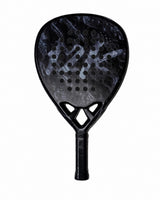
Padel rackets are solid — no strings. They're round or teardrop-shaped with a perforated or textured face. Shorter than tennis rackets (max 45.5cm). Most adult rackets weigh 355–375g.
The ball is similar to a tennis ball but with slightly less internal pressure. It bounces lower and slower, which is part of why the game works at slower reaction speeds than tennis.
The serve
The serve is underarm. The ball must bounce in your service box first, then you hit it below waist height. It needs to land in the diagonal service box on the other side of the net. Two attempts, same as tennis.
There are no overhead or jump serves in padel. This is a deliberate design choice — it means the serve doesn't dominate the game the way it does in professional tennis. Rallies tend to be longer as a result.
Scoring
Padel uses tennis scoring: 15, 30, 40, game. Sets to six games. Matches are best of three. Tiebreak at 6-6. For the full detail, read our scoring system guide.
How it feels to play
The walls mean mistakes recover more often than you expect. A ball you think is past you comes off the back glass and is suddenly playable. This changes the psychology of a rally — you play the ball rather than the line.
The doubles format means constant communication with a partner. You share the court, cover each other's weaknesses, and set up shots for each other. Most players find this social dimension one of padel's main appeals.
At beginner level, sessions feel active and enjoyable from the first time. The learning curve is gentler than tennis — you don't need to master a complex serve before a rally is possible.
How big is padel in the UK?
The LTA estimates around 250,000 padel players in the UK as of 2024, up from tens of thousands in 2019. Court numbers have grown from a few hundred to over 1,000 in the same period. Major leisure operators — David Lloyd, Everyone Active, Places Leisure — have been installing courts at scale.
It's not yet a mainstream sport in the way football or tennis is. But it's past the early-adopter stage. Most mid-to-large UK cities now have at least one padel facility. Check our guide on how to find padel courts near you.
How much does it cost to play?
Court hire is typically £15–30 per hour split between four players — so £4–8 each. Most clubs provide balls. Racket hire is available at £3–5 at most venues.
Once you're playing regularly, having your own racket makes sense. A good entry point is a full-construction carbon racket in the £80–120 range. This is where carbon grade matters — carbon faces generally feel firmer and more direct than fibreglass ones.
Getting started
Most clubs offer beginner group coaching sessions at around £15–25. Two or three sessions before you play socially will teach you the serve and the wall rules properly — the two things that take longest to figure out without instruction.
Read our complete beginner's rules guide before your first session, and our UK beginner racket guide when you're ready to buy.
The 12K Padel range is £79.95 for a 12K carbon-face racket, free UK delivery over £90. We sell direct, without the distributor and shop margins.