Padel vs Tennis: What Is Actually Different (and What Carries Over)

If you play tennis and someone keeps telling you to try padel, you are probably wondering how different it actually is. The short answer: different enough to feel like a new sport, similar enough that you will pick it up faster than you expect.
Here is a proper breakdown of what changes and what carries over.
The Court Is Smaller Than You Think
A padel court measures 20m x 10m. A tennis court runs closer to 24m x 11m. The difference sounds small on paper but feels significant when you are standing inside one for the first time. The court is fully enclosed by a combination of glass panels and metal fencing on all four sides.
That enclosure is not just structural. The walls are part of the game itself, and understanding that is the first step to playing padel well.
The Racket Is Nothing Like a Tennis Racket
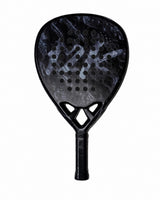
The most obvious adjustment when switching from tennis to padel is the racket. A padel racket is a solid frame with no strings. Instead, it has a perforated hitting surface made from composite materials like fibreglass or carbon fibre.
The racket is shorter than a tennis racket, which means your swing is more compact. The point of contact with the ball is closer to your body, which actually helps with control.
The quality of the carbon in the frame makes a real difference to how the racket performs. 12K carbon faces are common on mid-range and premium padel rackets. The 12k refers to the weave density of the carbon, which affects stiffness, touch, and how much feedback you feel at the point of impact. Every 12k Padel racket has a 12K carbon face.
Padel Balls Are Not Tennis Balls
Padel balls look almost identical to tennis balls. The key difference is internal pressure. Padel balls have slightly less air inside, which means they travel slower and bounce lower than a tennis ball.
This is intentional. The slower pace gives rallies more time to develop and rewards placement and positioning over raw power.
The Serve Is Underarm
In padel, you serve underarm. The ball must bounce before you make contact with it. There are no overhead serves. You drop the ball, let it bounce, and hit it diagonally into the service box on the other side.
For tennis players this is usually the first adjustment that feels unnatural. The instinct to toss and swing overhead does not disappear immediately. It takes a few sessions before the underarm serve starts to feel normal.
The Walls Change How You Think About Every Shot
This is the part that makes padel feel genuinely different, even to experienced racket sports players. The ball can rebound off the back and side walls, and those rebounds are live. You play them the same way a squash player would.
A ball that clears your side of the court does not end the point. It hits the wall and comes back. If you ignore the wall, the ball keeps playing. If you read the wall, you can set your partner up for an attack.
Some of the most satisfying shots in padel involve bouncing the ball off the back glass and lifting it back over the net at an angle that would be impossible on an open court. That creativity is one of the things that makes the sport addictive.
Scoring Is Familiar, With One Difference
Padel uses the same scoring system as tennis. Games, sets, deuce, the whole structure is the same. The one difference is the golden point.
At deuce, one team chooses which side they want to receive on, and the next point decides the game. It speeds up play and removes the extended deuce exchanges that can drag on in tennis.
If you already understand tennis scoring, padel scoring will not confuse you at all.
Padel Is Always Doubles
There is no singles padel. The game is played with four players, two per side. This is not a minor detail. It shapes the entire culture of the sport.
Every session involves a partner and an opposing pair. Communication, positioning, and decision making with your partner become central to how you win points. You cannot win alone, which means even experienced players have to develop a social and collaborative game.
For many people coming from individual sports, this is one of the aspects of padel that keeps them coming back. You leave every session having shared something with three other people.
What Carries Over From Tennis
Quite a lot, as it turns out. The hand eye coordination you have built through tennis transfers directly. Reading spin, timing the ball, understanding pace off the racket face, all of that is relevant in padel.
Your footwork carries over too. The instinct to split step and react to a wide ball is the same instinct you use when your opponent attacks from the net in padel.
What you may need to unlearn is the habit of hitting hard. In tennis, a flat ball hit with pace is a weapon. In padel, that same ball often stays low and reachable, or clips the net if you aim it flat. The shots that hurt opponents are usually those that bounce high off the back glass, or lobs that force a defensive scramble. Control and placement beat power here.
How Quickly Will You Adapt?
Most tennis players feel comfortable playing padel within three or four sessions. The first session is usually disorienting. The walls catch you off guard, the racket feels short, and the underarm serve needs work.
By the third or fourth session those adjustments start to click. Within a month of regular play, most tennis players are thinking about tactics and positioning rather than just getting the ball back over the net.
The ceiling is high. Padel rewards tactical thinking, communication with your partner, and consistency developed over time. Tennis players tend to accelerate through the early stages because the fundamentals of racket sports are already embedded.
What You Need to Get Started
Courts in the UK almost always have rackets available to borrow for a first session. If you want your own, start with one that prioritises control rather than power. Round and teardrop shaped rackets suit most beginners well, and a full carbon construction will carry you well beyond the early stages of the game.
The 12k Padel Shark Blue has a 12K carbon face and a medium EVA core, built for improving players. It is a racket that holds up as your game develops, which makes it a sensible starting point for anyone making the move from tennis.
Shoes from your tennis bag will work fine for the first few sessions. Proper court shoes with lateral support are worth adding once you are playing regularly.
A Few Sessions Is All It Takes
Padel is not tennis with walls. The similarities are real but the game has its own rhythm, its own demands, and its own logic. The good news is that if you already play tennis, you are already closer to being decent at padel than you might expect.
Give it a few sessions. The walls will start to make sense, the underarm serve will start to feel natural, and you will understand why padel has grown so quickly in the UK over the last few years.
Browse the 12k Padel racket range and find one that fits where you are in your game.