Your First Padel Session: What to Expect
Padel is one of those sports where your first session goes one of two ways. Either you step on court and think this is brilliant, or you spend the first twenty minutes confused about the walls and why the ball keeps bouncing off them at angles you did not see coming. Usually both, in the same afternoon.
If you have never played before, knowing what to expect makes the whole thing a lot less chaotic. Here is a straightforward breakdown of what your first padel session will actually look like.
The Court Is Smaller Than You Think
A padel court is about a third of the size of a tennis court. It is 10 metres wide and 20 metres long, with glass walls and metal fencing surrounding the entire playing area. The net sits in the middle, slightly lower than a tennis net at the sides.
The enclosed space feels unusual at first, but it works in your favour as a beginner. Shots that would fly out on a tennis court stay in play on a padel court. The pace is slower and you get more time to think and react.
How the Rules Work in Padel
Padel is always played as doubles. You will have a partner, and so will the other side. Singles padel exists but it is extremely rare and most venues do not offer it.
Scoring is identical to tennis: 15, 30, 40, game. Sets go to six games with a two-game advantage, and a tie-break is played if the score reaches six all. If you already play tennis, the scoring will feel completely natural from the start.
The serve is underarm. You drop the ball, let it bounce once, and strike it below waist height. It must land diagonally in the service box on the other side of the net. There is no overhead serve, which makes the whole thing a lot easier to get right straight away.
After the serve, the ball can be played off the glass walls once it has bounced on the ground. That is the core rule that makes padel different from every other racket sport, and also the part that takes the most getting used to.
The Walls Take a Bit of Time
On your first session, you will probably ignore the walls entirely. That is completely fine. Most beginners spend the first thirty minutes just keeping the ball in play across the net, and that is more than enough to build a feel for the game.
The walls become useful once you are comfortable with the basic rally. A ball that hits the back glass can be played back into court, and learning to time that rebound is what separates intermediate players from beginners. It clicks faster than you expect.
Do not stress about the walls in your first session. Focus on watching the ball, getting into position, and making contact cleanly. The rest follows naturally with time on court.
What You Will Need for Your First Session
Most clubs in the UK hire out rackets for a few pounds per session, so you do not need to own one before you play. If you are going to a structured beginner session, everything including balls is usually provided.
For footwear, court shoes or tennis shoes work well. Running shoes are fine in a pinch but they offer less lateral support, which you will notice when you start moving sideways quickly across the court.
Wear comfortable sportswear that lets you move freely. There are no strict dress codes at most social padel venues in the UK, though dedicated padel kit has become popular as the sport has grown. A light top and shorts or leggings is all you need to get started.
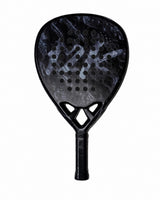
Once you decide you want to play regularly, having your own racket makes a real difference. The 12k Padel Court Pack bundles a 12K carbon-face racket with the accessories you need to get on court properly, and it is a straightforward option if you want everything sorted in one go.
What a Typical First Session Looks Like
If you book a beginner coaching session, a coach will walk you through the serve, the basic rules, and how to rally. You will spend time hitting the ball back and forth until it starts to feel natural, then gradually work into actual points.
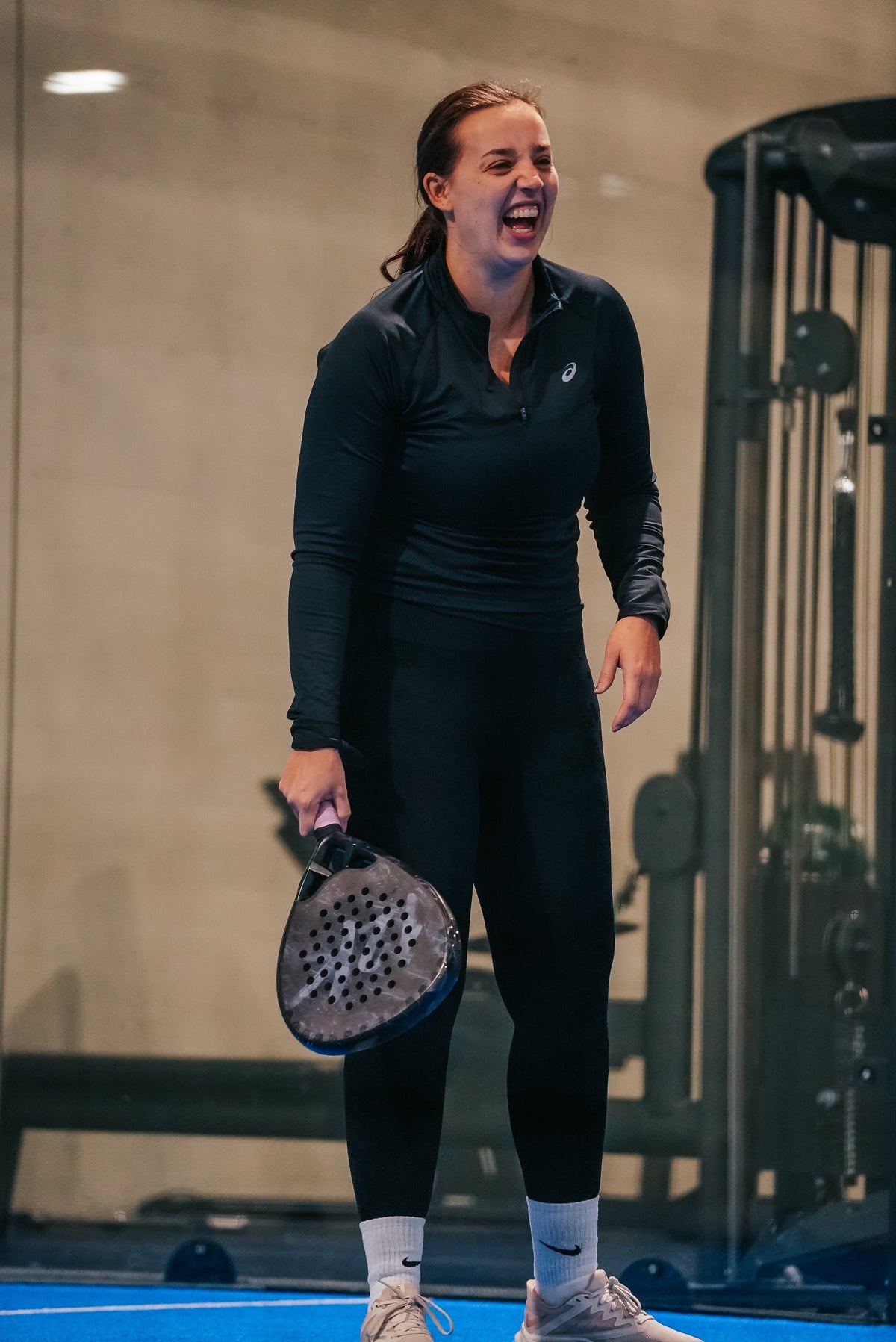
If you are jumping straight into a social session with friends, expect the first fifteen minutes to be a bit chaotic. Someone will serve into the net, someone else will mishit the ball into the glass, and everyone will find it funnier than they probably should. This is normal and honestly part of the appeal.
A standard padel session runs for sixty or ninety minutes. Ninety minutes is better for a first session because it gives you time to find your rhythm rather than finishing just as things start to click.
A Few Things Nobody Mentions Before You Play
The racket feels nothing like a tennis racket. It is solid with no strings, the grip is shorter, and the hitting surface is smaller. Give yourself five minutes to adjust before you start judging your own shots.
Your instinct will be to swing hard. Padel rewards control over power, especially as a beginner. Slower, more accurate shots tend to win more points than big swings. The sooner you accept this, the faster you will improve.
Padel is also relentlessly social. You will end up chatting between points, swapping stories about mishits, and probably making plans to come back before the session is even over. It is genuinely hard not to enjoy it.
Ready to Get Started
The best way to prepare for your first padel session is simply to show up and play. The rules make sense within a few minutes on court, and you will be rallying comfortably long before the session ends.
When you are ready to get your own kit, the 12k Padel shop has everything a new player needs to get started properly. Browse the full range here whenever you are ready to take the next step.