How Padel Grew in the UK: Britain's Fastest-Growing Sport

Ten years ago you would have struggled to find a padel court anywhere in Britain. Now there is a good chance one has opened within a few miles of wherever you are reading this. The numbers behind that shift are hard to take in once you start digging into them.
In 2019 the UK had roughly 15,000 padel players. By 2023 that figure was 129,000, and by the end of 2024 it had reached 400,000. The LTA's own count at the end of 2025 was 860,000 people who had played at least once in the previous year. In May 2026 the governing body confirmed Britain had passed one million padel players. Few sports anywhere have grown at that pace.
Courts went up almost as fast as players did
Player growth needs somewhere to happen, and court building kept pace. Britain had 68 padel courts in 2019. That number passed 1,000 in July 2025, reached 1,553 by the end of that year, and stood at 1,825 courts across 551 venues when the LTA published its one million announcement in 2026. More than 400 courts were built in 2024 alone, and 2025 beat that comfortably.
A lot of that expansion has come from converting old squash courts and adding padel to existing tennis and leisure centres. Padel needs less space than a tennis court, so it slots into corners of sites that were not being used for much else. Operators noticed the demand before most of the public did.
London saw the earliest cluster of clubs, but growth has spread well past the capital. Manchester, Leeds, Bristol, Glasgow and towns across the southeast have all added courts in the last couple of years. The LTA now tracks padel alongside tennis in its participation figures, which tells you how far the sport has moved from niche hobby to something the governing body plans around. If you want to see what is near you, our guide to finding a padel court in the UK walks through the booking apps and directories that actually work.
Search interest tells the same story
Worldwide interest in padel grew by 49 percent year on year between 2024 and 2025. In the UK the jump was 121 percent, more than double the global rate. That pushed Britain into the world's top 20 countries for padel search interest.
Awareness has grown alongside participation. At the end of 2024, 38 percent of British adults had heard of padel. A year later that was 57 percent. More than 10 million people say they would like to try it if they got the chance. That is a huge pool of potential players still sitting on the sidelines.
It is not only twenty-somethings driving this. Corporate leagues have sprung up in cities with big office populations, and plenty of clubs report a strong contingent of players well into their fifties and sixties who found padel easier on the joints than squash ever was. Family sessions on weekend mornings are common too, with parents and teenagers sharing a court in a way that rarely happens with tennis.
2026: the year the pro game arrived
For years British players watched the professional tour from a distance. That changed in August 2026 when London hosted its first Premier Padel P1 at Olympia in Kensington. Every day sold out, around 20,000 people came through the doors over the week, and the organisers have already committed to a bigger event in 2027.
Government money followed the crowds. The LTA secured a £3 million commitment for the 2026/27 financial year to fund covered padel and tennis facilities, aimed at the biggest problem British padel still has: too many outdoor courts that sit empty from November to February. Expect more roofs and more all-weather venues over the next two years. If you want to follow the pros from home, our guide on how to watch padel in the UK covers the streaming options.
Why it caught on here specifically
Padel's appeal in the UK comes down to a few things stacking on top of each other. It is easier to pick up than tennis or squash. The smaller court and underarm serve mean new players can rally within their first session instead of spending weeks just getting the ball in. Doubles-only play makes it social by default. You are not out there alone working through a skill, you are there with three other people, and usually laughing more than you expected to.
At 12k Padel we have watched this play out with our own customers. People who tried padel once as a favour to a friend are now booking three sessions a week and asking about racket weight and carbon grades like they have played for years. That quick jump from curious to committed is rare in racket sports, and it is a big part of why courts keep filling up. It is also why we put together the 12k Padel starter pack, so a new player gets a proper carbon racket and the basics in one go rather than a plastic frame from the back of the club cupboard.
Indoor facilities have played their part too. British weather is not kind to outdoor courts for half the year. Operators have responded by building more indoor and covered venues, which keeps usage steady through winter instead of dropping off a cliff every October.
Questions people ask about padel's growth in the UK
Is padel the fastest-growing sport in the UK?
By participation growth, yes. No other sport in Britain has gone from 15,000 to a million players in seven years, and no other sport added more than 900 new courts between the start of 2024 and mid 2026. Pickleball is growing quickly too, but from a much smaller base and with far less venue investment behind it.
How many padel courts are there in the UK?
The LTA's 2026 figure is 1,825 courts across 551 venues in Great Britain. That count excludes Northern Ireland, and it is out of date almost as soon as it is published because clubs open every week. London and the South East have the largest share, followed by the South West and the Midlands, with Scotland and Wales catching up fast.
Why is padel so popular in the UK right now?
Three reasons sit behind most of it. The sport is easy to start and social from the first session. Squash courts and tennis clubs had spare space that converted cheaply. And the cost of a game, once you split a court four ways, is lower than most people expect. Our breakdown of how much padel costs in the UK puts real numbers on it.
What this means if you are just starting out
The practical upside of all this growth is availability. A few years ago, finding a padel court near you meant a long drive and a waiting list. Now most towns of any size have at least one club, and plenty have several competing for your booking.
Pricing has become more competitive as supply catches up with demand. Beginner sessions and taster classes are far easier to find than they were even two years ago. If padel has been on your list of things to try, there has never been an easier moment to show up and hit a few balls.
Ready to join the boom
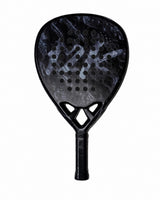
Whether you are picking up a racket for the first time or upgrading from a battered starter set, gear that suits your game shortens the learning curve. The 12k Padel Midnight Black racket is a 12K carbon teardrop at 365 grams, built for players who want a solid all-round option while they figure out their style in this fast-growing sport. Book a court, grab a racket, and see what the fuss is about.