Padel for Tennis Players: How to Make the Switch Without Picking Up Bad Habits

Tennis players tend to pick up padel faster than complete beginners. You already understand rally construction, you can read spin, and your footwork gives you a head start on most people who walk onto a padel court for the first time.
But there is a flip side. Some of what you have spent years drilling in tennis actively works against you in padel, and if nobody points it out early, those habits take a long time to unlearn. This guide covers both sides: what transfers well, and what needs to change.
What You Can Bring Straight Over
Your ability to read the ball is a genuine advantage. Tennis players recognise spin, anticipate trajectories, and tend to position earlier than complete beginners. That same spatial awareness works just as well on a padel court.
Footwork is another asset. Split steps, recovering to the centre, staying on your toes: all of it carries over. The padel court is smaller and the pace is slower, so your movement instincts will often put you in the right place even before you have learned the specific shots.
Volley technique is largely transferable too. If you are comfortable at the net in doubles tennis, the shift to dominating padel at the net tends to feel natural relatively quickly.
Power Is Not the Goal
This is the biggest adjustment for most tennis players, and it is where a lot of the frustration in early padel sessions comes from. In tennis, generating pace wins points. In padel, pace that bounces high off the back glass simply feeds your opponents a ball to counter with.
The point of most shots in padel is to keep the ball low, make it die off the walls, and force your opponents into a difficult position. Not to blast through them. Hard flat shots that would win a tennis point will regularly come back at you in padel because the glass is part of the court, not the end of it.
The Lob Is Your Best Friend Now
In tennis you almost never lob when an opponent approaches the net, because the passing shot is a realistic option. In padel the court is smaller, you are always playing doubles, and the walls make true passing shots almost impossible. The lob is the primary counter when your opponents hold the net.
Get comfortable with it early. A well-placed lob that lands deep and bounces off the back glass is one of the most effective shots in the game. In tennis it can feel passive and defensive. In padel it is a genuine tactical weapon used at every level.
The Overhead Is a Different Beast
Tennis players instinctively smash overheads as hard as possible. In padel, the bandeja and the vibora are the primary overhead options, and neither of them is about pace. The bandeja is a sliced, controlled shot designed to land deep and stay low off the glass. The vibora is a side-spin shot that kicks out wide and makes the return difficult.
Smashing a flat overhead at full pace from the back of a padel court will bounce high, come back off the glass, and give your opponents an easy ball to attack. Bring the overhead down in pace and learn the spin-based alternatives. The improvement in your game will be noticeable quickly.
Grip: Lighter Than You Think
Tennis players often grip with more tension than padel requires. Padel rewards a looser grip that allows the wrist to move freely, particularly on volleys and the softer touch shots near the net. A tight tennis grip tends to produce flat, heavy contact that does not work as well in padel.
If you are coming to padel from tennis, consciously relax your grip during sessions and notice how it changes the feel of the ball on contact. Most players pick up the difference within a few sessions.
The Walls: Use Them, Do Not Avoid Them
Players coming from tennis backgrounds tend to volley balls that would be better left to bounce off the back glass. The wall is part of the game, not an obstacle, and learning to trust it only comes with court time.
Stand deeper than feels natural when you are at the back. Let balls travel to the glass and play them after the bounce. That patience, combined with low and controlled shots back into the court, is what solid defensive padel looks like. It will feel awkward at first. Keep at it.
Getting Set Up Properly From the Start
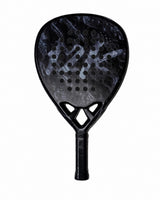
One practical step that makes the transition easier is making sure your racket suits where you are as a player right now. Padel rackets and tennis rackets are completely different tools, and using something built for an advanced level makes the learning curve steeper than it needs to be.
At 12k Padel we build rackets and bundles with newer players in mind as well as those looking to step up. The 12k Padel Court Pack is a good starting point if you are getting set up for padel properly for the first time and want a package that covers the essentials without overcomplicating things.