The History of Padel: From Mexico to Global Sport
Padel is one of the fastest-growing sports in the world right now. It is also one of the newest. The gap between invention and global expansion is unusually short for a sport — it went from a single private court in Mexico in 1969 to over 25 million players worldwide in under 60 years.
The origin: Acapulco, 1969
Padel was invented by Enrique Corcuera, a Mexican businessman, at his home in Acapulco. He had limited space for a full tennis court, so he built a smaller enclosed version using the existing walls of his property as boundaries. He formalised it with a net, modified the rules to allow walls as part of play, and called it Padel.
The first person outside Mexico to see it was Alfonso de Hohenlohe, a Spanish prince, who visited Corcuera, played the game, and took it back to Marbella in 1974. He built the first two courts in Spain at the Marbella Club, and that's where the sport's real growth started.
Spain becomes the home of padel
From Marbella, padel spread through Spanish high society and then into mainstream Spanish culture through the 1980s and 1990s. Spain is still the world's largest padel market by a significant margin — there are an estimated 8–10 million players in Spain, more than in any other country, and a professional tour that draws mainstream television audiences.
Argentina developed a parallel padel culture in the 1970s and 1980s, with strong uptake in Buenos Aires. Argentine players have historically been among the best in the world, partly because of the scale of the domestic game.
The World Padel Tour
The professional circuit has gone through several structures. The World Padel Tour (WPT) ran from 2013 and built the sport's professional profile significantly through international expansion. In 2023, it was succeeded by Premier Padel, backed by the International Padel Federation and major institutional investors, which consolidated the top-level professional game under a single structure.
The top players — historically Spanish and Argentine — are now internationally known within the sport, and the professional circuit has events across Europe, the Middle East, and increasingly the Americas and Asia.
Padel arrives in the UK
Padel has existed in the UK in small pockets since the early 2000s, mainly at private clubs and through connections to the Spanish market. The LTA — which governs tennis in the UK — adopted formal responsibility for padel development around 2018, and since then the growth has been significant.
UK court numbers went from a few hundred in 2019 to over 1,000 by 2024. Major leisure operators like David Lloyd began large-scale court installation programmes. Local authorities started adding public padel courts to leisure centre and park facilities.
The pandemic years of 2020–2021 unexpectedly accelerated this. Outdoor sport was permitted when indoor facilities were closed, and padel's outdoor glass-and-mesh court format attracted players looking for activity. Many picked up the sport during that period and stayed with it.
Why padel grew so fast
A few factors explain the unusual growth rate:
The learning curve is shorter than tennis. Beginners can sustain a rally within the first session because the walls keep the ball in play longer. That early competence is motivating.
It's inherently social. Doubles-only means four players per court. That structure drives club formation, social leagues, and the community dimension that makes sports stick.
The court is smaller and cheaper to build than tennis. One tennis court footprint can accommodate two padel courts. That's made installation viable for operators who couldn't justify a full tennis development.
And — unlike many sports — padel has active professional investment. The people who built the professional tour and the major equipment brands had strong commercial reasons to market and grow the sport. That doesn't happen with every sport.
Where it's going
Padel is in the process of applying for Olympic inclusion. It appeared as a demonstration sport and the International Padel Federation has been working toward full IOC recognition. Whether it's included in the 2028 or 2032 Olympics is still open, but the direction is clear.
In the UK, the LTA's stated target is to make padel a mainstream racket sport alongside tennis over the next decade. Given the court installation rate and the growth in player numbers, that isn't an unrealistic ambition.
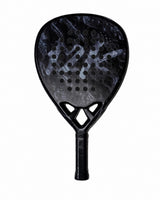
Interested in getting started? Our beginner's guide to padel rules covers everything you need for your first session, and our UK court finder lists nearly 500 venues. For equipment, the 12k Padel rackets have a 12K carbon face and cost £79.95.