How to Hit a Por Tres in Padel: The Smash That Ends Points
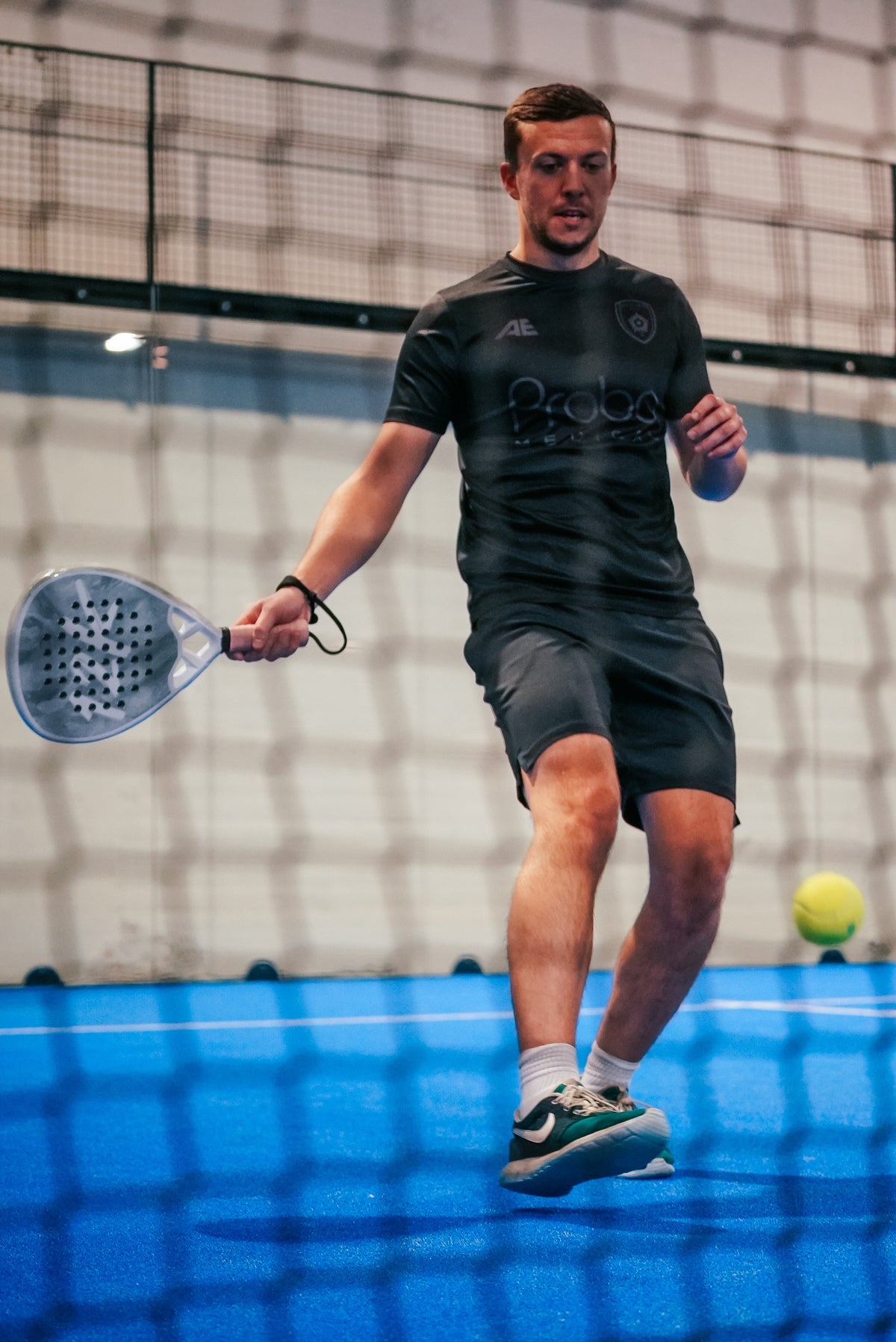
There is a shot in padel that has no equivalent in any other racket sport. You smash, the ball bounces, it climbs the back glass, and it keeps going until it clears the side fence and lands somewhere near the car park.
That is the por tres. It is the closest thing padel has to a knockout punch, and it is also the shot most club players go for at completely the wrong moment. Here is how it works in 2026, when to hit it and how to practise it.
What Por Tres Actually Means
The side glass on a padel court stands three metres high. Send the ball out over the top of it and you have hit it por tres, which is Spanish for by three. The back of the court is a metre taller, with three metres of glass and a metre of mesh on top, so a ball that leaves over the back wall is a different shot with a different name.
The rules are on your side. If the ball bounces inside the court first and then leaves the enclosure, the point belongs to you. Our guide to padel out of court rules goes through what happens next in detail, including what your opponents are and are not allowed to do.
Your opponent has one escape route. They can run out through the side door and hit the ball back before it bounces outside, over the net and into your half. You will see that happen a few times a season on the professional tour. At club level, almost never. Once the ball is over the fence, the point is finished.
When to Go for It
This is the part people get wrong. A por tres is not a shot you decide to hit. It is a shot the lob hands you.
You need a short lob that drops in front of you, a contact point well above net height, and both feet under you. If you are backing up, reaching, or turning your shoulders late, the answer is a bandeja and the point carries on.
Distance from the net matters more than power. Standing four or five metres back and swinging hard sends the ball into the back glass at a flat angle, and it drops straight down at your own feet. Move in two metres before you hit it and the angle changes completely.
Watch where your opponents are standing too. Two defenders glued to the back glass have no chance of running out through the door in time. Two defenders hanging around mid-court can get there, and against them a flat smash into the open space is often the better pick.
The Honest Success Rate
Even good players do not land this every time. Treat it as a shot you take when the ball is genuinely sitting up, not as your default answer to anything above head height.
A missed por tres usually means you lose the net, and losing the net costs more than the point you were trying to win.
The Technique
Continental grip, same as the bandeja and the vibora. Nothing changes there.
Turn sideways early and get the racket behind your head in the scratch position, elbow bent, knees loaded. Point at the ball with your non-hitting hand so your shoulders stay in line with it as it drops.
Contact happens slightly in front of your body at full arm extension. This is the bit that separates a smash from a por tres, because the brush matters more than the speed.
Spin Over Force
You are hitting up and through the back of the ball with heavy topspin, not flattening it. The topspin is what makes the ball dig into the floor and then leap off the glass rather than rolling up it.
A controlled smash with real rotation on it goes out more often than a flat one hit twice as hard. Players around 12k Padel who work on this usually find their percentage jumps once they stop trying to hit it through the wall.
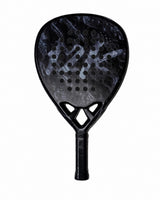
The racket face does some of this work for you. A rough, sandy carbon surface grabs the ball for a fraction longer at contact and adds rotation you do not have to swing for, which is why the 12k Padel Midnight Black uses a textured 12K carbon face rather than a smooth one. We explain the difference in our guide to rough vs smooth padel racket surfaces.
Finish across your body. If your arm stops dead at contact you have hit it flat, and flat balls come back.
Where to Aim
Target the corner where the back glass meets the side glass, on the side you are standing.
The ball needs to land deep, roughly a metre or two from the back wall. Land it short and it rebounds low. Land it too deep and it hits the glass before it has picked up enough kick off the floor.
Aim down the middle of the court and you have no chance, because the ball has nowhere to go but back to your opponents. The whole shot depends on the ball travelling towards a corner and then out over the side.
The Mistakes That Kill It
Hitting it too hard is the obvious one. Pace without spin produces a low flat rebound that your opponent volleys back while you are still admiring your swing.
Attempting it off a deep lob is the second. If the ball is dropping behind your shoulder, you cannot generate an upward brush, and the best outcome available is a bandeja that keeps you at the net.
Then there is the shoulder. This shot loads the joint hard, and a full session of trying it is a quick way to end up sore for a week. Build up to it rather than throwing forty at the wall in one evening.
How to Practise It
Get a partner to feed short lobs from the back of the court, standing where a real opponent would be. Ten at a time, then swap.
Ignore whether the ball goes out at first. Watch the second bounce instead. If it is kicking high off the glass and travelling towards the side, the mechanics are right and the height will follow.
Then add a rule to your next match. You are allowed one por tres per set. That single restriction forces you to wait for the ball that actually deserves it, which is the whole skill.
Questions Players Ask About the Por Tres
What is the difference between por tres and por cuatro?
Both are smashes that leave the court after bouncing, and both win the point. The por tres goes out over the three-metre side glass after kicking off the back wall, usually with heavy topspin. The por cuatro goes out over the four-metre back wall, glass plus mesh, and is normally a flat smash hit from close to the net so the ball rebounds high enough to clear everything. The por cuatro needs more pace and a shorter ball, so at club level the por tres is the one worth learning first.
Can you return a por tres?
Yes, if the court has an opening and you are quick. A defender can leave the enclosure through the door, let the ball travel, and play it back over the net before it bounces outside. The ball is still live until it touches the ground out there. Plenty of UK courts have no gap in the fence at all, and on those the ball is simply dead once it leaves, so it is worth knowing which type you are playing on before you commit.
Does the ball have to bounce before it leaves the court?
Yes. If your smash clears the side glass without touching the court floor first, it is out and you lose the point. The ball has to bounce inside the lines and then exit, whether that happens off the back glass, the side glass or straight off the floor.
Which smash should a beginner learn first?
Not this one. Get a reliable flat smash and a bandeja first, because they cover ninety percent of the overheads you will face. Our beginner's guide to the padel smash covers the basic swing. Once that is solid, the por tres is the same movement with more brush and better timing.
One thing worth saying about kit. This shot asks for a frame that gives you spin and a bit of punch at the top of the head, which is why most players who hit it well use a teardrop or diamond shape with the weight sitting slightly towards the tip. Every 12k Padel racket is built around that balance, and the Shark Blue gives you the same 365 gram teardrop frame and rough 12K carbon face in a colour that stands out on court. Wait for the short lob, move in two metres, and brush up.