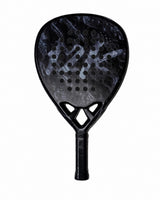
Padel Racket Surface Explained: Rough vs Smooth
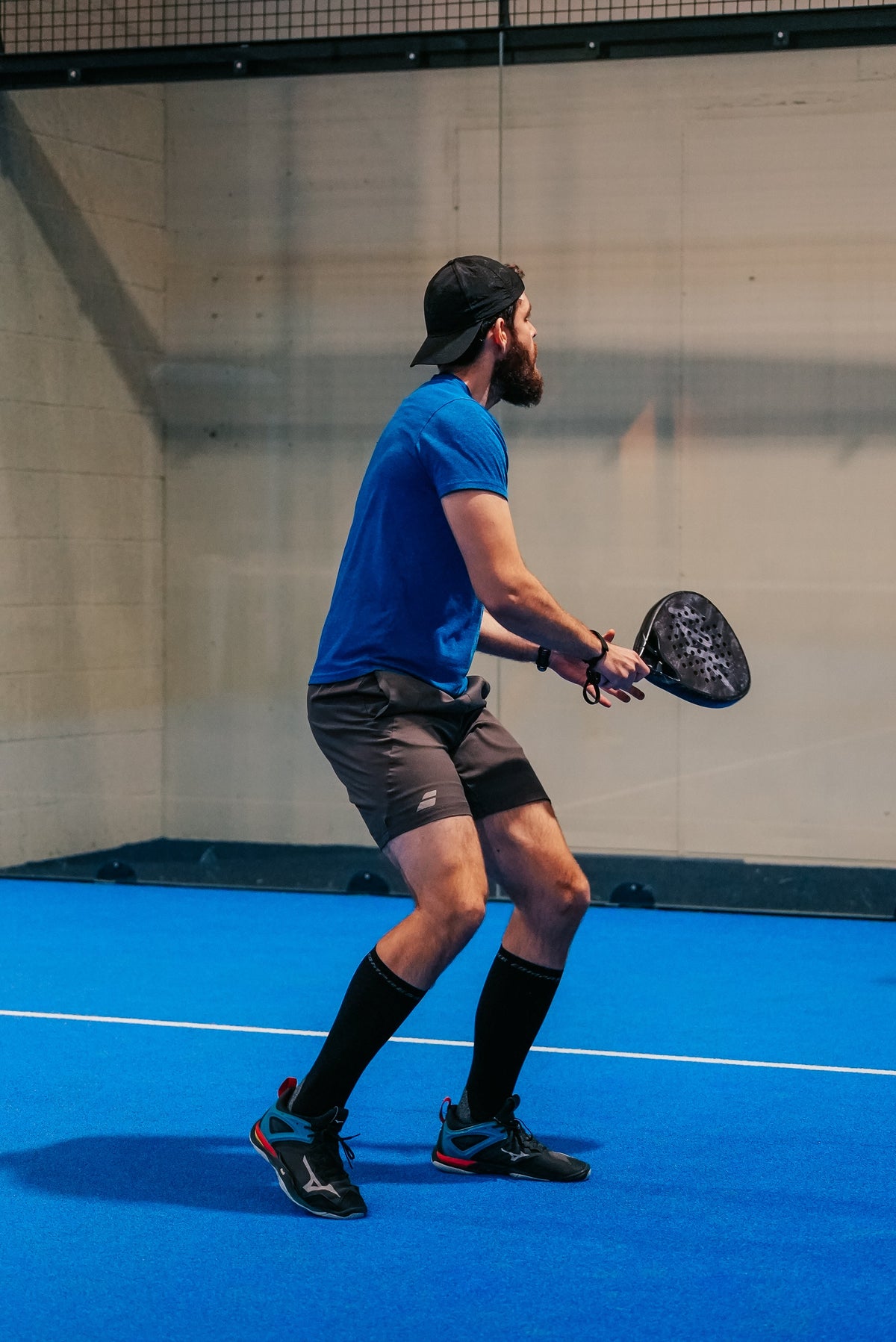
Pick up two rackets in a shop and run a thumb across each face. One feels like fine sandpaper. The other is smooth as a phone screen. Nobody behind the counter usually explains why, and half the brands do not bother listing it on the spec sheet either.
The surface does change how the ball comes off your racket. Not by as much as the marketing suggests. But enough that it is worth knowing which one you are holding.
What roughness does to the ball
A textured face holds onto the ball a fraction longer at contact. That grip lets the racket drag across the ball instead of sliding off it, and dragging across the ball is where spin comes from.
A smooth face does the opposite. The ball glides, the contact is shorter, and more of your swing goes into pace rather than rotation.
Now the honest part. Testing generally puts the difference somewhere around five to ten percent more rotation from a rough face, assuming the same swing. That is real. It is also small enough that nobody watching from the side of the court would ever notice it.
Your technique does far more. A proper brushing action on a smooth racket will out-spin a flat punch on the grippiest face ever made.
Where spin actually changes a point
Slice on a bandeja keeps the ball low after it hits the side glass. That is the difference between your opponent playing a comfortable ball at hip height and scraping one off their shoelaces.
Topspin on a lob makes it drop faster and sit up less off the back wall. Sidespin on a vibora sends the bounce sideways into the glass rather than straight back out into the court.
All three are technique before they are equipment. A rough face makes each one slightly easier to produce once you can already do it.
Three ways brands add texture
Sandblasted and silica
The sandpaper feel. Fine particles bonded onto the carbon during production. Grippiest of the lot when the racket is new.
It also wears fastest. Those particles sit on top of the surface rather than in it, so every ball takes a little away. Six months of heavy use and a sanded face can feel close to smooth.
3D and embossed patterns
Raised shapes moulded or laser etched into the face. Diamonds, ridges, dots, whatever the brand went with. This texture is part of the frame rather than a layer sitting on top of it.
It lasts much longer for that reason. There is nothing to rub off. The trade is cost, which is why embossed faces tend to appear further up a range.
Hybrid faces
Both together. An embossed pattern with a sanded coating over the top. You get the bite of sand at the start and keep some texture underneath once that has worn through.
How long the grip actually lasts
Playing three or four times a week, a decent sanded face smooths off over roughly six to twelve months. That is ordinary wear, not a fault.
If the texture has vanished after a few weeks, the coating was cheap. Worth raising with whoever sold it to you.
Looking after it is simple. Wipe the face with a dry cloth after you play. Skip the water and the cleaning sprays, which clog the texture rather than clearing it.
Most surface damage does not come from hitting balls anyway. It comes from scraping the frame along the glass reaching for a low ball, or dragging it across the turf to scoop a ball up instead of bending down. We see plenty of that at 12k Padel sessions.
Which surface suits your game
Rough tends to suit players who live at the net. Spin matters more when you are shaping bandejas and viboras into the side glass, and those shots are built on brushing contact rather than raw pace.
Smooth suits players who hit flatter and harder from the back. If your game is about depth and speed, the extra bite is doing very little for you.
If you sit somewhere in the middle, which is most club players, it barely registers. Weight, balance and shape will change how a racket feels in your hand far more than texture ever will.
Beginners should ignore this completely on a first racket. Get the weight and the shape right. Surface is a detail you can start caring about on racket number three.
What to check before you buy
Run your thumb across the face and see whether you can feel anything at all. Some rackets sold as textured are barely rough to the touch.
Then look at how the texture was made. Painted grit or moulded pattern. If a brand will not say, assume it is a coating and assume it will fade.
And ask yourself honestly whether you generate spin in the first place. Plenty of people buy a rough racket hoping it will produce spin their swing does not. It will not. The face adds to what you already do.
Get the order right
Surface belongs at the bottom of the list. Weight first, then balance, then shape, then core, then face. Choosing a racket for its texture is a bit like choosing a car for the cupholders.
If you are shopping for something built around control rather than raw power, the Ice White from 12k Padel is worth a look. Whatever you end up with, put your money into the parts that decide how the racket swings and treat the surface as a bonus.