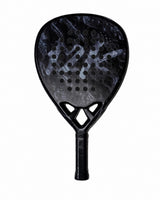
Padel Racket Sweet Spot Explained: Where It Is and Why It Matters
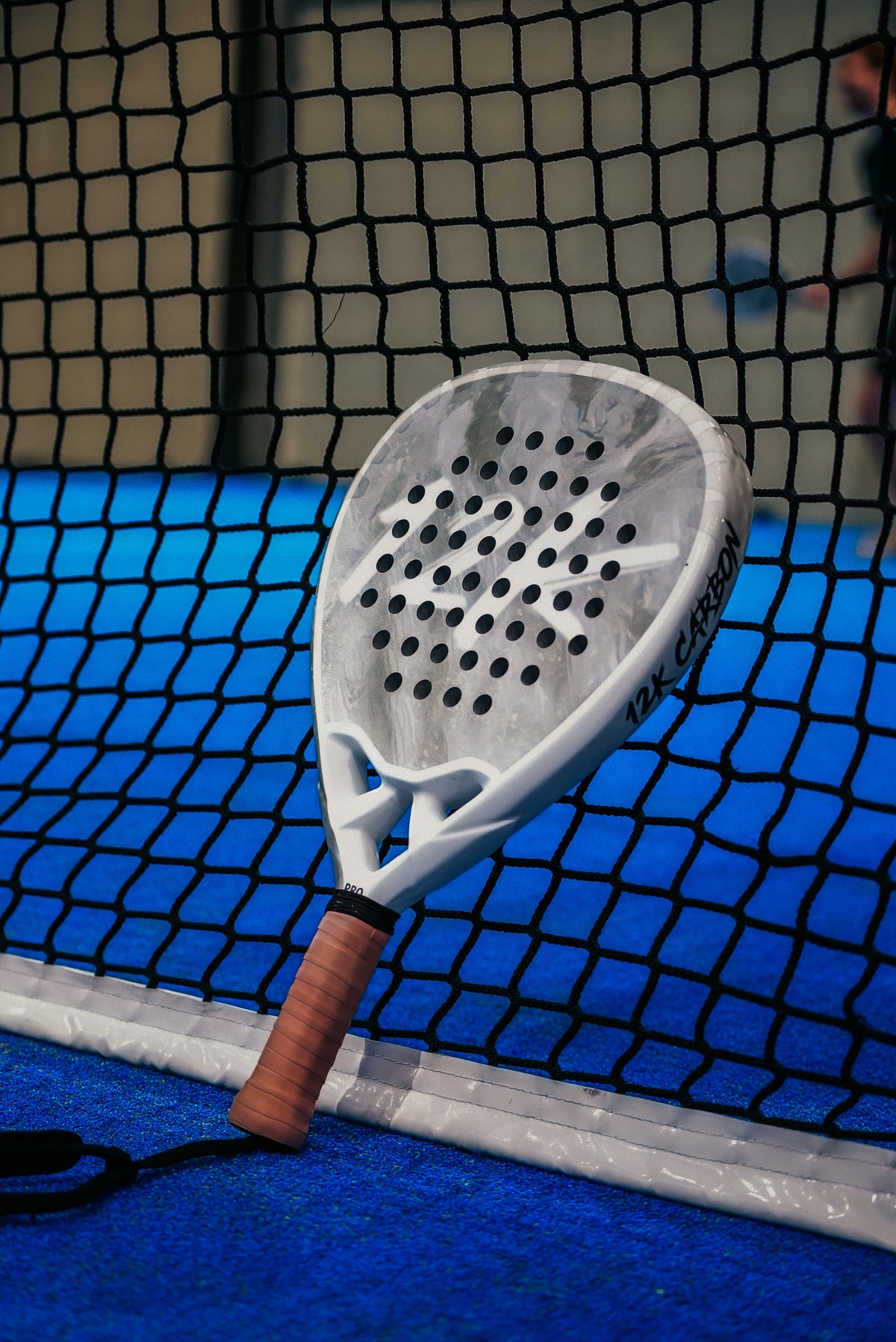
You catch one in the middle and the ball goes exactly where you were looking. Three centimetres off and it dribbles into the net while your forearm buzzes. Same swing, same racket.
That difference is the sweet spot. It tells you more about whether a racket suits you than the price or the carbon grade printed on the box.
What the Sweet Spot Actually Is
It is the part of the face where the racket puts the most energy into the ball and the least into your hand. Contact there and the head stays steady through the hit. Contact outside it and the frame twists a fraction, the ball loses pace, and the shock travels up your arm.
Every racket has one. What changes from frame to frame is how big it is and where on the face it sits.
Nothing on the racket marks it out. Two frames that look identical in a photo can feel completely different in the hand because their sweet spots are in different places.
Shape Decides Where It Sits
Round
On a round racket the sweet spot sits low and wide, close to the throat where the face is densest and the frame is most stable. It is the biggest of the three.
That is why round frames get recommended to beginners so often. You do not have to find a small target to get a decent ball back, and a scruffy contact still clears the net.
Teardrop
Teardrop puts it in the middle of the face. Smaller than a round racket, larger than a diamond, and roughly where most players instinctively aim anyway.
It asks the least compromise of the three shapes. You get some help on off-centre hits and still have weight sitting high enough to hurt someone with a smash.
Diamond
Diamond frames carry their mass in the head, so the sweet spot climbs towards the top of the face and shrinks. Small target, awkward place.
Find it and the ball leaves fast. Miss it and the racket twists in your hand and the shot goes nowhere. Diamonds punish poor timing harder than any other shape, which is why they belong with players whose contact is already consistent.
Balance Moves It Too
Shape and balance are related but not the same thing. Balance is where the weight sits along the length of the frame, measured in millimetres from the handle.
A high balance, around 275 millimetres and up, pulls the effective hitting zone upward and makes the head feel heavier through the swing. A low balance, nearer 255, keeps it low and makes the racket quicker to move.
Two teardrops with different balances will not feel the same. If you have ever picked up a friend's racket in the same shape as yours and found the contact point strange, that is usually balance rather than shape.
How to Find Yours
Look at the face after a hard session. The ball leaves faint marks, and the cluster tells you where you are actually making contact rather than where you think you are.
If the cluster sits well below the middle on a diamond frame, you are fighting the racket every time you swing. If it sits dead centre on a round one, you are getting everything the frame has to give.
The other test is your arm. Vibration through the elbow after an hour usually means repeated contact outside the zone, not a fault in your technique.
The Knock-Up Check
Before a match, hit ten volleys and pay attention to sound rather than result. Middled balls make a solid, low thud. Off-centre ones give a higher, hollow click you can hear from the other end of the court.
Two minutes of that tells you where the frame wants the ball, and it works with a racket you have never held before.
What a Small Sweet Spot Costs
Power on your best shots is not the issue. Small sweet spots hit fine when you middle them.
The cost lands on everything else. Defensive balls off the back glass, stretched volleys, low digs near your feet, anything hit while moving. Those are the shots that decide long rallies, and they are the ones where a forgiving face keeps you in the point.
Then there is the elbow. Repeated off-centre contact sends vibration into the joint, and padel elbow builds up over months rather than arriving in one session. Plenty of players around 12k Padel end up in a rounder frame for that reason alone.
Choosing Around It
Be honest about your contact before you look at anything else. Players in their first two years mishit far more than they realise, and a large low sweet spot is worth more than the extra power a diamond promises.
If you are hitting cleanly most of the time and the smash is a real weapon, a higher sweet spot starts to pay. Until then it makes bad days worse.
Core matters as well. Soft EVA widens the zone slightly because the face flexes more on contact, while a harder core gives a smaller, more precise zone with more return when you find it.
Try Before You Commit
Numbers on a spec sheet will not tell you how a frame feels on a stretched backhand volley. Fifteen minutes on court will.
Borrow a partner's racket for a set, or use a club demo if there is one. The 12k Padel Shark Blue is a teardrop with a medium EVA core, a combination many improving players get on with. Hit with something before you buy it, and let your arm tell you whether the racket is helping.