Padel Racket Holes Explained: How They Affect Power and Control
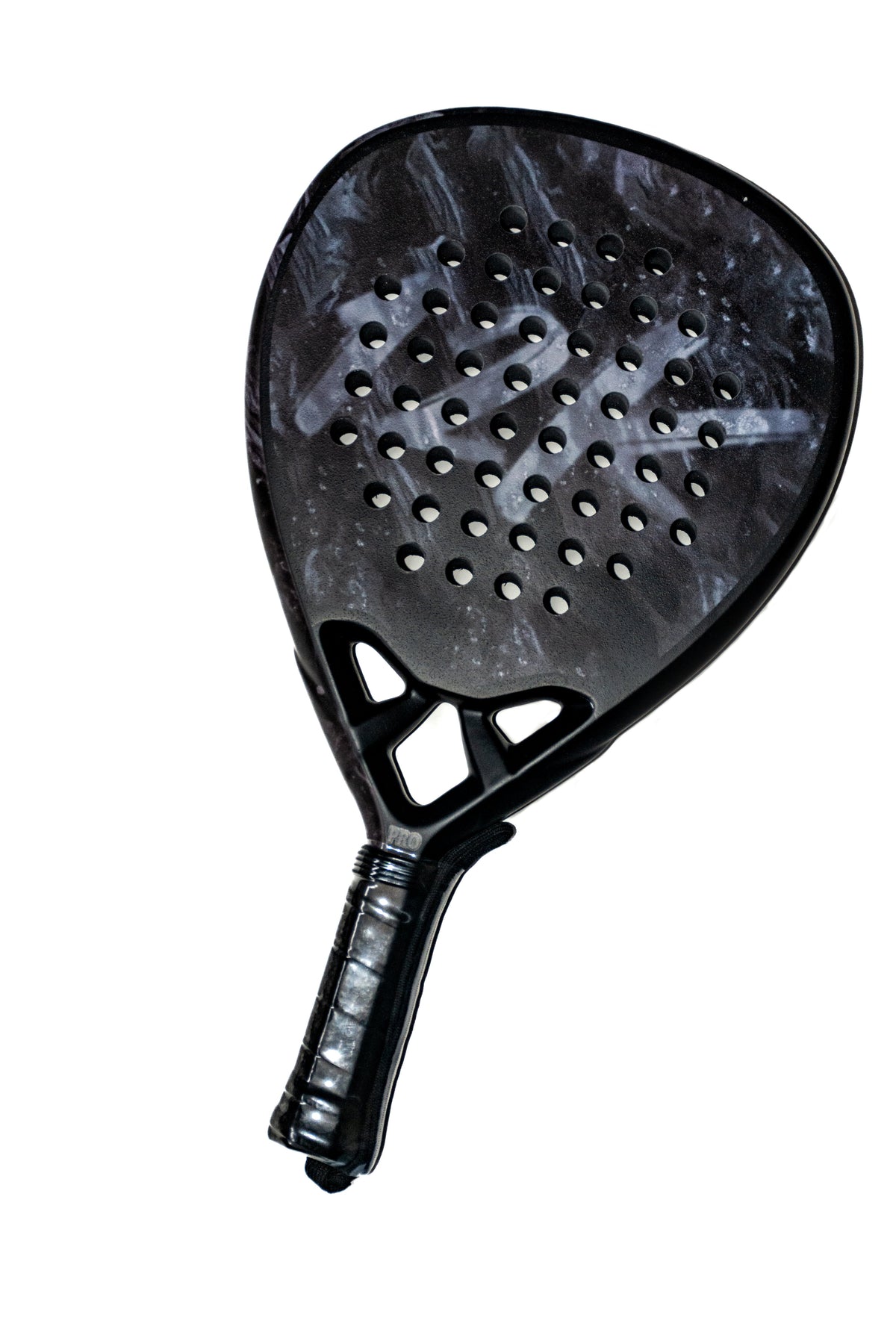
Look at any padel racket face and you'll count somewhere between fifty and eighty holes punched through it. Most players have never asked why. They just assume it's decoration, or something to do with weight, and move on.
It's not decoration. The holes are one of the most deliberate design choices on the whole racket, and the pattern you're holding changes how the ball leaves the face, since padel rackets don't have strings at all.
Why rackets have holes in the first place
Start with weight. Drilling material out of a solid face makes the racket lighter without thinning the frame itself. A racket that weighed the same as a solid slab would feel like swinging a cricket bat by the fifth game.
Air resistance matters more than people expect. A solid face pushes against the air on every swing. Holes let air pass straight through, so the racket moves faster for the same amount of effort from your arm and shoulder.
Vibration is the third piece. Ball contact sends a shockwave through the face, and that shockwave is what you feel as sting in your elbow after a bad hit. Holes break up that shockwave before it reaches your hand.
The sweet spot connection
A racket's sweet spot is the zone where a hit feels effortless and the ball comes off clean. Holes near the edges of the face let that zone stretch wider, because the face flexes more evenly across a bigger area instead of concentrating all the give in the dead centre.
That's part of why two rackets with identical shape and weight can feel completely different in your hand. The hole pattern is doing work the spec sheet never mentions.
Power rackets vs control rackets
Bigger holes, spread toward the outer edge of the face, tend to show up on power oriented rackets. More open space means more flex, and more flex means the face springs back faster on contact, which is where extra pop on your smash comes from.
Smaller holes clustered near the centre do the opposite. Less flex, more rigidity, and a tighter, more predictable response when you're trying to place a shot rather than blast it. Control rackets lean on this pattern for a reason.
Neither approach is better. A player who relies on timing and placement gets punished by a face that's too springy. A player who needs pace to hurt their opponents gets frustrated by a face that absorbs all their effort and gives little back.
What the pattern shape tells you
Circular arrangements concentrate the response toward the middle of the face, which suits players who strike the ball cleanly and consistently in the same spot. Linear or staggered patterns spread that response out, forgiving the shots that land slightly off centre.
None of this is printed on the box in plain language. Most brands mention hole count somewhere in the spec but rarely explain what the arrangement actually does once the racket is in your hand.
Does hole size actually change ball speed
Yes, and it's measurable rather than marketing talk. Larger holes let the face flex more on impact, and that flex acts like a small spring, adding a touch of extra speed to the ball as it leaves the surface.
Smaller holes limit that flex. The tradeoff is durability. A face with bigger, more open holes takes more stress with every hit, which is part of why some power rackets have shorter useful lifespans than control focused ones built for touch over raw output.
At 12k Padel we get asked constantly whether a racket with more holes is simply better. It isn't. More holes without the right placement just means less structure holding the face together, and a racket that cracks sooner than it should.
How to actually use this when buying a racket
Forget counting holes on a spec sheet. Pick up the racket and press your thumb into the face near the edge. More give under light pressure usually signals a power leaning design. Less give signals control.
Think about your own game honestly. Players who already generate their own pace from technique tend to get more out of a control pattern, since they don't need the racket adding extra speed on top of what they're already producing.
Beginners often do better starting with something in between rather than chasing maximum power straight away. A face that's too lively punishes mishits harder, and mishits are exactly what beginners produce most.
If you're weighing up a second hand racket, check the edges of each hole for hairline cracks before anything else. Stress collects around those openings first, long before it shows up anywhere else on the face, and a racket that looks fine from a distance can already be failing there.
Where this leaves you
The holes in your racket aren't an afterthought bolted on for looks. They're doing four jobs at once, cutting weight, cutting air resistance, absorbing vibration, and shaping how big your sweet spot actually is. Ignore the pattern and you're choosing a racket half blind.
We built the Shark Blue with exactly this balance in mind, an open enough face to give you real pop on the smash without turning every mishit into a wasted point. If your current racket feels either dead in your hand or too unpredictable to trust, the Shark Blue from 12k Padel is worth picking up and testing for yourself.