How to Hit a Rulo in Padel: The Soft Smash That Wins Points
Most club players have two answers to a good lob. Smash it, or let it go and give up the net. The rulo is the third answer, and almost nobody at amateur level uses it.
It is a soft overhead played with heavy brush across the ball, aimed at the side fence or side glass on the opponents' half. Done right, the ball kicks off the fence at an angle nobody can read, dies before the back glass, and you are still standing at the net.
What the rulo actually is
Forget the word smash. You are not hitting through the ball at all. You are brushing up and across it, sending it slowly over the net with enough topspin and sidespin that the bounce off the side wall goes sideways instead of back into play.
The shot is a cousin of the kick smash, but with the power taken out. Same brushing action, same body turn, a fraction of the force. That is why it is easier to learn than most overheads. You are not fighting for pace, you are steering.
Franco Stupaczuk is the player most people study for this. Watch him take a deep lob that looks like a lost point and turn it into a fence-dying winner. He barely swings.
Why it is worth learning
The obvious reason is the bounce. A ball with side spin comes off the fence at a strange angle and often stays low. Your opponents cannot set their feet for it. Even when they get a racket on it, the reply is usually weak.
The less obvious reason is that it saves you from a decision you normally lose. When a lob lands deep towards your inside, near your own side wall, a flat smash is high risk from that position. Letting it bounce means retreating and handing over the net. The rulo lets you stay.
It also punishes the players who lob and immediately sprint forward. If they are already moving to the net when the ball rolls off the fence behind them, the point is over.
Setting up the shot
Turn your shoulders first
This is the part people skip. Your shoulders need to point at the fence you are aiming for. Not your feet alone, your whole upper body. If your chest is still facing the net, the angle is not there and the ball goes long.
Turn early, as soon as you read the lob. Everything after that is easier.
Get behind and under the ball
Move back further than feels necessary. You want the contact point above and slightly in front of your hitting shoulder, not behind your head. If you are reaching backwards you have already lost the brush.
Use small adjusting steps at the end. Big lunges leave you off balance.
Point with your free hand
Non-dominant hand up, tracking the ball. It keeps your chest open, holds the shoulder turn, and gives you a reference for where the ball is. Drop that hand early and your body opens up too soon.
Drop the elbow
Racket behind you, elbow low, the same loaded position you would use for a kick smash. From there the racket travels up and across rather than down and through.
Hitting it
Soft. That word matters more than any other instruction here. It should feel like you are pushing the ball sideways rather than striking it.
A right-handed player on the left side of the court brushes towards the right side fence. A left-handed player on the right side brushes towards the left. The wrist stays loose. A tight arm kills the brush and turns the shot into a weak flat smash that sits up for the opponent.
Aim for the fence roughly level with the service line, low rather than high. High contact with the fence means the ball has too much life and bounces back into court.
When not to play it
Right-handed on the right side, or left-handed on the left side, the angle is too narrow. You are trying to thread the ball across the whole court and it will not work often enough to be worth it. Take a different shot.
Skip it when the lob lands in the middle of the court. Middle means no angle, and no angle means you are gambling.
Skip it when you are late. If you cannot get your shoulders round and your feet set, let the ball bounce off the back glass and rebuild the point. A rushed rulo goes long or floats up as a free smash for the other team.
How to practise it
Start with a partner feeding easy lobs to your inside corner. No targets, no pressure, just the feel of brushing the ball instead of hitting it. Twenty balls before you worry about where any of them land.
Then add a target. Put a cone or a bag against the side fence around the service line and try to land the first bounce near it. Accuracy before pace, always.
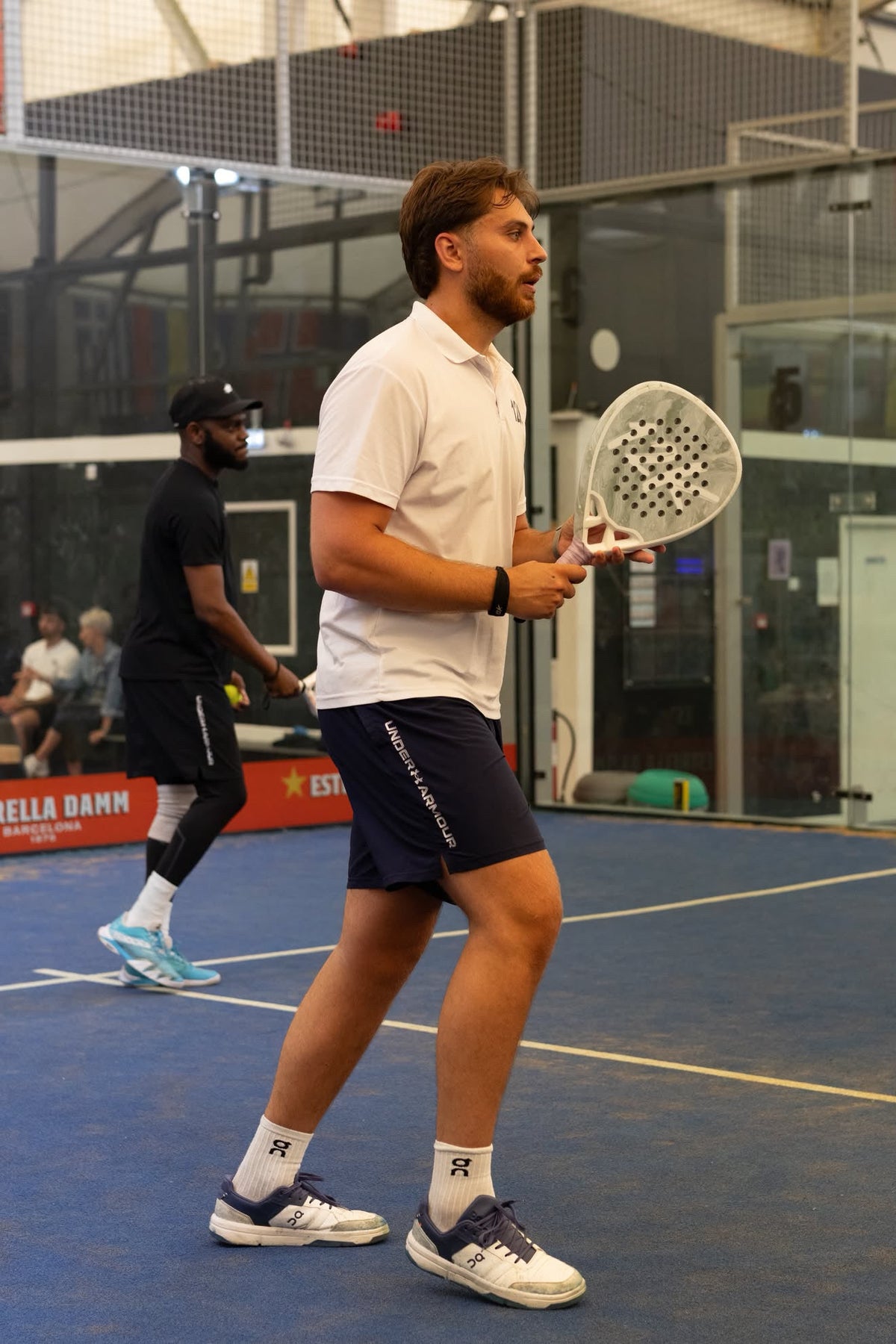
Once it lands consistently, take it into games but only from the correct side and only on lobs you have time for. Plenty of players at 12k Padel picked it up in a few sessions once they stopped trying to hit it hard.
The mistake almost everyone makes
They swing too fast. The rulo looks flashy on video, so people assume it needs speed. It needs the opposite. Slow the arm down, keep the wrist relaxed, and let the brush do the work.
The second mistake is watching the shot instead of moving after it. Hit it, then close to the net. The whole point is that you kept your position.
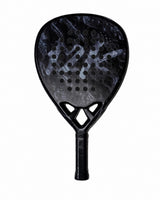
A racket with a decent sweet spot and a control-leaning shape helps here, because the rulo is all about touch rather than raw power. The Ice White from 12k Padel is a sensible option if you are building a game around placement and want something forgiving on off-centre contact. Whatever you play with, spend a session on this shot. It is the cheapest upgrade in your game.