How to Hit a Gancho in Padel: The Overhead That Saves Your Net

There is a moment every club player knows. A lob floats up over your left shoulder, deep, and you have about half a second to decide. Back off and let it bounce, or try to do something with it. Most people back off.
The gancho is the third option, and it is one of the least used shots in amateur padel.
What a gancho actually is
Gancho means hook in Spanish. That is roughly what your arm does. You reach up over your non-dominant shoulder, hook across the back of the ball, and send it away without ever turning your back on the net.
For a right-handed player it usually happens on the right side of the court, when a lob drifts over the left shoulder and a normal bandeja is no longer available. Left-handers get the mirror image on the left side.
Do not confuse it with a smash. The intent is much closer to a bandeja. You are buying time, holding your position, and handing your opponents something awkward to deal with. Speed is not the point.
When to reach for it
The ball is over the wrong shoulder
This is the main trigger. A lob that lands over your hitting shoulder is a bandeja or a vibora. One that drifts across to the other side gives you almost no room to turn and load. The gancho works in that gap.
You do not have time to set up properly
A well-disguised lob leaves you late. If you are still shuffling backwards when the ball is dropping, trying to build a proper overhead is a good way to shank it. Reaching up and hooking is faster.
Your opponents are creeping forward
Some pairs lob and immediately move in, assuming you will retreat. A gancho aimed at the side glass punishes that habit. They are moving one way while the ball dies behind them.
How to hit it
Turn early and reach high
Get your shoulders round as soon as you read the lob. You want to strike the ball at the top of its arc, roughly above and slightly behind your head on the non-dominant side. Waiting for it to drop is what turns this shot into a mess.
The higher the contact, the more angle you have and the less you need to force it.
Use your free hand
Point at the ball with your non-hitting hand. It sounds like a small detail. It is not. Tracking the ball with that hand keeps your chest open, stops you rotating too early, and tells your arm where to go.
Hook across, do not punch through
The racket travels over the top and across the ball rather than straight through it. Loose wrist, relaxed forearm. That brushing action is what puts sidespin on the ball and makes the bounce off the glass unpredictable.
A rigid arm turns the gancho into a flat, floaty overhead that sits up perfectly for the other team.
Aim for the glass, not the floor
Target the side glass or fence on your opponents' half, low rather than high, somewhere around the service line. A ball that catches the glass low stays low and skids. A ball that hits it high has too much life and rebounds back into play.
Pace is your enemy here. Play it at maybe sixty percent and put the effort into placement instead.
When to leave it alone
Skip it when the lob is genuinely deep and you are out of position. Some balls are just good lobs. Let them bounce off the back glass, reset, and rebuild the point rather than throwing away a free smash.
Skip it from the middle of the court. Without an angle to the side glass there is not much to gain, and a straight gancho down the middle is a gift.
Skip it when you can play a proper bandeja instead. The gancho is a solution to a specific problem. If you have time and the ball is on your hitting side, take the shot you know better.
Practising it
Start static. Have someone throw balls up over your non-dominant shoulder while you stand near the service line. No court, no targets, just the feel of reaching up and hooking across. Get the contact point right before you add anything else.
Then add movement. Two or three small steps back, strike, and immediately step forward again. Recovering to the net is half of the shot. Players who hit a decent gancho and then stand admiring it have wasted the effort.
Finally, add a target. A bag or a cone against the side glass around the service line works fine. Landing near it consistently matters more than how hard you can hit.
Twenty balls a session for a couple of weeks is usually enough to make it available in a match. Several players around 12k Padel picked it up faster than that, mostly because they stopped trying to make it a winner.
The mistakes that show up most
Hitting too late is the big one. Let the ball drop below your reach and there is no angle left, so the shot either goes long or drops short.
The second is going for too much. The gancho is a percentage shot. Its job is to keep you at the net and make the next ball harder for them. Treat it like a smash and you will find the fence more often than the court.
The third is forgetting your feet. Every overhead in padel gets easier with small adjusting steps. Big lunges leave you off balance and unable to recover.
A note on your racket
Overheads like this reward control and a forgiving face. You are making contact above your head, often slightly off centre, and a racket that punishes that will make the shot feel harder than it is.
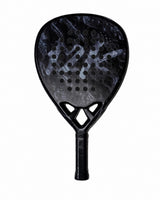
If you are rebuilding your overhead game and want something that stays predictable on those reaching contacts, the Midnight Black from 12k Padel is worth a look. Either way, spend a session on the gancho. It is one of the quickest ways to stop giving up the net for free.