How to Hit a Contrapared in Padel: Defence Off Your Own Wall
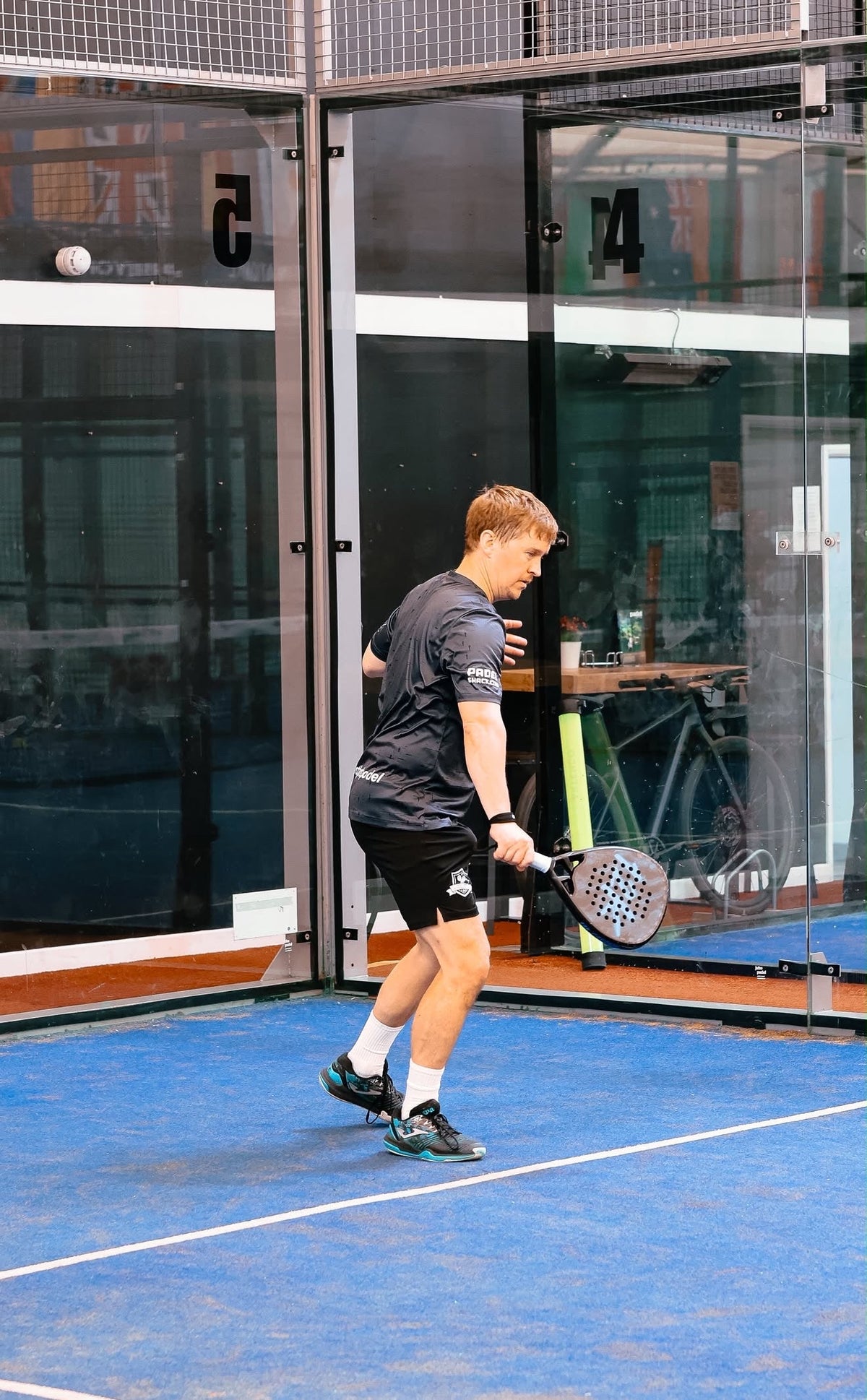
You get pushed deep. The ball comes off the back glass and you are squeezed against it with nowhere to swing. Most players scrape something out at knee height and watch it float back for a free smash.
There is another option, and almost nobody at club level uses it. Hit the ball into your own glass and let the wall do the work.
What a contrapared is
Contrapared means against the wall. You strike the ball backwards into your own back glass, it rebounds off, travels forward over the net and lands in the opponents' court. The ball goes the wrong way first and then comes good.
It looks like a trick shot the first time you see it. It is not. Professionals use it regularly, and it exists for one reason: sometimes the ball is so close to the glass that there is no room for a normal stroke, and hitting backwards is easier than hitting forwards.
Think of it as a rescue shot with a real chance of resetting the point in your favour.
When it is the right choice
The ball has died on you
A deep lob comes off the glass low and slow, and by the time you have adjusted you are almost standing on the back wall. Any forward swing means hacking the ball up with no control. Turning and pushing into the glass gives you a clean contact instead of a desperate one.
You are jammed into the corner
Corners are where points go wrong. The ball comes off two surfaces, the angle is awkward and your body is in the way of your own racket. A contrapared out of the corner buys you the half second you need to get back towards the middle.
You need time more than you need pace
The ball travelling into the wall and back takes longer than the same ball hit directly. That extra time is the whole point. While it is in the air you get your feet reorganised and your partner gets back on line with you.
How to hit it
Read the bounce early
Everything depends on knowing where the ball will be after it comes off the glass, not where it is now. Turn your shoulders as the ball passes you and track it with your eyes all the way into the wall and back out.
Players who get caught out by the contrapared are usually not watching the rebound. They are watching the opponents.
Get close, but not too close
You want roughly an arm's length between you and the glass. Any closer and your racket has nowhere to go. Any further and you will reach for the ball and lose control of the face.
Small steps. This shot punishes big lunges more than almost anything else in padel.
Open the face and lift
The face wants to be open, pointing slightly upwards, and the swing is a controlled lift rather than a hit. You are not trying to generate speed. You are trying to send the ball into the glass high enough that it comes back out with enough height to clear the net.
Contact somewhere around waist height is comfortable. Lower than that and you need more lift, which means more risk.
Aim high on the glass
This is where most attempts fail. Hit the wall too low and the ball rebounds along the floor and dies on your own side. Aim around head height or above and the rebound has the arc it needs to travel forward and over.
The glass absorbs energy, so the ball always comes back slower than it went in. Allow for that. Play it firmer than feels natural.
Recover immediately
The ball is out of play for longer than usual, so use it. Move back towards the centre of your half as soon as you have hit. Standing still to watch your own shot is the fastest way to waste the time you just bought.
The mistakes that show up most
Hitting flat into the glass at a right angle is the first one. A ball struck square into the wall comes straight back at you rather than travelling forward. You need a slight angle so the rebound carries towards the net.
The second is treating it as a first option. The contrapared is what you reach for when a normal shot is unavailable. If you have room to play a proper lob, play the lob. It is a better ball almost every time.
The third is trying to win the point with it. Almost nobody hits a contrapared winner. Getting the ball over the net and staying in the rally is a good outcome.
How to practise it
Start without an opponent. Stand near the back glass, drop the ball for yourself, and push it into the wall. Nothing else. Learn where you need to hit for the rebound to come back at a useful height.
Then have someone feed you deep lobs so the ball comes off the glass properly. Play twenty in a row and count how many clear the net. Six out of twenty on the first session is normal. It climbs quickly.
Add the recovery step last. Hit, then move forward two steps. That habit is what turns the shot from a novelty into something useful in a match. Plenty of people at 12k Padel found it clicked in about three sessions once they stopped trying to hit it hard.
A word on equipment
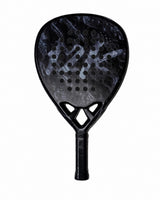
Defensive shots off the glass ask a lot of a racket. Contact is often low, off centre and rushed, and a stiff head-heavy frame will punish all three. Control and a forgiving face matter far more here than raw power.
If your defensive game keeps letting you down and you suspect the racket is part of it, the Shark Blue from 12k Padel is built around exactly that balance of control and forgiveness. Whatever you play with, give the contrapared a session. Being able to answer from the back wall changes how comfortable you feel when the point turns against you.