Padel Footwork: A Beginner's Guide to Moving Better on Court
Spend an hour watching beginners play padel and one thing stands out. The players hitting the ball cleanly are not always the ones with the best technique. They are the ones who arrive at the ball early, balanced, and with their feet in the right place. Footwork is the quiet skill that makes everything else look easier.
This guide breaks down padel footwork for players who are still finding their feet on the court. You will learn the ready position, the split step, how to recover after a shot, and how to drill all of it without needing a coach.
The Ready Position: Where Every Padel Point Starts
Before any padel point begins, your body should already be doing some of the work. The ready position is the platform every shot builds on, and most beginners skip it.
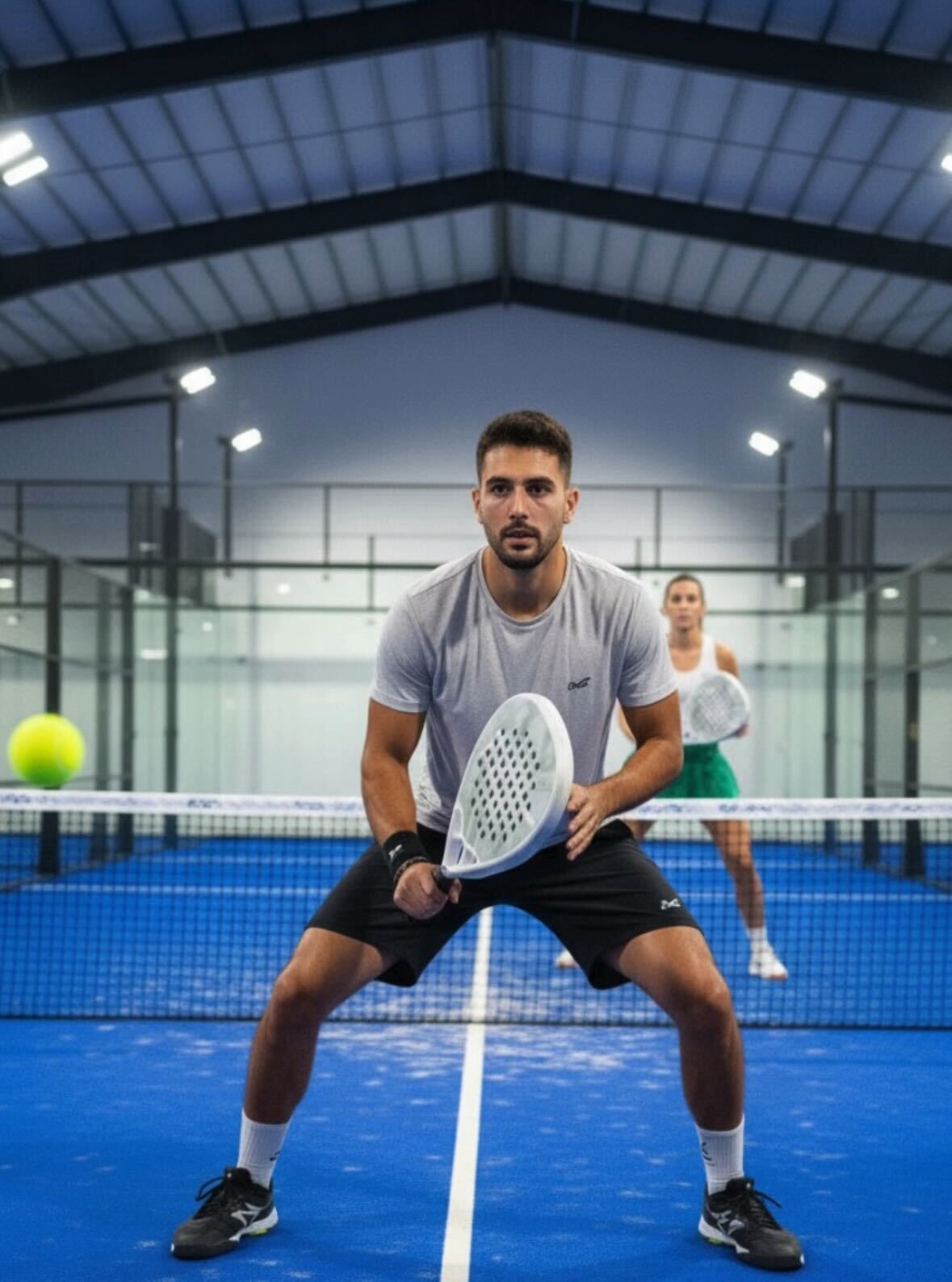
Stand with your feet just wider than your shoulders. Bend your knees softly. Keep your weight on the balls of your feet, never on your heels. Your racket sits in front of you at chest height, head up, ready to react in any direction.
If you stand still on flat feet waiting for the ball, you have already lost half a second by the time you decide to move. That half second is the difference between hitting a clean volley and snatching at a ball that has already passed you.
Hands and Eyes Matter Too
A common beginner habit is letting the racket drift towards the floor between shots. Keep both hands on the racket where you can. Your other hand helps balance and lets you change grip without thinking.
Your eyes should track the ball off your opponent's strings, not their body. Watching the ball earlier gives your feet more time to do their job.
The Split Step: The Most Important Move in Padel Footwork
If you only learn one thing about padel court movement, learn the split step. Top players do it on every single shot. Beginners almost never do it at all.
Just before your opponent makes contact with the ball, hop very slightly so both feet leave the ground for a fraction of a second. As they land, you push off in the direction of the incoming ball. That tiny hop loads your legs and means you explode out of stillness instead of starting from a standing position.
It feels strange at first. Try it during practice rallies. Once it clicks, you will wonder how you ever played without it.
When to Split Step
Split step every time the ball is about to be struck. Your opponent's serve, return, volley, smash, lob, all of it. The hop should be small and quick. If you can hear yourself land hard, you are jumping too high.
Moving Sideways Without Crossing Your Feet
Padel is a small court. The biggest movements are usually sideways, not forward and back. Sliding rather than stepping keeps your hips square to the net and makes you faster to recover.
Use a side shuffle for short distances. Push off the foot furthest from the ball, bring the other foot underneath you, and stay low. For longer distances, a crossover step is fine, but try to finish with your hips facing the net again before you hit.
Crossing your feet too early leaves you tangled and slow to change direction. The walls in padel mean the ball can come back from anywhere, so staying open to the court is a quiet superpower.
Recovering After Every Shot
Hitting the ball is only half a point. What you do in the next two seconds usually matters more.
After you hit, return to the centre of your half of the court. Not the absolute middle, but slightly closer to the side the ball is heading. This is your recovery position. From here you can cover any reply your opponent might send back.
Beginners often watch their own shot to admire it. Pros are already moving back into position before the ball has crossed the net. Train yourself to break that habit and you will win points purely on positioning.
Pair Recovery With Your Partner
In padel doubles, you and your partner move as a unit. If you drift forward, your partner should too. If you get pushed back to defend a lob, your partner needs to drop back with you. Think of an invisible rope between you. If one of you stretches it, the other should follow.
Three Footwork Drills You Can Do This Week
You do not need a coach to drill footwork. You need a court, a partner, and ten minutes.
The shadow drill. No ball needed. Stand in the ready position and have your partner point left, right, forwards, or back. Move two steps in that direction, recover to the middle, and reset. Two minutes is enough to feel the burn.
The cone drill. Place four cones or water bottles around your half of the court. Sprint to each one in turn, touch it, and return to the middle. Repeat for one minute, rest for thirty seconds, and go again.
The split step rally. Play a slow rally with your partner where the only rule is that both of you have to split step before every shot. Speed does not matter. Habit does.
How Your Racket Affects Your Footwork
A heavier racket pulls your arm down and slows your reactions, which then slows your feet. This is why beginners are often told to look at racket weight before anything else.
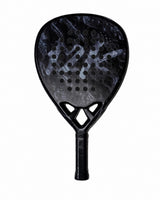
12k Padel rackets weigh 365 g with a medium to high balance, a middle-of-the-range setup. If your current racket feels like a brick by the second set, your footwork is doing extra work it should not have to do. Have a look at the 12k Padel range to see what fits your style.
Making Footwork a Habit, Not a Thought
The best padel footwork is the kind you stop thinking about. The split step happens because your body knows the rhythm. The ready position resets itself. Recovery becomes automatic.
Get there by drilling for short bursts often. Five minutes of focused footwork before each game does more than a single long session every few weeks.
The 12k Padel team plays every week and the players who improved fastest this year all have one thing in common. They started moving better before they started hitting better. Try it for a month and see what changes.