How to Add Spin in Padel: Slice, Topspin and Sidespin
Most people hit the ball flat for their first year of padel and never think about it. That is fine. Flat works.
Then you play someone who slices everything low over the net and watches it die at the bottom of the glass, and you spend an hour hitting upwards. That is usually when spin starts to matter.
What Spin Does on a Padel Court
Spin behaves differently here than it does in tennis, and the walls are the reason. In tennis the ball bounces once and the point moves on. On a padel court it bounces, hits glass, and comes back out carrying whatever rotation is left on it.
That second interaction decides more points than the first one. A sliced ball skids low off the floor and tends to sit near the base of the glass without coming out. A ball with heavy topspin kicks up off the floor and springs off the wall like it has been fired at you.
So the question is never which spin is better. It is what you want the ball to do after it has passed through two surfaces and reached your opponent.
Slice Is the One You Need First
Slice is backspin. The racket travels slightly downward and under the ball at contact, the face sits a little open, and the ball floats through the air rather than dipping.
The payoff arrives on the bounce. Backspin kills forward momentum, so the ball stays low and skids instead of jumping. Against a pair camped at the net that is exactly what you want, because it forces them to hit up and gives you time.
Off the back glass it is better still. A sliced ball comes out slow and short, which is awkward to attack. Your opponent has to walk in, get low, and create all the pace themselves.
How to Hit It
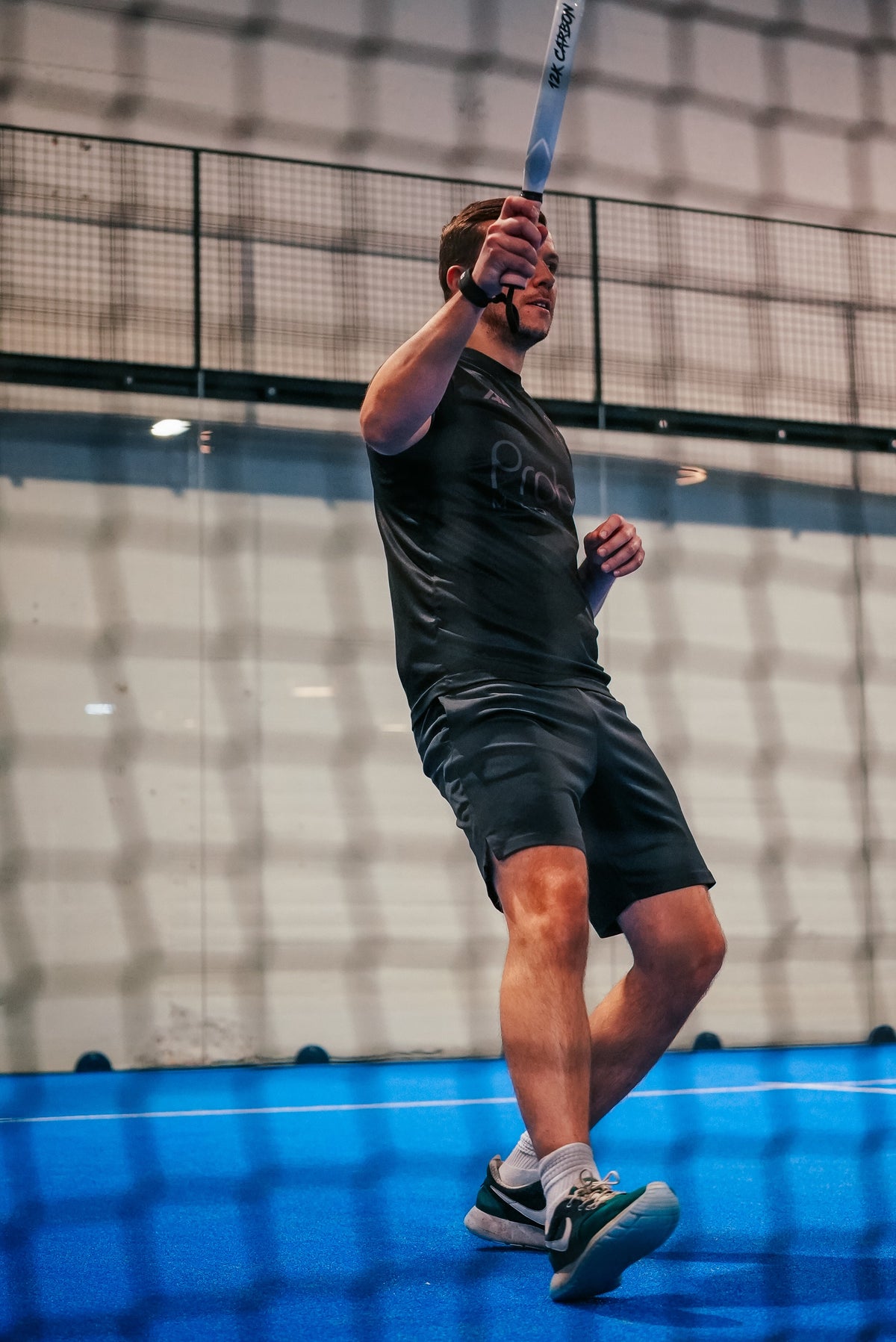
Continental grip, the same one you use for volleys and the bandeja. Start with the racket above the height of the ball, open the face slightly, and swing high to low so the strings brush under the back of the ball.
Keep the swing short. Slice is not about pace, and a long swing only adds error. Firm wrist, contact out in front, controlled finish.
If you already hit a bandeja you have the feeling for it. A slice is the same brushing action applied lower and flatter. The vibora is the next step up, where you add sidespin to that same high-to-low swing.
Topspin: Use It Sparingly
Topspin is forward rotation. The racket brushes up the back of the ball with a slightly closed face, and the ball dips into court faster than a flat shot would.
That dip is the whole point. It lets you swing harder without sending the ball long, which counts for something on a court where the back wall is ten metres away.
The trouble is the rebound. A topspin drive that lands deep kicks off the floor and comes off the glass high and fast, handing your opponent a comfortable ball at chest height. Plenty of players who arrive at 12k Padel from tennis lose points that way for months before working out what is going wrong.
Where It Belongs
Lobs, mostly. A topspin lob drops sharply behind the net player and pulls the rebound tight into the corner instead of pushing it out into the middle. That is the most valuable use of topspin in the whole game.
Then there is the kick smash, which is topspin first and power second. The rotation is what makes the ball rear up off the back glass and leave the court. Most coaches call it the hardest shot in padel. Learn the topspin lob first.
Avoid topspin on deep drives from the back of the court. All you are doing is setting up their next volley.
Sidespin and the Walls
Sidespin comes from brushing across the ball, left to right or right to left, with the face roughly vertical.
On a padel court it changes the angle the ball leaves the glass, which is a far more useful thing. A ball with sidespin can hit the side wall and jump forward instead of kicking away, or squeeze into a corner and refuse to come out.
Most players meet it on the serve before anywhere else. Cut across the outside of the ball and it skids wide off the side glass, dragging the returner off court before they have hit a shot.
Start With the Serve
You have to serve underarm and below the waist, so pace is capped and spin is the only real weapon available. Professional players hit roughly seven out of ten serves with slice, usually at the backhand side or the glass. Ten minutes of serving at the start of a session is enough to build a serve that is genuinely hard to attack.
Aim at the join between the side glass and the floor. If the ball reaches that corner with sidespin on it, the return comes back slow and short more often than not. If your basic serve is not consistent yet, fix that first with our beginner's guide to the padel serve and add the spin once the toss and contact are automatic.
Brushing the ball asks for a relaxed hand, and a shiny, worn grip makes you squeeze. Swap in a fresh 12k Padel overgrip before you spend a session on spin serves. A tacky handle lets the wrist do its job.
Does Your Racket Matter for Spin?
Less than the marketing suggests. A rough or textured face grips the ball for a fraction longer at contact and adds a small amount of rotation, roughly five to ten percent with the same swing. Past a certain contact angle every racket produces about the same spin whatever the surface.
Technique does the heavy lifting. Racket path, face angle and where you meet the ball decide most of the result. A textured face helps you feel the brush while you learn, but it will not rescue a flat swing. We cover the trade-offs in our guide to rough vs smooth padel racket faces.
Ball condition matters more than people expect. A fresh ball takes topspin well and kicks off the glass. A ball that has been open for three weeks is heavier, and slice bites into it far more.
Reading Spin Coming the Other Way
Watch the racket face at contact rather than the ball. High to low means the ball will stay low. Low to high means it will kick.
Against slice, get your knees bent early and accept that you are lifting the ball. Against topspin off the glass, take a step back and let it drop rather than fighting it at shoulder height.
This is the part nobody practises and it costs more points than technique does. Half a second of early reading changes where your feet end up, and where your feet end up decides the shot.
Questions Players Ask About Spin
Is topspin or slice better in padel?
Slice, for most club players, most of the time. It keeps the ball low, slows the rally down and makes the glass work against your opponent. Topspin is the attacking option for lobs, the odd passing shot and the kick smash. Being able to hit both is what makes you hard to read.
Why do padel players slice so much?
Because the walls punish anything that bounces high. A flat or topspin ball that lands deep comes off the back glass at a comfortable height and gets volleyed away. Slice dies at the base of the glass, and a ball that dies there is the hardest ball in padel to attack.
Can you use topspin in padel?
Yes, and tennis players usually can already. The problem is the habit of using it on every ball. Keep topspin for lobs and overheads, hit flat or sliced from the back, and the rebound stops handing over free points.
How to Practise It
Take one spin per session rather than all three. Fifty sliced backhands with a partner feeding is worth more than an hour of mixing everything together.
Use the glass as your feedback. Hit a slice, watch how far it comes out of the corner, then hit a flat one and compare. You will see the difference immediately, which is faster than being told about it.
Then put it into a game with a rule. Every ball from the back must be sliced, for one set. That builds the habit quicker than free play.
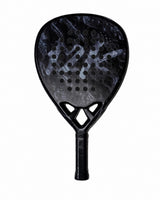
One last thing on kit. Spin depends on brushing the ball rather than hitting through it, and that needs a frame you can feel the contact on. The 12k Padel Midnight Black is a 12K carbon teardrop at 365 grams, built for exactly that kind of control. Pick one spin, spend a month on it, and let the walls do the rest.