How to Attack in Padel: Tactics to Win More Points

Most beginner padel players spend a lot of time at the back of the court. Defending, surviving rallies, and waiting for the other team to make a mistake. It is a reasonable way to start. But at some point, that approach stops working and you need to learn how to take points rather than just wait for them.
Attacking in padel is not about smashing everything as hard as you can. It is a deliberate process of building pressure, picking the right moment, and moving to the right place at the right time. Once you understand the basics, it changes the way you see every single point.
Why the Net Is Where Points Are Won
In padel, the team at the net almost always wins the point. The court geometry makes it extremely difficult to defend against a pair who are well positioned at the front. Volleys and overheads can be directed at sharp angles your opponents cannot reach from the baseline.
The whole logic of attacking is about getting both players to the net in a controlled way, at the right time. If you are stuck at the back, your job is to either survive until the situation changes, or use a lob to force the other team back and create your own window to advance.
When to Push Forward
Timing is everything when it comes to attacking in padel. Moving forward at the wrong moment just means you get a ball drilled at your feet in the middle of the court with nowhere to go.
The best moments to advance are after hitting a shot that puts real pressure on the other team. A fast drive deep to the back glass, a low ball at their feet, or a quality lob that sends them scrambling are all signals to move up. If your last shot was weak or landed in a comfortable position for the opposition, stay patient. The chance will come.
Watch your opponents as you move. If one of them is reaching awkwardly or running wide to retrieve, the next ball will likely be slow or imprecise. That is exactly the kind of ball you want to be at the net to deal with.
The Rule That Changes Everything: Move Together
In padel doubles, attacking is never a solo job. You and your partner must advance and retreat as a unit. If one of you charges the net while the other stays pinned at the baseline, you open a wide gap in the middle and hand the other team an easy winner.
Staying parallel is not just about court coverage. It is about communication and trust with your partner. A quick call of "yes" when you hit a good shot, or "up" to signal both of you should advance, keeps things aligned without overthinking it mid-point. Pairs who communicate well consistently attack with more confidence and control.
Using the Lob to Start an Attack
The lob is the most reliable way to launch an attack in padel. A well placed lob over your opponents' heads sends them running back towards the glass. While they scramble to retrieve it, you and your partner should already be moving forward.
The sequence goes like this: you hit a solid lob, the opponents retreat to deal with the back wall, both of you advance to the net, and you are ready to cut off their return with a volley. That is the fundamental attacking pattern in padel and you will see it repeated at every level of the game.
Not every lob needs to be perfect. Even a decent lob that lands somewhere deep forces the other team back, resets the positions, and gives you a window to move up. The key is to commit to advancing as soon as the lob looks like it will land safely.
Moving Through the Transition Zone
The area between the service line and the net is sometimes called the transition zone. A lot of players either rush through it recklessly or stall there and get caught in an awkward middle position.
Advance with your racket up and your weight slightly forward and ready to stop. Do not sprint without tracking the ball. Move with purpose, take a small split step just before your opponent strikes the ball, and stay balanced. That split step gives you a fraction more reaction time in either direction.
If a return comes quickly and catches you mid-court, play a controlled low volley back rather than forcing a big shot. Keep the pressure on, stay alive in the point, and wait for the next chance to properly close out.
What to Do Once You Reach the Net
Now you are where you want to be. The goal from here is not to win the point instantly but to keep applying pressure and force the other team into a short ball or an error.
Aim Low to Their Feet
Direct your volleys at the opponents' feet as much as possible. A ball landing at the feet is one of the hardest returns to deal with in padel. It forces an awkward lift, which usually gives you a short and attackable ball on the next shot.
Placement matters far more than raw power at the net. A firm, accurate volley into the corner wins more points than a wild smash that flies out. Keep the ball in play, keep it low, and let the geometry of the court work for you.
Discipline in Your Half
Stay disciplined about covering your side of the court. Poaching has its place but abandoning your half leaves an obvious gap your opponents will find quickly. Play your shots, trust your partner to cover theirs, and communicate clearly before crossing over. Net discipline makes your pair much harder to break down.
Building the Habit Through Practice
The fastest way to improve your attacking game is to make it a rule during practice matches. Every time your team hits a solid lob or a deep drive that pins the opponents back, both players commit to moving forward. You will lose points doing this at first. That is part of the process. Over a few weeks, the pattern becomes instinctive and the overall quality of your game goes up noticeably.
Even a short focused session on the lob, advance and volley sequence makes a real difference. Ask your hitting partner to feed balls that let you practise the full approach from the back of the court to closing at the net.
The Right Racket for Attacking Play
Fast exchanges at the net and overhead smashes put real demands on your equipment. A racket that is too heavy or too stiff at the top can make quick volleys feel sluggish and reduce your control when it matters most.
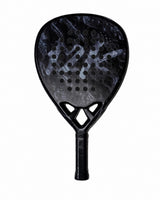
If you are looking to sharpen your attacking game, the 12k Padel Shark Blue is worth a look. It is built for players who want a clean, responsive feel with the control to place the ball precisely rather than just swinging hard and hoping.
Browse the full range at 12k Padel and find the racket and gear that suits the way you want to play.