What Is 12K Carbon in a Padel Racket? (And Why It Matters)
If you have been researching padel rackets, you have probably seen terms like carbon fibre, 3K, 12K or full carbon. Here is what 12K actually means, what it changes on court, how to spot the real thing, and what it does not do. We make 12K carbon rackets, so we have tried to be straight about the limits.
What does "12K carbon" mean?
The K number is how many thousand carbon filaments are grouped into each strand, or tow, of the weave.
- 3K carbon = 3,000 filaments per tow
- 12K carbon = 12,000 filaments per tow
- 18K carbon = 18,000 filaments per tow
A bigger tow gives a broader weave pattern. Hold a 3K and a 12K face side by side and you can see it: 3K has a tight checkerboard, 12K has wider, flatter bands. That visual difference is the most reliable thing the number tells you. It does not, by itself, make a racket stronger, stiffer or more powerful.
How a 12K carbon face is actually made
Every carbon padel face starts as sheets of woven fibre soaked in resin. The factory stacks a set number of those sheets over the foam core, often two to four layers per side, then presses the whole thing in a heated mould. The heat cures the resin and locks the layers together. Once it cools, the face is trimmed, drilled and painted.
Four things in that process decide how the racket feels, and only one of them is the K number:
- Number of layers. More layers means a stiffer, heavier face. Two layers of 12K can feel softer than four layers of 3K.
- Fibre angle. Layers are laid at 0, 45 or 90 degrees. Crossing the angles spreads impact across the face and is a big part of what makes a racket feel solid on off centre hits.
- Resin and cure. Too much resin and the face goes dead. Too little and it cracks. Getting this right is where cheap factories cut corners.
- The weave itself. This is the 3K or 12K part. It affects how the face looks and how the fibres share load, but it is the smallest of the four.
What 12K changes on court
In practice a 12K face on a medium core gives a firm, direct response. The ball leaves the face quickly and you get clear feedback about where you hit it. Players moving up from a fibreglass beginner racket usually notice three things in the first session:
- Volleys feel crisper and sit lower after the bounce.
- Smashes and viboras get more pace for the same swing.
- Mishits are more obvious. The face tells you when you have caught it in the frame.
That third point is why we do not push 12K at complete beginners. If you are still learning where the sweet spot is, a softer face hides your mistakes. Once you have a few months of play behind you, the feedback becomes useful rather than annoying.
Carbon vs fibreglass
The bigger difference is carbon versus fibreglass. Fibreglass faces are generally softer and more flexible, which many beginners find comfortable. Carbon faces are generally firmer and lighter for the same strength, which gives a more direct feel. Both have their place. Our carbon vs fibreglass guide goes through this decision in detail.
What actually decides how a racket plays
- Core foam: soft, medium or hard EVA has the biggest effect on comfort and power. Read EVA foam vs soft foam.
- Shape: round is most forgiving, diamond most powerful, teardrop in between. See racket shapes explained.
- Weight and balance: heavier and head heavy adds power and arm load. See racket weight and balance.
- Layers and surface: the number of carbon layers and any surface texture affect stiffness and spin. A rough 3K face will grip the ball better than a smooth 12K face every time.
How to tell real 12K from a sticker
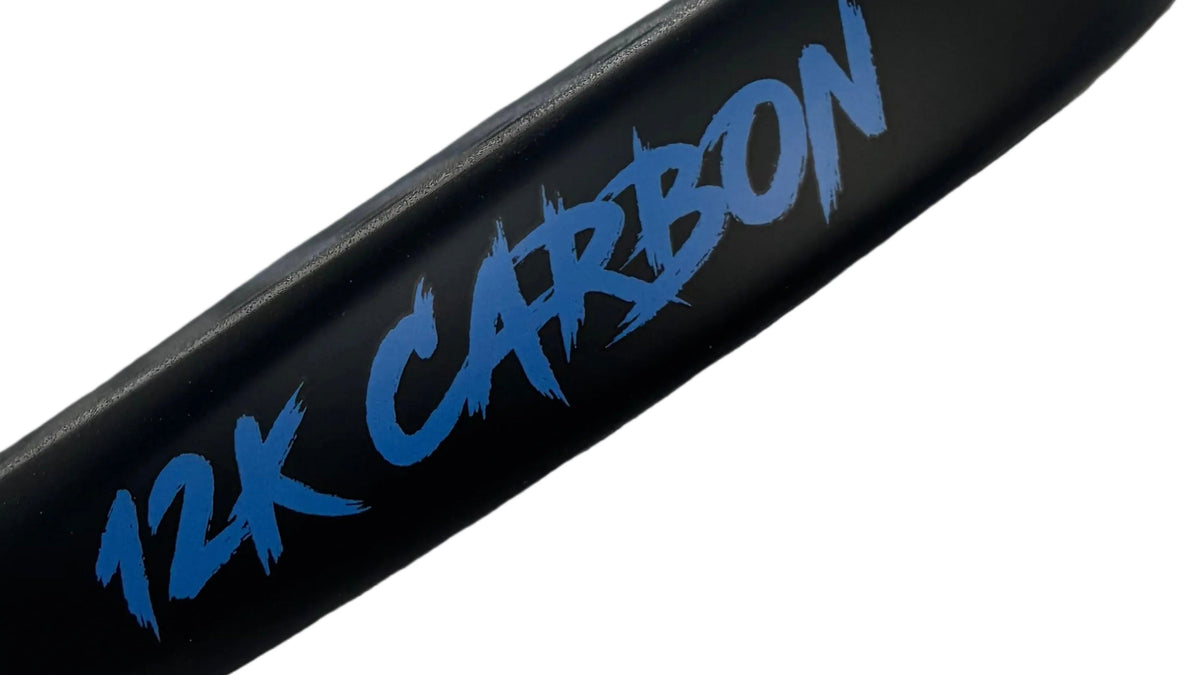
Some rackets print "12K CARBON" on the frame and use a fibreglass face with a carbon look wrap on top. A few ways to check before you buy:
- Look at the weave. Real 12K has a wide, slightly irregular band pattern. A printed wrap looks perfectly uniform and often continues under the paint edge.
- Press the face. Push your thumb into the centre. Carbon gives a small amount and springs straight back. Fibreglass flexes more and feels softer under the thumb.
- Check the weight. A full carbon face on a 365 g racket leaves more of the weight in the core. A heavy racket with a soft, flexy face is usually fibreglass.
- Ask what is under the face. If the brand cannot tell you how many layers, what core and whether the frame is carbon too, that is your answer.
12K vs 18K
18K is the next step up in tow size and you will see it on plenty of high end diamond rackets. The difference in feel between 12K and 18K on the same build is small. Where 18K rackets feel harder, it is almost always because they are paired with a firmer core and more layers for advanced players. If you are choosing between a 12K and an 18K racket, compare the core and the shape first. The weave is the last thing to worry about.
Is 12K carbon only for advanced players?
No. Plenty of improving club players use 12K carbon rackets with a medium core. Complete beginners, or anyone with a sore elbow, are usually better off prioritising a round shape and a soft core over the carbon grade. Our tennis elbow guide covers what specs actually help.
Looking after a carbon face
Carbon is strong in the direction the fibres run and brittle across it. Wall scrapes and floor knocks hit it the wrong way. Three cheap habits make a 12K face last years instead of months:
- Fit a head protector on day one. Most cracks start at an unprotected edge.
- Do not leave it in a cold car overnight. Cold resin cracks more easily on the first hard smash of the session.
- Change your overgrip before it goes slick. A slipping grip means more frame hits.
How 12k Padel uses 12K carbon
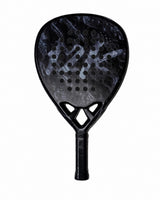
Our three rackets pair a 12K carbon fibre face with a medium EVA core, a teardrop shape, a 365 g weight and a medium to high balance. They are built for improving and intermediate players who want a firm, honest response without a £200 price tag. See them on the rackets page, or compare them with other carbon rackets in our under £100 comparison.
Frequently asked questions
Is 12K carbon better than 3K?
Not automatically. It is a different weave. The core and construction matter more to how the racket feels.
Does carbon make a racket harder to use?
A carbon face is firmer than fibreglass, so it gives less help on off centre hits. A well balanced carbon racket with a medium core is still manageable for improving beginners.
Does a 12K face crack more easily?
No more than any other carbon face. Cracks come from edge knocks and poor resin, not from tow size. A protector solves most of it.
How long does a 12K carbon racket last?
Two to three seasons of weekly play is typical before the core softens. See how long a padel racket lasts.
Why are some 12K rackets so cheap?
Large tow carbon costs less per kilo, so 12K turns up on budget rackets as well as premium ones. Price tells you about the brand's margins, distribution and sponsorship deals, not the fibre.
Is 12K carbon worth it?
If you play regularly and want a firm, direct feel, a 12K face on a sensible shape is a good choice. If comfort is your priority, choose the core first.
Related: 3K vs 12K explained · carbon grades 3K to 18K · why we build with 12K carbon