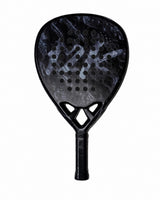
Carbon vs Fibreglass Padel Rackets: Which Should You Buy?
Walk into any UK club and you will see two kinds of racket in the rack. Cheap ones with a glossy fibreglass face, and pricier ones with a carbon weave you can see through the paint. The carbon vs fibreglass padel racket question comes up constantly, and the usual answer is that beginners want fibreglass and everyone else wants carbon. That is close, but it misses why, and it misses when a beginner is better off skipping fibreglass entirely.
This guide covers what each material actually does on court, how long each one lasts, what you should pay in the UK, and which one makes sense for the way you play.
What the face material actually does
A padel racket is a sandwich. There is a foam core in the middle, and a thin sheet of woven fibre bonded to each side of it. That sheet is the face, and it is what the ball hits.
The core does most of the work on feel and comfort. The face decides how stiff the racket is, how well it holds its shape, and how much of your swing turns into ball speed.
Fibreglass is the softer, more flexible material. Carbon fibre is stiffer and stronger for its weight. Everything else in the debate flows from that one difference.
Fibreglass: soft, cheap, forgiving
A fibreglass face flexes on impact. The ball sinks in a fraction more, the face springs back, and you get a little free power without swinging hard. It also dampens vibration, so it is kind on the arm and easy on the hands.
The price is the main attraction. Fibreglass is far cheaper to produce, which is why most rackets under fifty pounds use it. If you have played twice and are not sure you will play a third time, a fibreglass racket is a low-risk way to find out.
The drawback is that it wears out. Every flex costs the fibre a little of its spring, and after a season of regular play a fibreglass face starts to feel dead. It also marks and cracks more easily off the glass, so the racket you bought for forty pounds can be in the bin within a year.
Carbon fibre: stiff, precise, long lasting
A carbon face barely flexes. That sounds like a loss of power, and on a slow swing it is. But the stiffness means the racket returns exactly what you put into it, so when you hit the middle of the face with a proper swing the ball comes off fast and goes where you aimed. Volleys feel crisp and nothing gets lost in the frame.
Carbon also holds its shape. The face does not fatigue the way fibreglass does, and the surface resists scrapes and chips from wall contact far better. A carbon racket bought today should still play the same in two or three years, which changes the maths on price completely.
The trade-off is comfort. Carbon passes more vibration through to the hand, especially on off-centre hits. This is why the core underneath matters so much.
A carbon face over a hard core is a racket for advanced players with clean technique. A carbon face over a medium EVA core is a very different animal, and it is the combination that suits most UK club players.
Not all carbon is the same
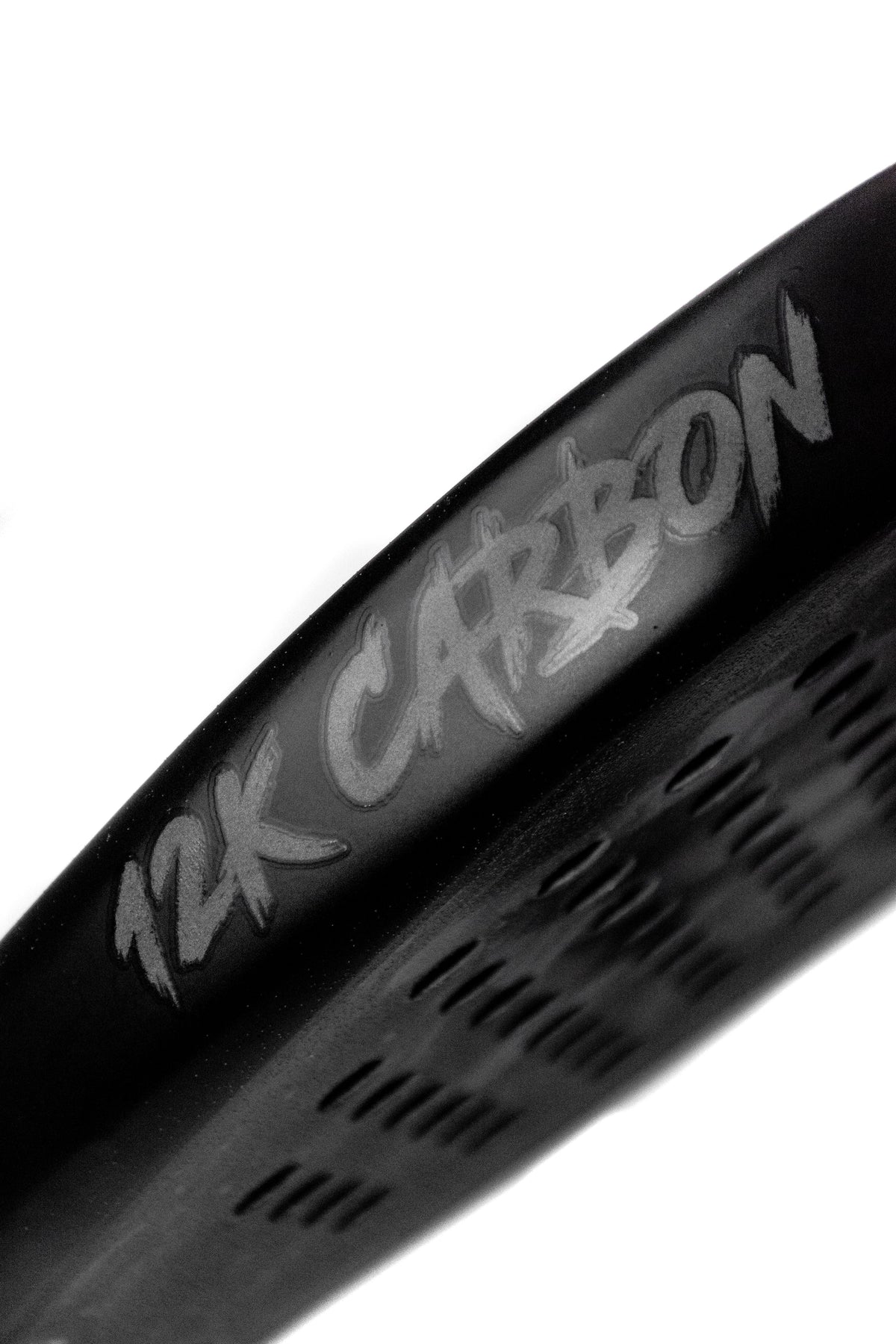
You will see 3K, 12K and 18K printed on carbon rackets. The number is how many thousand filaments are bundled into each strand of the weave. Lower numbers give a finer weave that is slightly softer. Higher numbers give a coarser weave that is stiffer and more direct.
12K carbon sits in the middle, which is why 12k Padel builds every racket around it. It gives you the durability and precision of carbon without the harshness that puts people off 18K frames. Our carbon grades guide goes through each grade in detail.
Head to head: the four things that matter
Power
Fibreglass gives easy power on slow swings. Carbon gives more power on fast swings. If you are still learning to swing through the ball, fibreglass flatters you. Once your technique settles, carbon rewards you.
Control
Carbon wins. A stiff face means less unpredictable flex, so the ball leaves the racket at a consistent angle and speed. Drop shots, lobs and blocks are all easier to place.
Comfort
Fibreglass wins on the face alone. But a carbon face paired with a medium EVA core closes most of that gap, because the core absorbs the shock the face passes on. Our padel racket core guide explains why that pairing works.
Durability
Carbon by a distance. Expect two to three seasons of regular play from a carbon face against one season from fibreglass.
What should you pay?
In the UK, fibreglass rackets sit between thirty and sixty pounds. Full carbon rackets from the big names run from a hundred and fifty pounds up to three hundred, and most of that gap is sponsorship and retail margin rather than materials.
The gap does not have to be that wide. A brand that sells direct can put a full 12K carbon face, a medium EVA core and a 365 gram teardrop frame in your hand for under eighty pounds. At that price carbon costs roughly twice what fibreglass does and lasts two to three times as long. The fibreglass racket is only the cheaper option if you stop playing.
Questions people ask before buying
Is a carbon padel racket good for beginners?
Yes, if you have played a few times and know you are going to keep going. The old advice to start on fibreglass assumes you will outgrow your first racket within months, and a cheap one softens the loss. Buy a carbon racket with a forgiving teardrop shape and a medium core and you skip the second purchase altogether.
How long does a fibreglass padel racket last?
Played once or twice a week, expect one season before the face goes flat and the frame starts to chip. Carbon rackets played at the same rate usually go two to three years before you notice any change in feel.
Does carbon cause tennis elbow?
Not on its own. Elbow pain comes from a hard core, a head-heavy frame, a worn grip and poor technique far more than from the face material. A carbon face over a medium EVA core at around 365 grams with a medium balance is comfortable for the vast majority of players.
The short version
Pick fibreglass if you are on a strict budget, you have played only once or twice, or you want the softest possible feel and do not care how long it lasts. Pick carbon if you play weekly, you want a racket that stays consistent for years, and you would rather buy once than twice.
For most club players in the UK that means carbon, as long as it sits over a core that does the comfort work. That is exactly the build at 12k Padel: full 12K carbon face, medium EVA core, teardrop head, 365 grams. If you want that spec in a clean matte finish, the Midnight Black is the place to start.