Padel Racket Shapes Explained: Round vs Teardrop vs Diamond
Short answer: a round padel racket keeps the sweet spot in the centre of the face and gives you the most control and forgiveness, so it suits beginners and defensive players. A teardrop racket moves the sweet spot slightly higher for a balance of power and control, which is why most UK club players end up on one. A diamond racket pushes the sweet spot to the top of the face for maximum power and suits advanced attacking players with clean technique. Every 12K Padel racket is a teardrop, and this guide explains why.
Round vs teardrop vs diamond at a glance
| Shape | Balance | Sweet spot | Power | Control | Who it suits |
|---|---|---|---|---|---|
| Round | Low or even. Head light. | Large, in the centre of the face | Lowest of the three | Highest. Most forgiving on mishits. | Beginners, defensive players, anyone with a sore arm |
| Teardrop The 12K racket |
Medium or medium high | Generous, slightly above centre | Medium to high | High. Keeps most of the round shape's forgiveness. | Improving and intermediate club players, all-round games, players switching from tennis |
| Diamond | High. Head heavy. | Small, near the top of the face | Highest of the three | Lowest. Punishes off-centre contact. | Advanced attacking players who finish points at the net |
Why head shape matters more than people think
The shape of a padel racket head decides where the sweet spot lives. The sweet spot is the patch of the face that gives you the cleanest strike. Hit inside it and the ball goes where you want. Miss it by a few centimetres and the ball loses pace and direction. Weight and balance get most of the airtime online, but shape is the thing that sets the ceiling on your game, because it decides how precise your contact has to be on every single shot.
Shape also drags balance along with it. More material near the top of the head means more mass near the top, so diamond frames feel head heavy and round frames feel head light, even at the same overall weight. Our guide to padel racket balance covers that side of the decision.
Round padel rackets: control and forgiveness
A round padel racket has its sweet spot planted in the middle of the face, and it is the largest sweet spot of the three shapes. Mishits still come off the face reasonably clean. You give up top-end power. What you gain is consistency, which is the thing that wins points when you are still learning.
Round frames are usually head light or evenly balanced. They swing easily, react fast at the net and do not punish you for being slightly off balance on a defensive shot. You can block a heavy ball, drop a soft volley and scramble out of a corner without textbook technique every time. This is what most coaches hand beginners, and plenty of intermediate players never move off a round frame. If you play for fun more than for ranking points, or if your arm complains after a long session, round is the right call.
Teardrop padel rackets: the all-round choice
Teardrop sits between the other two, which is also where most club players sit on the court. The face is widest just above centre, so the sweet spot creeps up a little compared with a round frame. You get more pop when you catch the ball clean, and you keep most of the forgiveness when you do not.
Balance on a teardrop is medium or medium high. That extra mass toward the top helps you drive the ball deep on a serve or a defensive lob without the racket feeling heavy at the net. It rewards cleaner technique without demanding it on every shot. Teardrop is the shape for players who have the basics down and want more bite, and for anyone whose game is not obviously aggressive or defensive, because it meets you wherever you are that day.
Diamond padel rackets: pure power
A diamond racket pushes the sweet spot right up near the top edge of the face. Catch the ball in that zone and the shot comes off with real weight behind it. Smashes carry, drives land deeper and finishing points gets easier.
The trade-off is real. The sweet spot is the smallest of the three, the racket is head heavy through the swing, and mishits lose most of their energy. In the wrong hands a diamond keeps dumping balls into the net for no obvious reason, and swinging a head heavy frame for an hour takes a strong wrist and shoulder. Diamond is for attacking players at an advanced level whose game is built on smashes, transitions and pace. If you are still working on consistency, it will expose every flaw in your contact.
Hybrid shapes: what the label means
Hybrid appears on more spec sheets every year, and there is no fixed definition. It usually means a teardrop frame with the sweet spot nudged a fraction lower, or a round frame with a slightly wider top, so the racket keeps a control feel while adding a touch more reach on volleys and overheads. In practice most hybrids play like a slightly calmer teardrop. The gap between a hybrid and a teardrop is far smaller than the gap between either of them and a diamond.
Which shape is the 12K Padel racket, and why
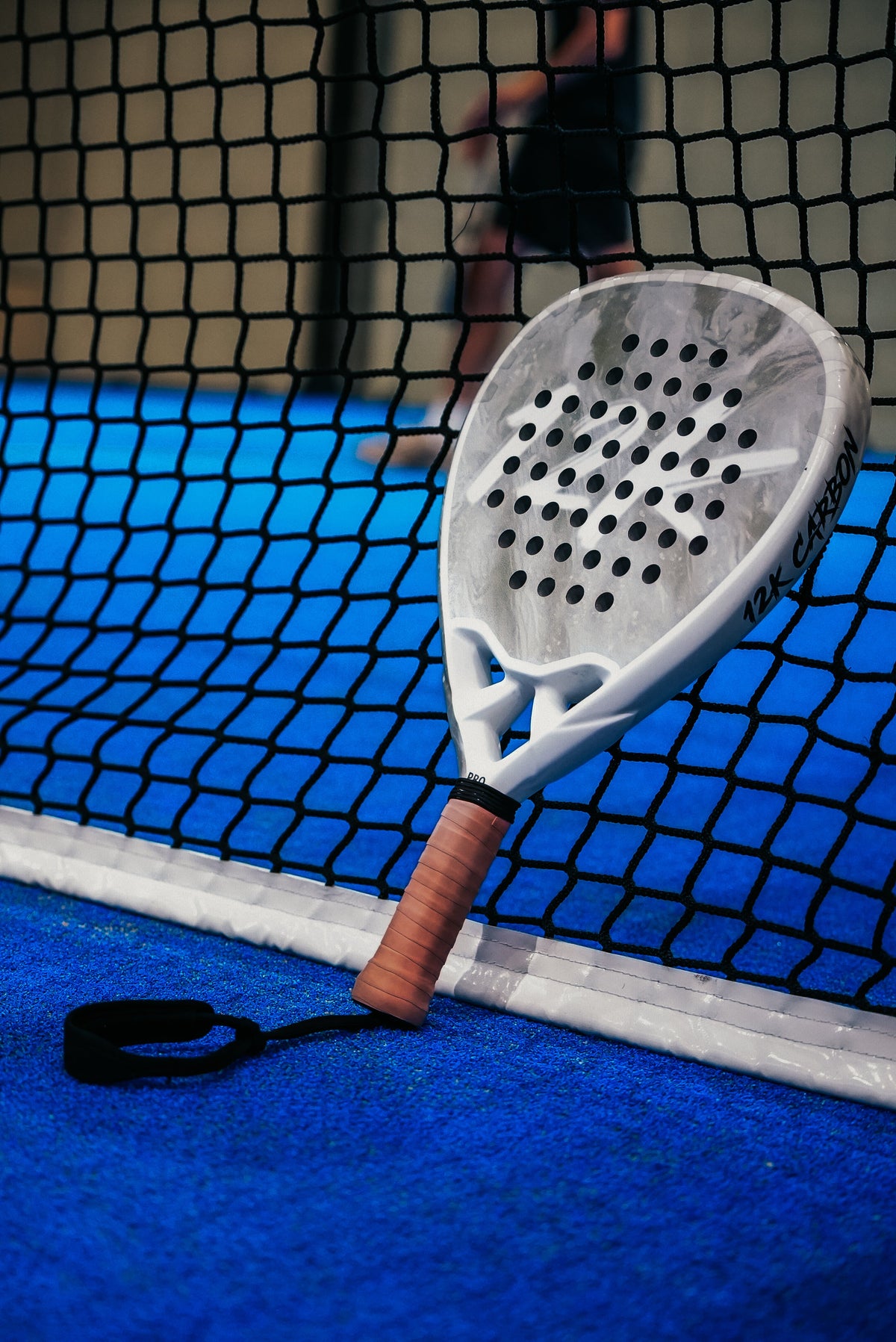
Every 12K Padel racket is a teardrop. We built the whole range on one shape because teardrop is the shape that serves the most players for the longest time. A round frame is easier for the first few sessions but gets outgrown as soon as you start attacking. A diamond rewards a game most club players do not have yet. Teardrop keeps a generous sweet spot for the off days and gives you the power to finish points on the good ones, so you are not buying a new racket the moment you improve.
The shape is paired with a medium to high balance for easy overheads, a medium EVA core for a consistent feel across the face, a 12K carbon face for a firm, direct response, and a 365 g frame that sits in the middle of the standard weight range. The three finishes play identically, so the choice between them is purely about looks.
The teardrop racket in this guide
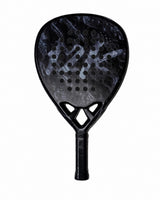
One teardrop racket. Three finishes. £79.95.
Teardrop head, 12K carbon face, medium EVA core, 365 g, medium to high balance. Sold direct with a 12-month frame warranty. See the full range on the 12K carbon padel rackets collection.
 Midnight Black
Matte black on black. Quiet until you hit it.
£79.95 · View racket →
Midnight Black
Matte black on black. Quiet until you hit it.
£79.95 · View racket →
 Shark Blue
Blue 12K script over black carbon. The one that turns heads.
£79.95 · View racket →
Shark Blue
Blue 12K script over black carbon. The one that turns heads.
£79.95 · View racket →
 Ice White
Clean white face, black frame. Shows every mark you earn.
£79.95 · View racket →
Ice White
Clean white face, black frame. Shows every mark you earn.
£79.95 · View racket →
Need grips and a head protector with it? The Court Pack adds three overgrips, a head protector and a free score keeper for £92.95, delivered free in the UK.
How to pick the right shape for your game
- Under a year of padel, or playing for fun: round. You will miss fewer balls, your arm stays fresher and you learn faster because the racket is not working against you. Our guide to the best padel racket for beginners covers that first purchase.
- Basics in place and starting to think about attacking: teardrop. It keeps enough forgiveness for the off days and rewards you on the good ones. This is the shape that lets your game grow without a new racket every year.
- Coming from tennis or squash: teardrop. Your hand-eye coordination and timing carry over, so you can skip the round stage. Read padel vs tennis for the full switch.
- Advanced, aggressive, and finishing points at the net: diamond. Only if the technique is dialled in and the fitness matches. Plenty of club players buy one because it looks the part and quietly regret it when their smashes stop landing.
Shape and weight work together, so a light diamond can feel easier to swing than a heavy teardrop. Once you have settled on a shape, our padel racket weight guide gets the second half of the decision right, and control vs power explains how shape, core and balance combine.
Frequently asked questions
Which padel racket shape is best for beginners?
Round, if you are starting from zero. It has the largest sweet spot and the lightest swing, so you get more clean shots per match. A teardrop is the better buy for a beginner who is coordinated, comes from another racket sport, or plans to play twice a week, because you will not outgrow it.
What is the difference between a teardrop and a diamond padel racket?
The sweet spot. A teardrop keeps it just above centre with a medium balance, so you get a blend of power and control. A diamond pushes it to the top of the face with a head heavy balance, which gives more power on clean contact and less forgiveness on everything else.
Which padel racket shape gives the most power?
Diamond. The high sweet spot and head heavy balance put the most mass behind the ball on smashes and overheads. Teardrop comes second and round gives up the most power in exchange for control.
Is a round padel racket good for intermediate players?
Yes. A round racket is still the best shape for control, and many intermediate players with a defensive or touch-based game stay on one for years. Move to a teardrop when you find yourself wanting more pace on your overheads and drives.
What shape is the 12K Padel racket?
Teardrop. All three 12K Padel rackets share one build: teardrop head, 12K carbon face, medium EVA core, 365 g and a medium to high balance, at £79.95. The teardrop shape is the reason the racket suits beginners stepping up as well as intermediate club players.
Related: 12K carbon padel rackets · the sweet spot explained · racket balance explained · racket weight explained · carbon grades explained