Playing Padel as a Couple: A Beginner's Guide
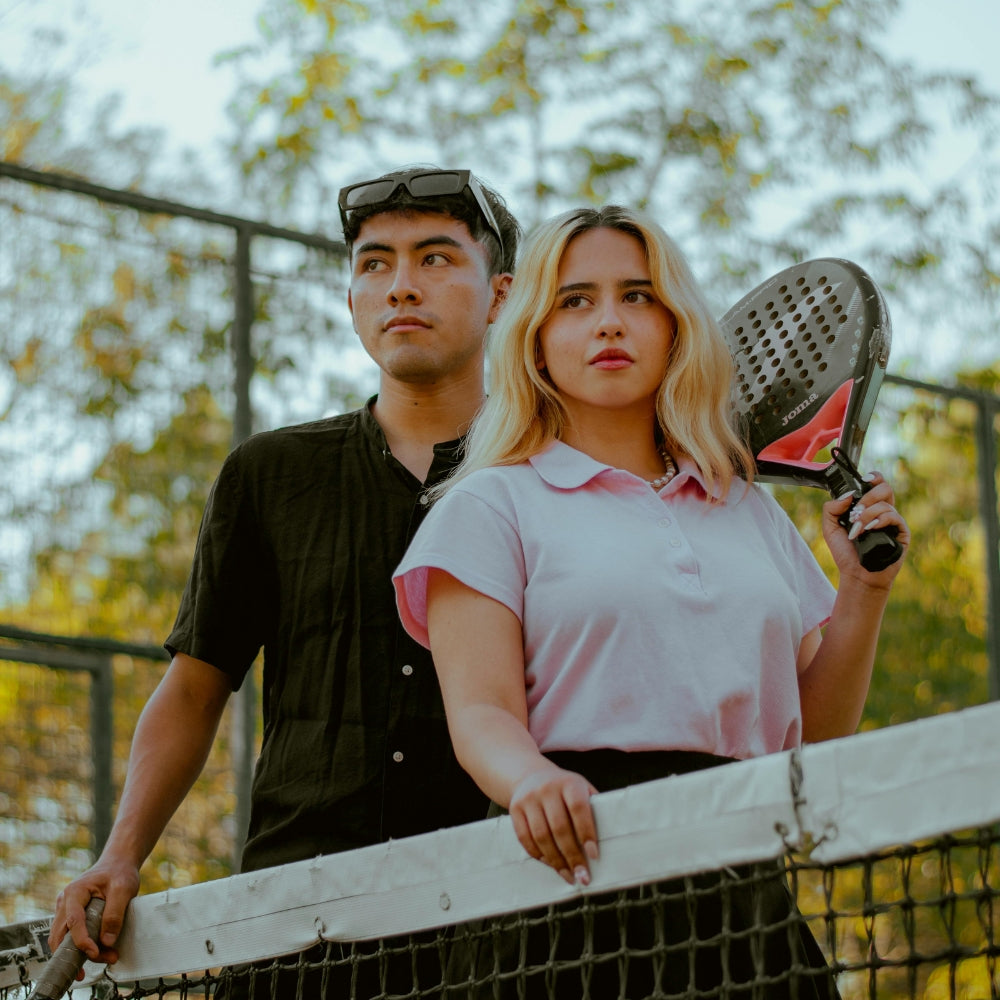
My partner and I tried padel for the first time on a whim, mostly because our usual Saturday coffee spot was shut and someone mentioned a court nearby. Two years later we still play most weekends. It turned into one of the few things we do together that isn't just watching something on the sofa.
Padel has a lower barrier to entry than tennis or squash, and that matters more than people expect when you're trying to get two people with different fitness levels and different amounts of patience onto the same court. At 12k Padel we hear from a lot of couples who started exactly this way. One person drags the other along, and within a month they're both booking courts on their own.
Why padel suits couples better than most sports
The court is small. The ball comes off the face slower than it does off tennis strings. You're playing doubles by default, which means you're never isolated on your own half trying to cover everything. That setup forces communication, even between two people who aren't naturally chatty on a sports court.
There are also the glass and mesh walls. Rallies last longer because the ball stays in play even after a mishit, so beginners get more touches per session than they would in tennis. That keeps both players involved instead of one person dominating while the other stands around waiting for something to happen.
Clubs have noticed. In 2026 the LTA was openly promoting padel as a way to meet people, and venues across the UK now run mixed social nights and even padel speed dating. If a sport works for two strangers who have just met, it works for two people who already know each other.
Getting your first session right
Book a court with no one else around if you can. A quiet 45 minutes without an audience makes it much easier to laugh off bad shots and work out positioning without feeling watched. Most clubs offer off-peak slots that are cheaper and emptier, usually late morning on weekdays or early evening before the after-work crowd shows up.
Skip the urge to buy premium gear before you know whether you'll stick with it. A basic racket and a pair of court shoes are plenty for the first several sessions. Once you're both hooked, that's the point to think about upgrading. A new racket is the big step, but the cheapest change that makes a difference is a fresh padel overgrip on the handle. Two players sharing a sweaty grip is a quick way to put one of you off the whole idea.
Split the court, not the blame
Padel doubles has a rough rule of thumb: one player covers the forehand side, one covers the backhand side, and you split down the middle. Couples tend to argue about who should have taken a shot down the middle more than about anything else on court. Agree on this before you start playing, not after the third missed ball. Our guide to padel doubles positioning covers where each of you should stand and when to move together.
It also helps to decide in advance that mistakes don't get discussed mid-point. Save the coaching for the walk back to the baseline, or better yet, save it for after the game entirely. Coaches put it simply: call "mine" or "yours" early, keep feedback factual rather than emotional, and move as a pair so that when one of you goes forward the other follows.
Managing different skill levels
Most couples don't arrive at padel with equal experience. One of you might have played racket sports for years, the other might never have held one. That gap closes faster in padel than in most sports because the walls do some of the work for you. A weaker player can still keep the ball in play by using the back wall to buy time, which levels things out more than people expect.
If the gap feels too wide early on, try restricting the stronger player to lobs and soft shots for the first few games. It sounds artificial, but it keeps both people moving and hitting the ball rather than one person controlling every point. The trap to avoid is the stronger player poaching everything. They stop improving because the points are too easy, and the weaker player stops improving because they never touch the ball. We wrote a longer piece on playing with a better or weaker partner if this is your situation.
Making it a regular thing rather than a one-off
The couples who keep playing tend to book the next session before they've even left the court after the first one. Momentum matters more than motivation here. Wait a few weeks between sessions and you're starting from scratch on footwork and positioning every single time.
Some clubs run social sessions aimed at couples or mixed pairs, which is a good way to meet other people at a similar level rather than only ever playing each other. It also takes some of the pressure off, since you're not the only two people on court still figuring things out. Double dates work well for the same reason. Four people who are all a bit rubbish is a far better evening than two people trying to rally against a wall.
What to bring
Water, a spare grip if you have one, and something to wear afterward if you're heading straight to food or drinks. A lot of couples treat padel as the start of the evening rather than the whole plan. Post-match plans matter almost as much as the game itself.
None of this needs to be complicated. Two rackets, a booked court, and an agreement not to keep score too seriously for the first few weeks will get you further than any amount of research into technique. The rest comes with time on court.
Questions couples ask before their first game
Can two people play padel on their own?
Yes, but the court is built for four. Playing one against one on a full court is hard work and most of the rallies die early. Some UK clubs have narrower singles courts, and if yours doesn't, you can agree to play only the inner half of the court. It's fine for a first hit or for practising walls, but you'll learn faster in a four. Our guide on padel singles explains how the 1v1 version works.
How much does it cost to play padel as a couple in the UK?
Court hire outside London typically runs from about £20 to £28 an hour off-peak and £26 to £36 at peak times, charged per court rather than per player. Split four ways on a double date it comes to a few pounds each. London courts cost noticeably more, with many venues around £60 an hour and some well above that. Most clubs lend or hire rackets for a small fee until you decide to buy your own.
Is padel a good date idea?
It's one of the best. An hour is long enough to get a sweat on without wiping either of you out, there's no awkward silence because the game fills it, and you're finished early enough to go for dinner. Padel clubs with a bar attached have worked this out already, which is why so many of them look more like a social club than a sports hall.
If you and your partner are just getting into this, keep things simple and let padel do the work of getting you both outside instead of stuck on the sofa. We made the 12k Padel after-work padel club t-shirt for exactly that stretch between the last point and the first drink, so you can go straight from court to bar without changing your whole outfit. Worth a look if padel is already becoming the start of your evening: after-work padel club t-shirt.