The Mental Game in Padel: How to Stay Calm When It Matters Most
The mental game in padel is the part nobody talks about enough. You can have a clean forehand, a decent bandeja, and a solid understanding of positioning. But the moment the score gets tight, a lot of players fall apart.
It happens at every level. Two good players stepping onto court and playing well for the first set, then something shifts in the second. Errors creep in, body language drops, and the partner stops communicating. Nine times out of ten, it is not a technical problem. It is a mental one.
The good news is that the mental side of padel is trainable. It takes the same kind of deliberate practice as any other part of the game. Here is what actually works.
Why Padel Gets in Your Head More Than Other Sports
Padel is a doubles game, which means your mental state affects your partner as well as yourself. A visible reaction to a missed shot does not just hurt your own confidence. It changes the energy on your side of the court immediately.
The enclosed court also plays a role. Unlike tennis, you can see your opponents up close the entire time. You can read their body language, hear what they say to each other. All of this feeds into how you feel during a match, and it can amplify both confidence and doubt very quickly.
The Ball Does Not Know the Score
One of the most useful reminders in sport psychology is that the ball does not know if you are 30-40 down or 5-0 up in a golden point. Each shot you play exists independently. The pressure you feel is real, but it is something your mind creates.
When you catch yourself thinking about what happens if you lose the point, bring your focus back to what you are about to do. Where do you want to place the ball? What is the most reliable shot you have in this moment? That small mental reset is something you can practise during training until it becomes automatic.
How to Reset Between Points
The gap between points is where the mental game is really played. Most players either replay the last error or start worrying about the next point. Neither of those is useful.
A reset routine helps. It does not need to be complicated. Walk slowly to your position, take a deliberate breath, and say something brief to your partner. Just a quiet word or a tap of the rackets is enough. The routine signals to your brain that the last point is done and the next one has not started yet.
Using Your Body Language to Change How You Feel
Research in sport psychology consistently shows that body language does not just reflect how you feel. It can actually shift how you feel. Shoulders back, head up, and deliberate movement between points all send a signal to your nervous system that you are composed and in control.
The players who look the most confident on a padel court are often not the most talented. They are the ones who have learned to carry themselves well even when they are struggling.
Communicating Under Pressure
Partner communication is one of the first things to break down when a match gets tense. Players go quiet, stop calling for the ball, and drift through rallies without a shared plan.
Keep communication short and simple. Before the serve, agree on a direction. After a point, acknowledge it and move on. During a rally, call clearly for anything that could cause confusion. Saying mine or yours with conviction saves a lot of dropped points.
It also helps to make your communication habit based rather than emotion based. If you commit to saying something to your partner after every single point, you remove the moment of decision about whether to speak. It becomes part of the rhythm of the match.
Managing a Losing Streak Mid-Match
Every player goes through patches where nothing goes right. Three or four errors in a row, a couple of lucky shots from the other side, and suddenly the set feels out of reach.
The worst thing you can do is try harder. Gripping the racket tighter, swinging faster, forcing shots you would not normally take. All of this speeds up the spiral rather than stopping it.
The better approach is to simplify. Go back to what you know is reliable. A steady return, a consistent low volley, a lob that buys time to reset. Smaller targets, safer choices, and the willingness to defend until the momentum shifts.
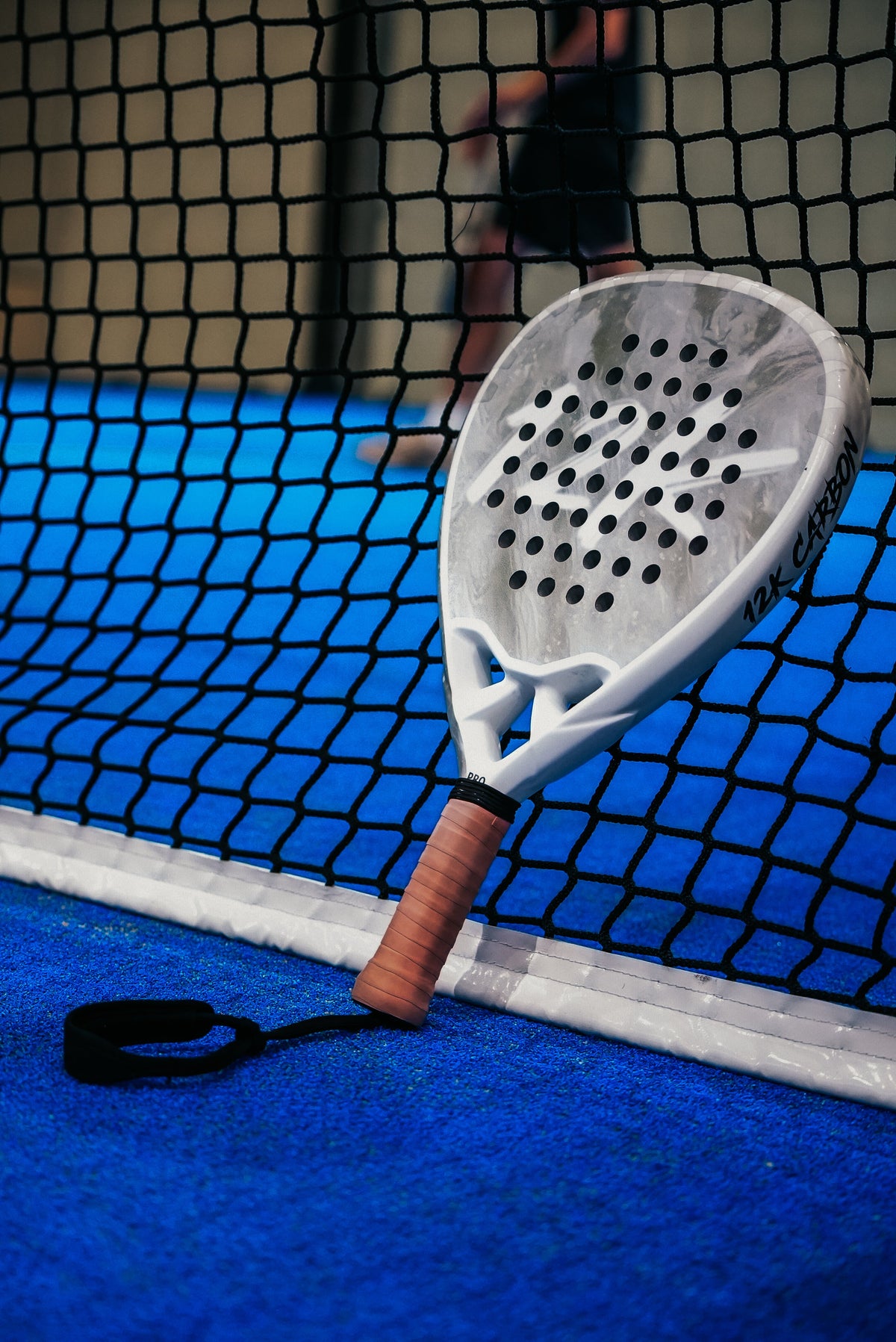
Having equipment you genuinely trust helps here too. If you know exactly how the racket will behave, one less thing is working against you under pressure. The 12k Padel Shark Blue has a 12K carbon face that gives you firm, direct feedback on every shot.
Training the Mental Game Off the Court
Mental skills develop through deliberate practice, just like physical ones. A few habits that translate directly into matches:
Play tie-break practice sets in training. Start points at 0-30 down. Put small consequences on practice games. These create the feeling of pressure in a low-stakes environment, and your brain learns to stay calm under those conditions over time.
Reflection after matches is useful too. Not to pick apart every error, but to ask one or two honest questions. Where did I lose focus? What thought kept getting in the way? Writing it down briefly makes it more concrete and easier to address next time.
The Long Game
Developing a reliable mental game in padel takes time. It does not click after one session or one match. But small improvements compound across a season of regular play. A calmer reaction to errors, a steadier breath at 30-40, a quicker reset after a rough patch. Over months, these things add up significantly.
At 12k Padel, we think a lot about how the right equipment can support your game, not just technically but mentally. A racket you trust, a grip you do not have to think about, kit that does not get in the way. The aim is to remove distractions so you can focus on the game in front of you.
If you are looking for a racket that gives you genuine confidence on court, take a look at the 12k Padel Court Pack. Everything you need to step onto court and start building your game.