Playing Padel With a Better or Weaker Partner: How to Make It Work
Almost every social padel game is a mismatch. Someone has been playing for three years, someone else started in March, and the four of you are on court together because that is who was free on Thursday night.
It works better than people expect. It also goes wrong in the same few ways every time, and nearly all of them trace back to two players who never agreed on what they were trying to do out there.
The gap is not what costs you points
Mixed-level pairs lose for reasons that have very little to do with the level difference. The weaker player hides. The stronger player takes over. Neither one mentions it.
Padel rewards court position and patience more than it rewards shot quality, which is why a pair with a big gap between them can beat an evenly matched pair who are standing in the wrong places.
What does cost you is predictable. Decent opponents will work out who the weaker player is inside two games and then hit at them for the rest of the match. That is not rude, it is just the sport, and the whole plan has to be built around it happening.
If you are the stronger player
Stop covering the whole court
The instinct is to poach everything you can reach. It feels like helping. It is the quickest way to make your partner play worse for the next hour.
Every ball you steal is a ball they did not get to hit, and the space you leave behind is exactly where your opponents are already aiming. You spend the match sprinting sideways while your partner stands still and gets colder.
Take your own balls and the ones through the middle. Leave the rest. Cover a bit more ground than usual, not twice as much.
Change what you feed them
You control where the ball goes, so you control what comes back at your partner. Slice a low ball at the opponents feet and the reply is usually slow and floaty. Hit hard and flat and the reply comes back fast.
A weaker partner can handle slow and floaty all night. Fast and low will bury them. Every point where you pick the aggressive option, you are also picking the difficulty setting for the person next to you.
Lob more than you want to. It is the shot that buys your side the most time, and time is the thing your partner needs most.
Say less, and say it earlier
Coaching mid-point does not work. Nobody has ever fixed their grip while a ball was in the air.
Pick one thing before the match and leave everything else alone. Usually it is where to stand after the serve, because that single habit fixes more problems than any technical note would.
If you are the weaker player
Expect the ball and want it
You are going to get targeted. Standing there hoping otherwise is the worst version of this, because you end up reacting late to a ball you should have been ready for.
Get set before every shot the opponents hit. Assume it is coming to you. When it does not, you have lost nothing, and when it does you are already moving.
Play the boring ball
The urge to prove you belong is what loses these matches. You go for a winner from a defensive position, miss, and hand over a point that was still very much alive.
High and deep is almost never the wrong answer. A lob to the back of the court resets the rally, drags the opponents off the net and gives your partner a chance to do something. Nobody has ever been annoyed at a partner for lobbing too much.
Keep the ball in play and let the better player finish. That is the deal, and it works.
Cover your side properly
If your partner is roaming, the temptation is to shrink into a corner and stay out of the way. Do not. The middle needs somebody in it, and the shots that go through the gap between you are the ones that end points cheaply.
Move with the ball. When it goes wide to your partner side, you slide across too. Two players connected by an invisible rope, not two people guarding separate boxes.
What to sort out before the first serve
Two minutes of conversation saves an hour of frustration. Who takes the middle. Who takes the smash. Whether the weaker player is going to be on the left or the right.
The right side usually suits the less experienced player. More of the balls that arrive there are straightforward forehands, and fewer of them are the high defensive ones that need reading off the glass.
Agree what happens when things go badly, too. Most pairs have no answer for going three games down and just start swinging harder.
Why these games are worth playing
Playing above your level is the fastest improvement there is. The ball arrives quicker, the gaps close sooner, and you find out which of your shots hold up under pressure. One hour with better players teaches you more than three social sets against people you always beat.
Playing below your level has its own value, though people rarely admit it. Your margin for error disappears, so you stop relying on a partner to bail you out. Positioning gets sharper. Shot selection gets tighter.
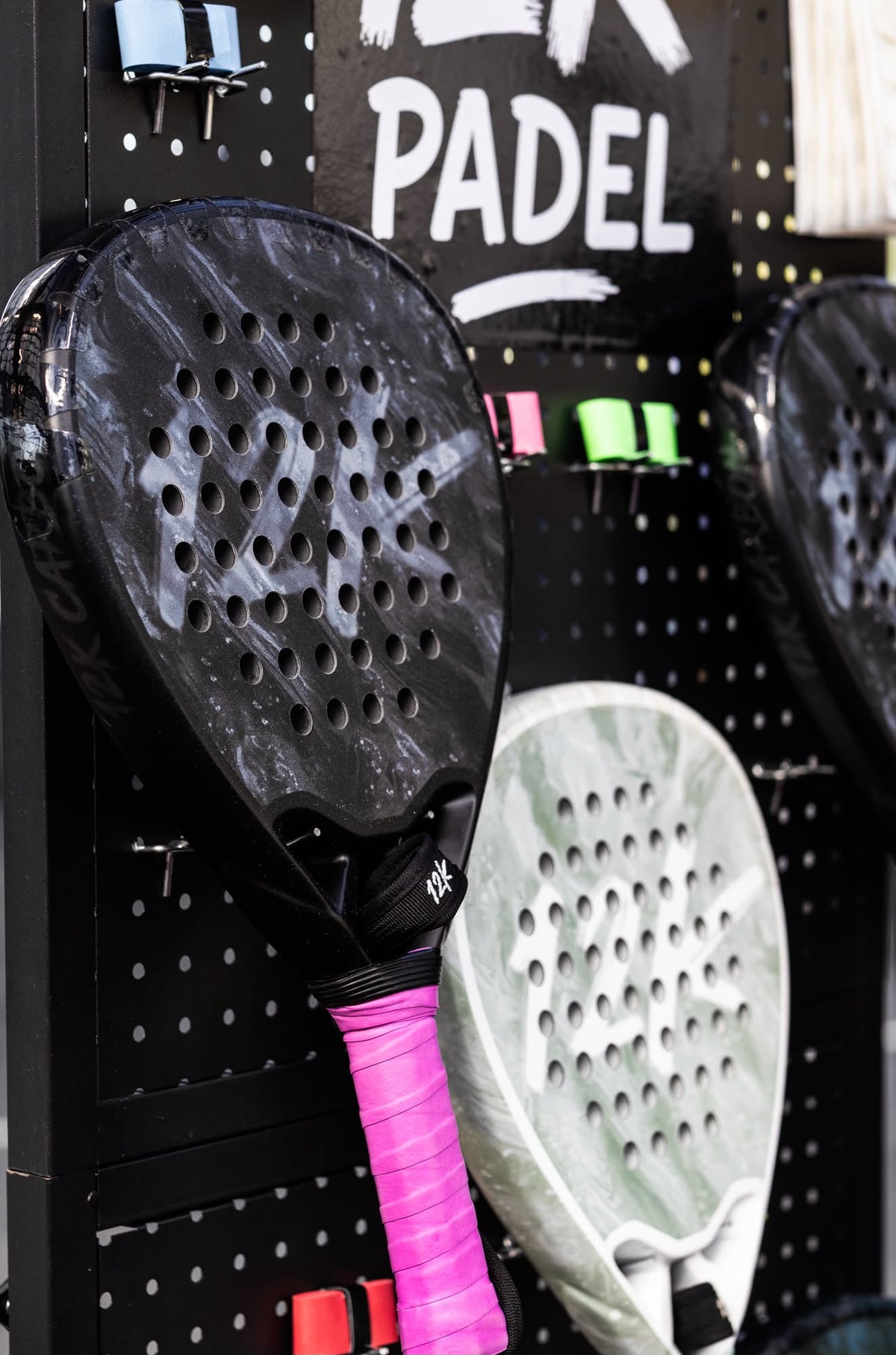
At 12k Padel we hear from plenty of players whose regular four spans three different levels, and the groups that last are the ones that stop pretending everybody is the same. They set the pairings so the gaps are even, then get on with it.
The short version
Stronger player: cover a little more, not everything, and think about what comes back off your shot. Weaker player: expect the ball, lob when in doubt, hold the middle.
Both of you: talk before the match rather than during it. That is most of it.
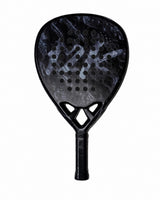
One last thing if you are the one getting targeted. A racket that punishes off-centre hits makes a level gap feel far wider than it is, because the balls you reach late go nowhere. The Midnight Black from 12k Padel stays stable on the shots you get to at full stretch, which is most of them when the ball keeps coming your way. Worth a look before your next Thursday night.