Women's Padel in the UK: How to Get Started and Where to Play

Padel in Britain went from a curiosity to a million players in roughly four years. The women's side of that has grown just as quickly, and much more quietly, because most of it happens in ladies-only sessions and club WhatsApp groups rather than anywhere you would notice from outside.
If you have been circling the idea for months without booking anything, this is the guide. What it actually involves, where to find a session, and the bits nobody mentions before your first hour on court.
Where women's padel sits right now
The LTA counted 860,000 adults and juniors who had played padel at least once during 2025. That figure has since passed a million. Courts followed, with somewhere around 1,800 of them now spread across more than 500 venues.
The gender split is the part worth knowing. Padel arrived in the UK skewed heavily male, the way most new racket sports do. That is changing, and not by accident. Several operators are running programmes aimed squarely at closing the gap, with some publicly targeting an even split within the next couple of years.
What that means for you is simple. More ladies-only sessions. More beginner clinics that are not quietly full of men who have been playing since 2023. More clubs that have actually thought about the question.
Why the sport suits people starting from nothing
The court is enclosed and small. Rallies last far longer than they should, because the walls keep the ball alive when it would have been long anywhere else.
The serve is underarm and struck below the waist. There is no technical barrier standing between you and your first real point, which is where most people give up on tennis.
And it is always doubles. You share the court with a partner from the first ball, which takes a surprising amount of pressure off when everything is new.
Finding your first session
Ladies-only clinics
Most clubs with more than two courts now run something. A weekly ladies morning, a six week beginner block, a monthly social. The format varies. The point of it does not.
These are the easiest way in by a distance. Everyone in the group is at roughly the same stage, the coach pitches accordingly, and nobody is standing by the gate waiting for the court back.
Ring the club rather than hunting through the website. Half of these sessions are advertised on a noticeboard and a WhatsApp group and nowhere else.
Mixed beginner sessions
Worth considering if your club has no ladies programme yet, or if the timings do not work. A beginner session is a beginner session, and padel groups tend to be friendlier than the sport's reputation suggests.
Ask what level the group actually is before booking. Some clubs use the word beginner loosely and you will end up in a session with people who have been playing for a year.
Apps and groups
Playtomic is the default booking app at most UK venues and lists open sessions you can join on your own. Facebook and WhatsApp groups fill the gaps, especially outside London.
If your area has an active women's sport group of any kind, ask there first. Padel spreads through word of mouth much faster than through advertising, and somebody in that group is already playing.
Your first hour, honestly
You will hit the glass. Everyone does. The instinct to stop chasing a ball once it passes you takes a few sessions to unlearn, and until then you will watch perfectly playable balls bounce off the back wall and die.
You will also win points you had no business winning, which is the other half of why the sport hooks people. Rallies stay alive. The ball keeps coming back. Nobody is serving down at you at a hundred miles an hour.
Expect to be tired in your legs rather than your arm. Padel is short sharp movement, forward and back, with very little of the long running you get in tennis.
What to take
Trainers with grip, something you can move in, and water. That is it. Every club hires rackets and most include balls in the court fee.
Do not buy a racket before your third or fourth session. You will not know what you want yet, and hire rackets exist precisely so you can find out for nothing.
Getting past the first month
The drop-off point is not the first session. It is week four, when the novelty has worn off and you have not yet found people to play with regularly.
Fix that early by finding one person before you need them. Swap numbers with someone at your clinic. Two people who can book a court beats a group chat of twelve who never quite line up.
Box leagues are the other useful step. Most clubs run them, plenty let you enter alone, and they hand you a reason to book a court every week without having to organise anything yourself.
When to think about lessons
After ten sessions or so, not before. Early on, court time teaches you more than coaching does, because your problems are about reading bounces rather than technique.
Once you can rally, a couple of lessons on the lob and the bandeja will move you further than another twenty social games. That is the stage where coaching starts paying for itself.
Buying your own kit
The moment to buy is when you are booking courts without anyone having to ask you. Not before.
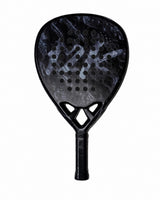
Look for a round racket with a soft core and a weight around 355 to 365 grams. Round shapes have the largest sweet spot and are far more forgiving on off-centre hits, which is most hits for the first few months. Ignore anything sold on power until your technique has settled.
Weight matters more than most new players expect. Too heavy and your shoulder complains by the third set. Too light and the racket gets pushed around by anything hit with pace.
At 12k Padel we hear from a lot of players buying their first proper racket after months of borrowing whatever the club had spare, and the pattern is nearly always the same. They wish they had moved off hire rackets sooner, and they wish somebody had told them to start round rather than teardrop.
The short version
Book a ladies clinic or a beginner session this month. Hire a racket. Swap numbers with one person. Come back next week.
That is the whole thing. Women's padel in the UK is growing fast enough that whatever you are worried about, several hundred people worked through the same worry last month and are now on court twice a week.
When you are ready to stop borrowing, the Ice White is the 12k Padel racket we point new players toward most often. Round shape, soft core, forgiving on the mishits you will still be making for a while yet. Play a few more sessions first, then have a look.