Padel Hand Signals Explained: What They Mean and How to Use Them
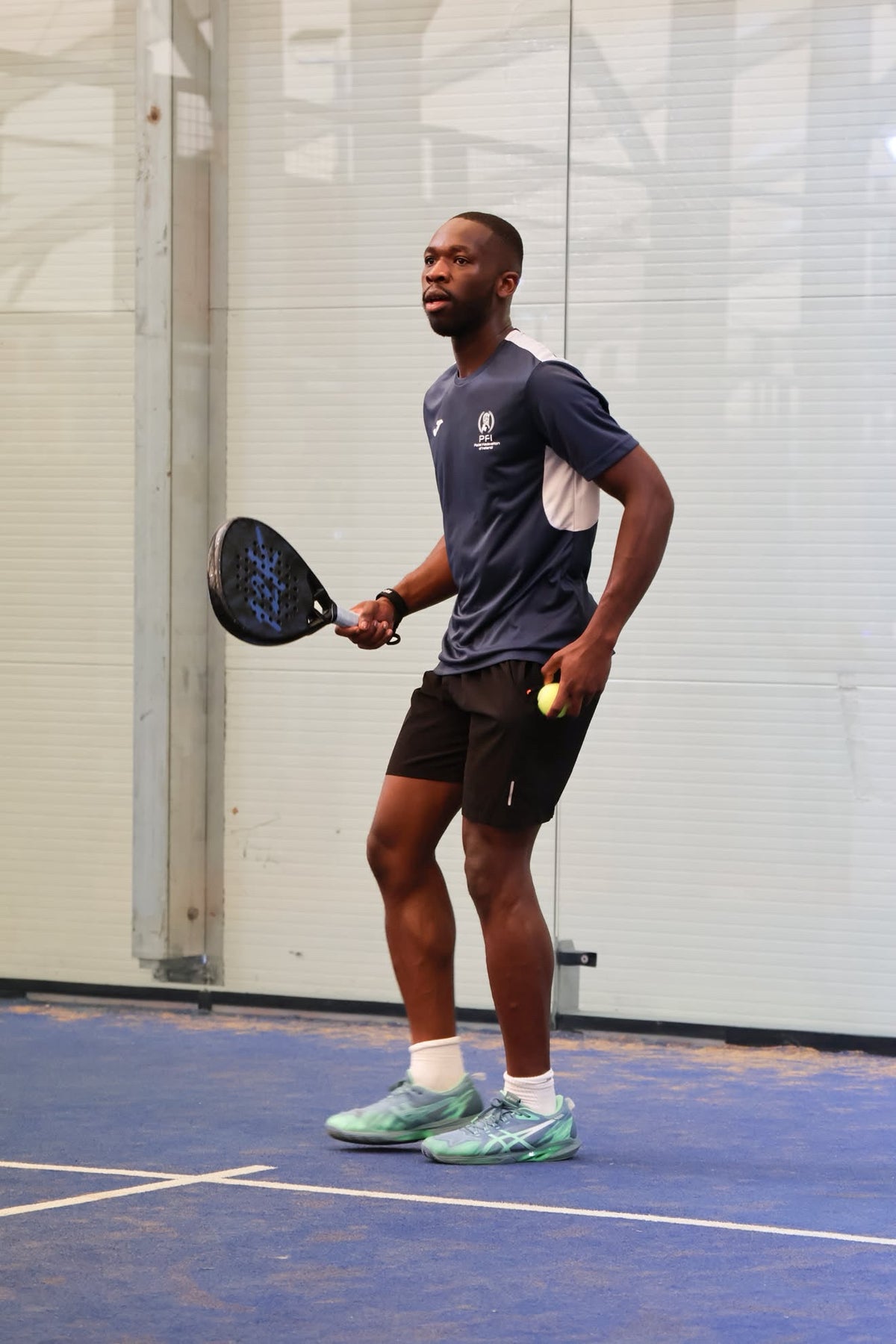
You have seen it on a stream. The net player crouches, tucks a hand behind their back, flashes a finger or two, then the serve goes in. It looks like a code because it is one.
Most club players file it under things the pros do. It is not. Hand signals are one of the few professional habits that drop straight into a Tuesday night match with nothing lost in translation.
What the signals are actually for
Padel borrowed them from tennis doubles and the job is the same. The player at the net tells their serving partner two things before the ball is struck. Where to serve, and what the net player plans to do once the return comes back.
The hand goes behind the back so the returner cannot read it. That is the entire reason for the awkward crouch.
It all has to happen before the serve because there is no time afterwards. Once the ball is moving you are down to single shouted words.
The common set
None of this is official. There is no governing body for hand signals and no two clubs use quite the same version, so treat what follows as the set you are most likely to run into rather than the correct one.
One finger means serve wide, out towards the side wall. Two fingers means serve into the body or down the middle. A closed fist means the server picks.
An open palm means the net player is going to poach, cutting across to take the return. A fist held still means they are staying where they are.
Some pairs add a wiggle for a fake. Move like you are poaching, then hold. That one is worth having once you trust each other, and useless before then.
Why they suit padel
The serve is underarm and slow. You are not acing anyone. What you can do is put the ball somewhere that makes the return predictable, and predictable is all a net player needs.
A wide serve drags the returner off court and opens the middle. A body serve jams them up and usually produces something floaty. If your partner already knows which one is coming, they know where to look before the ball is hit.
Half a second of head start. That is the whole gain, and it is the difference between watching a ball go past your hip and putting it away.
The poach is the real prize
Poaching without warning your partner is how points get lost. You cut across, the return goes behind you into the space you left, and your partner is still standing where the serve took them.
Signal it and the whole thing works. You move, your partner reads it and covers the gap you opened, and the pair rotates as a unit instead of two people guessing.
This is the bit most club pairs never get right. Not because the movement is hard, but because nobody told anyone it was happening.
Starting with your partner
Agree the meanings before you walk on court, not during the first game. Two minutes in the car park is enough.
Keep it to three signals for the first month. Wide, body, and poach or stay. Pairs who try to run eight signals on day one end up ignoring all of them by the second set.
The net player gives the signal, holds it until the server nods or says yes, then drops the hand. No nod means try again. A signal your partner did not see is worse than no signal, because now one of you is moving on a plan the other never agreed to.
Where people go wrong
Signalling too late is the big one. Get set, signal, then let your partner start their motion. Flashing fingers while the ball is already in the air helps nobody.
Signalling every single point is the other. Good pairs mix in plain serves with no plan attached, partly to stay unpredictable and partly because constant signalling gets tiring by the third set.
And do not let the hand drift out where the returner can see it. Behind the hip, close to the body, low. If your opponents can read your signals you have handed them the point before it started.
Do you need them at all
At the very start, no. If you are still working out where to stand after the serve, signals add a layer you do not have room for. Get comfortable, then come back to this.
Somewhere around the point where you and your partner start playing together regularly, they become worth it. Regular pairs get more out of signals than anyone, because the shorthand builds over months and eventually you are reading each other off a half-glance.
Casual mixed groups are the awkward middle. Explain the three basic ones to whoever you are playing with that night and most people pick them up in a game or two. We hear from plenty of 12k Padel customers who introduced signals to their regular four and had the whole group using them within a couple of weeks.
What to do when signals are not an option
Talk. Between points, quietly, facing away from the opposition. Two words at the back of the court does the same job and nobody needs to learn anything.
Some pairs prefer this permanently and there is nothing wrong with it. The signal is just a delivery method. What matters is that both of you know the plan before the ball is struck.
If you are the sort of pair who talks constantly anyway, signals will feel like admin. Skip them.
The short version
Three signals. Behind the back. Wait for the nod. Mix in the odd point with no plan at all so the pattern does not become obvious.
Give it a month of regular play and you will stop thinking about it. The signals stop being a system and turn into the way you and your partner talk, which is the point of them.
If you are setting up a new partnership and both of you are still borrowing club rackets, the 12k Padel Court Pack covers the gear side so you can spend your court time on the parts that actually win points. Sort the kit once, then get on with learning to read each other.