Indoor vs Outdoor Padel: What Changes and How to Adjust

Most UK players get their first taste of padel inside a converted warehouse or a sports hall. Then summer arrives, an outdoor court opens nearby, and the game feels different. Not worse. Different.
Indoor and outdoor padel share the same court, the same rules and the same scoring. What changes is everything around the court, and those changes affect your shots more than most people expect. Here is what actually differs, and how to adjust.
Same court, very different conditions
Every regulation padel court measures 20 metres by 10, with glass at the back and mesh at the sides. Build one indoors and the environment is fixed. Build one outdoors and the weather joins the match as a fifth player.
Wind, temperature, sunlight and damp all change how the ball behaves. Indoors you get none of that. The two versions of the sport reward slightly different games, which is why a solid indoor player can look ordinary outside for their first few sessions.
Wind changes more than you think
Wind is the big one. The lob sits at the heart of padel, and a lob spends a long time in the air. Even a light breeze can carry it half a metre further than you planned, which turns a perfect defensive shot into an easy smash for your opponents.
So check the wind before you warm up outdoors. Hit a few lobs from each end and note which direction helps you and which punishes you. Aim with more margin when lobbing into the wind, and pull your length back when it is behind you.
Ends matter outside in a way they never do indoors. If you win the toss on a gusty day, think about which end you want in the deciding moments, not just the first game.
Light and sight lines
Indoor centres run LED rigs that light the court evenly, so you rarely lose the ball. Outdoors the sun does its own thing. A low winter sun in the UK sits right in your eyes during overheads, and a high summer sun can hide a lob completely for a second or two.
Smart outdoor pairs use this. Lob into the sun and even a confident smasher starts to hesitate. If you are the one squinting, let the awkward ball bounce rather than swinging blind. A controlled shot off the back glass beats a guess every time.
Temperature and the ball
Padel balls are pressurised, and pressure responds to temperature. In a heated indoor centre the ball stays lively all session. On a cold outdoor court in January it turns heavy, sits low and dies off the glass, so rallies stretch out and smashes stop bouncing over the fence.
Warm weather flips it. On a hot day the ball flies, and even soft touches drift long. British outdoor padel serves up both extremes, sometimes in the same fortnight, so get used to testing the bounce during the warm up and adjusting from the first game.
The surface under your feet
Outdoor courts collect moisture. Even without rain, an autumn evening leaves the artificial turf slick and the glass greasy. Shorten your steps, get set earlier, and give the walls extra respect until you trust the bounce.
Indoors the footing is identical every session. That is one reason coaches prefer indoor courts for lessons. Technique grooves faster when nothing changes between visits.
So which is better for your game?
Neither wins outright. Indoor padel is the better classroom. Every ball behaves as expected, so you can isolate a weakness and drill it without excuses. If you are working on your bandeja or trying to climb a level, indoor repetition gets you there quicker.
Outdoor padel is the better teacher of match craft. It forces you to read conditions, change plans mid set and win ugly. At 12k Padel we rate players who grew up on outdoor courts for exactly this reason. They adapt, and adaptation wins tight matches.
The honest answer for most UK players is to play both. Use indoor sessions to build your technique through the winter, then take it outside and stress test it when the weather allows.
One racket for both jobs
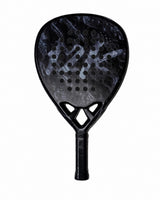
Changing conditions are hard enough without changing equipment. A consistent, forgiving racket makes the indoor to outdoor switch much smoother because the only variables left are the ones in the air. The Shark Blue from 12k Padel is a carbon all-rounder with enough control for gusty outdoor points and enough pop for fast indoor exchanges. Take it to whichever court the British weather allows this week, and let your game do the adjusting.