Playing Padel in the Wind: How to Adjust Your Game Outdoors
Most padel in the UK happens outdoors, and outdoors means wind. Some days it is a light breeze you barely notice. Other days the ball moves like it has a mind of its own, and the match turns into a lottery. The players who cope are not stronger or more talented. They just stop fighting the wind and start using it.
Wind is the one condition you cannot control and cannot avoid on an open court. The good news is that it hits both teams equally. Whoever adapts first wins.
What the wind actually does to the ball
A padel ball is light and full of air, so it gets pushed around far more than you expect. A breeze that feels gentle on your skin can still drag a lob a metre off line by the time it drops.
Spin makes it worse. When you brush up or slice under the ball, the air pressure around it changes as it spins, and the wind exaggerates the curve. A shot that normally sits down nicely can float long, or dip into the net, for no obvious reason. Flat shots hold their line better because there is less spin for the wind to grab.
Headwind slows the ball and shortens it. Tailwind speeds it up and pushes it deep. A crosswind is the sneaky one, nudging the ball sideways so your timing looks fine but your contact point is wrong.
Keep the ball low and flat
The single best adjustment is height. The higher the ball travels, the longer the wind has to work on it. Drive your shots lower over the net and flatten them out. You lose a little spin and a little margin, but you gain control, and control is what wins windy matches.
This is the day to leave the fancy stuff at home. Big topspin serves and heavy sliced viboras become unreliable. Simple, firm, low shots keep the point going and put the pressure back on the other pair.
Be careful with the lob
The lob is usually the smartest shot in padel. In the wind it becomes the riskiest. A globo into a headwind falls short and sits up for an easy smash. A globo with the wind behind it sails long and hands over the point.
You do not have to abandon it completely. Use it when the wind is helping you, so it carries the ball deep and pushes your opponents back. Avoid it when you are hitting into the wind, because you will need to hit so hard to reach the back glass that accuracy disappears.
Adjust your serve and return
On the serve, drop your ball toss lower than usual. A high toss in the wind drifts away from you before you strike it, and your placement falls apart. A lower toss gives the wind less time to interfere.
Serving into the wind, add a bit more power to get the ball where you want it. Serving with the wind at your back, do the opposite and focus on placement, because it is easy to overhit and give away a free point. On the return, stand a fraction earlier and take smaller steps, so you can correct late when the ball moves.
Play the percentages
Windy days are won by patience, not winners. The team that keeps the ball in play forces the mistakes, because the wind is already doing half the work of creating errors. Cut out the low-percentage shots and make the other pair beat you.
Move your feet more than you think you need to. The ball will not arrive where your eyes first tell you, so stay light and adjust with small steps right up to contact. Big lunges leave you stranded when a gust shifts the ball at the last second.
Let your kit help
Wind rewards control, and your racket plays a part in that. A softer, control-focused frame gives you more feel on flat, low shots and makes it easier to guide the ball rather than blast it. A stiff, powerful head that you rely on for free pace is harder to tame when you are trying to keep everything down and safe. At 12k Padel we point a lot of beginners towards control on days like this, because it is far easier to add power later than to buy back accuracy.
Grip matters too. Sweaty or gusty conditions make the handle move in your hand, and a slick grip means less control on the shots that already have the least margin.
Practise in it, do not hide from it
Nobody enjoys their first windy session. The ball behaves strangely and your normal shots stop landing. Stick with it. A few sessions in the wind teach you touch and shot selection that calm days never will, and you start to read gusts before they happen.
The players who dread the wind are the ones who only ever practise in perfect weather. Get comfortable being uncomfortable and you turn a bad-weather day into an edge.
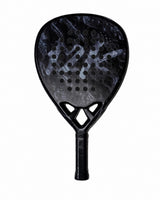
If you want kit that suits the low, controlled game the wind demands, the Shark Blue from 12k Padel is a control-friendly 12K carbon racket that helps you keep the ball down and steady when the air will not sit still. Pair it with a fresh grip, pick your shots, and the next gusty Saturday becomes the day you quietly out-steady everyone else on the court.