How to Hit a Half Volley in Padel: The Bote Pronto Explained

Somebody at the net gets caught out every single week. The ball skids low off the smash, lands two feet in front of them, and there's no time to let it bounce properly or step back for a clean volley. That in-between moment is exactly where the half volley lives, and most players have no plan for it at all.
Padel calls this shot the bote pronto, and it's one of the few strokes that gets taught late, if it gets taught at all. Coaches spend hours on the bandeja and the smash. The half volley usually gets a five-minute mention and a "you'll figure it out."
What a half volley actually is
A half volley happens the instant after the ball touches the ground, before it rises to a comfortable height. You're not volleying it out of the air, and you're not waiting for a full bounce either. You're catching it right at the bottom of its bounce, almost off the floor.
It shows up most at the net, usually when an opponent drives or smashes the ball straight at your feet. There's no time to retreat and no time to let the ball climb. The only option left is to meet it low, fast, and early.
The stance that makes it possible
Get your knees bent before the ball arrives, not after. Feet shoulder width apart, weight forward on the balls of your feet, ready to drop lower at the last second. Standing tall and reacting late is the single biggest reason players shank this shot into the net.
Keep your racket close to your body in the ready position. There's no time for a full backswing on a bote pronto. The whole stroke happens in a short, compact motion, almost like a block rather than a swing.
Where to make contact
Strike the ball in front of your body, not level with your hip or behind it. Contact that happens too late means the ball has already passed the ideal point, and control disappears with it. Get the racket face there early and let the ball arrive rather than chasing it.
Keep the racket face slightly open and the movement short. This isn't a shot you attack with pace. Most of the work is done by your positioning and timing, not by how hard you swing.
When to use it and when not to
The bote pronto works best when you're already at the net and the ball is coming in low and fast. Letting it bounce off the back wall first sometimes gives you more options. Use it when there genuinely isn't time for anything else, not simply because it's available.
On attack, it's a different shot entirely. A soft ball landing near your feet while you're pushing forward is a chance to keep the point low and awkward for your opponents, rather than a shot you need to survive. Same technique, completely different intention.
Direction matters more than power
Send the ball back roughly where it came from rather than trying to redirect it sharply cross court. A half volley hit at an aggressive angle is far easier to read and punish, because your opponents can see the setup coming even if you can't feel it happening that fast yourself.
Depth beats placement here. A controlled half volley that lands deep buys you time to reset your position. One that lands short and central is an invitation for your opponent to step in and finish the point.
Common mistakes worth fixing
Standing upright and waiting is the most common fault. By the time your knees bend, the ball has already gone past the point where the shot works. Get low before it arrives, not while it's happening.
Not every low ball at your feet needs a half volley either. Sometimes letting it bounce properly, or moving to hit off the wall, is the smarter choice, even if it feels less impressive in the moment. Reaching for it out of habit is how points get given away.
Trying to overpower it is the other trap. This isn't a smash. Extra pace usually means the ball sails long or catches the net cord, when a shorter, controlled block would have kept the point alive.
Practicing it without a partner feeding perfectly
Have someone feed low balls at your feet from close range, or bounce the ball off a wall so it comes back fast and low. Repetition at close range is what builds the reflex, since match speed rarely gives you a second to think about technique consciously.
Start slow and controlled before adding pace. The goal in early practice is contact quality, not power. Once the timing feels natural, speed things up until it matches what actually happens in a match.
At 12k Padel we see this shot get ignored in training more than any other, mostly because it's awkward to drill and doesn't look as satisfying as a smash. It's still one of the shots that decides whether you hold the net or get pushed off it.
Give yourself the racket control it needs
A half volley rewards touch over raw power, which means racket feel matters as much as technique. If your current racket feels heavy or unresponsive on quick reaction shots, that's worth addressing before you spend hours drilling a stroke your equipment is working against.
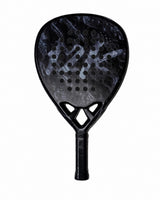
The Ice White from 12k Padel is built with exactly this kind of control in mind, giving you the touch to block a fast ball down rather than fight it. Get the racket right, and the bote pronto stops being the shot you dread and starts being the one you're glad shows up.