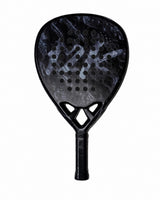
When to Upgrade Your Padel Racket: Signs You Are Ready
Most UK players buy their first padel racket in a hurry. A cheap fibreglass frame from a sports shop, a club starter racket, or whatever a friend had spare. It did the job for a few months. Then the question creeps in: when do you upgrade your padel racket, and how do you know it is the racket holding you back rather than your technique?
There is no fixed number of months. The right time is when your game has outgrown the frame in your hand, and that shows up in a handful of ways you can check on court this week.
Sign one: you find the sweet spot without thinking
A beginner racket is built around forgiveness. Round head, soft core, big central sweet spot. It exists so that a late, off-centre hit still goes over the net. That is exactly what you need for the first twenty or thirty sessions.
Once you are rallying from the back without shanking more than one ball in five, that forgiveness stops helping. All the soft core is doing now is soaking up pace you could be using.
Sign two: your shots feel flat and short
This is the complaint we hear most from players a few months in. The lob keeps landing mid-court instead of deep. Volleys die on the face. You swing harder to compensate and the errors come back.
A soft fibreglass face and a soft foam core absorb energy. That is comfortable, but it caps how much ball speed you get from a clean strike. A stiffer carbon face with a medium core gives that energy back, so the same swing travels further without you forcing it.
Sign three: you have a side and a game plan
If you know whether you prefer the left or right side, you have a shot you trust on the overhead, and you are starting to think about where the ball goes rather than whether it goes in, you are no longer a beginner. The racket should match that. A frame chosen for someone who had never held one is now the wrong tool.
Sign four: the racket itself has gone
Sometimes the decision is made for you. Fibreglass faces soften after a season of regular play, the ball exit gets dull, and cracks appear around the frame from wall and floor contact. If you are replacing a racket anyway, replace it with the one your game needs now rather than a copy of the one you started with. Our guide on how long a padel racket lasts covers the wear signs in detail.
When not to upgrade
A new racket does not fix a technique problem. If your bandeja keeps going long, a stiffer frame will send it longer. If your elbow hurts, a harder core will make it worse. And if you have played fewer than fifteen or twenty times, you are still learning where the middle of the face is, and the forgiving racket is doing its job.
Plenty of players spend money on a racket when an hour with a coach would have moved them further.
What to upgrade to
The mistake at this stage is jumping two steps. A diamond-shaped power racket with a hard core and a head-heavy balance is sold as the serious option, and it will make most second-racket buyers worse. The sweet spot is small and high, the frame is slow at the net, and it loads the arm on every block.
The step that works is from a round, soft beginner racket to a teardrop frame with a medium balance, a medium EVA core and a carbon face. Here is what each of those changes does for you.
Teardrop shape
The sweet spot moves slightly above centre, which is where you naturally strike a volley and an overhead. You get more depth on lobs and more bite on the bandeja, and the hitting zone stays wide enough that a mishit is not punished.
Medium balance
Enough weight in the head to put a smash away, and the frame still turns fast in a quick exchange at the net. A head-heavy racket feels powerful in the shop and feels heavy by the third set.
Medium EVA core
Firmer than a beginner core, so the ball comes off the face with pace, but not so hard that you feel every block in your elbow. For most club players this is the core they stay on for years.
Carbon face
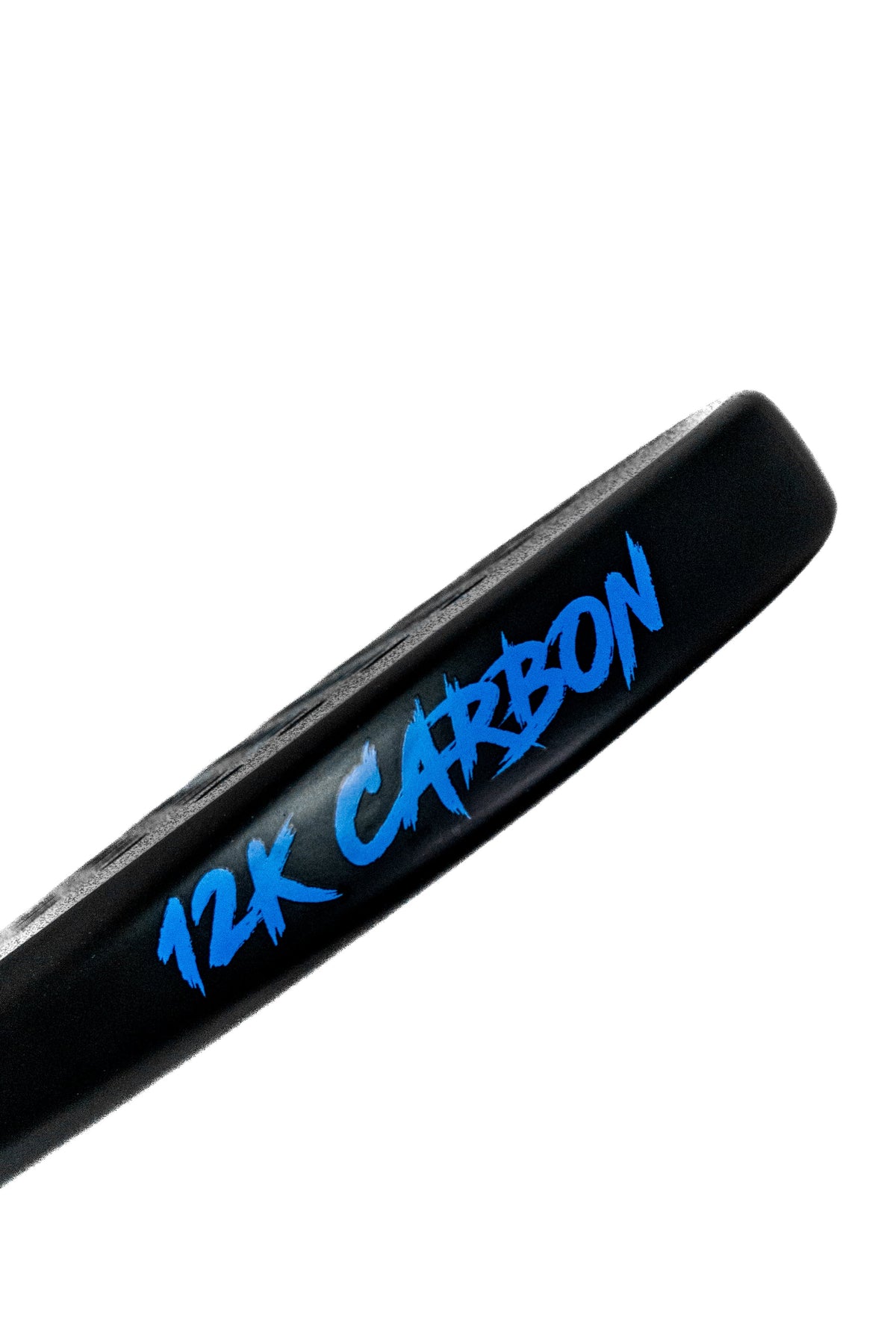
Carbon holds its shape and its feel for two or three seasons where fibreglass goes soft in one. A 12K carbon weave gives a crisp, consistent response across the whole face. Our intermediate padel racket guide goes deeper on the full spec.
Weight: do not go heavier than you need
Most adult rackets sit between 350 and 375 grams. Upgrading does not mean jumping to the top of that range. Around 365 grams is the window that gives you stability on a blocked volley without slowing the racket down or asking anything extra of your arm. If your beginner racket was 340 to 350 grams, that is a step up you will feel in a good way.
How much should a second padel racket cost in the UK?
Less than most people expect. A full carbon teardrop at the spec above used to mean £150 or more from a high street shop. Buying direct from a UK brand changes that. 12k Padel sells its 12K carbon teardrop for £79.95, which is often less than the beginner racket cost in the first place.
Spending more than about £120 on a second racket mostly buys stiffness and head-heavy power you cannot use yet.
Questions players ask before upgrading
Can a beginner use an intermediate padel racket?
Yes, if it is a teardrop with a medium core rather than a diamond with a hard one. Plenty of players start on that spec and never need the softer round frame at all, especially if they come from tennis or squash.
Should I keep my old padel racket?
Keep it as a spare for friends and for wet outdoor sessions when you do not want to risk your main frame.
How long does it take to get used to a new padel racket?
Two to four sessions for most players. The ball will come off faster at first, so shorten your swing on volleys and let the racket do the work. If it still feels wrong after a month, the spec was wrong, not you.
The short version
Upgrade when you hit the middle consistently, your shots feel short, and you know how you want to play. Move from round and soft to teardrop, medium balance, medium core and carbon. Stay around 365 grams. Do not pay for power you cannot use.
If you want that exact spec from a UK brand that sells direct, the 12k Padel Shark Blue is the one to look at. Teardrop, 365 grams, medium balance and a full 12K carbon face, at a price that makes the upgrade an easy decision.