Are Padel Lessons Worth It? A Realistic Guide for UK Players
Padel has a reputation for being easy to pick up, and it is. Most people can rally within twenty minutes of stepping on court. That is exactly why so many players skip lessons altogether, and it is also why so many of them stay at the same level for a year.
So are padel lessons worth the money? Usually yes, but not in the way most people spend it. Here is what coaching costs in the UK, what you actually get for it, and when you are better off saving your cash for court time.
What padel lessons cost in the UK
Private one-to-one lessons run between £50 and £80 an hour at most UK clubs, with London sitting at the top of that range. Independent coaches can be cheaper, sometimes £40 or so, though court hire often gets added on top.
Group coaching is a different story. Expect £15 to £25 per person per hour in a coached group of four. Lots of clubs also run beginner courses over four to six weeks, and those usually work out cheaper again per session.
Set that against what most of us spend on peak-time court bookings without blinking. One lesson a month is not a big stretch. The real question is whether it improves your game more than three extra social matches would. For most players, it does.
What actually happens in a lesson
A good coach starts with a short chat and a warm-up. They will ask what you want to work on, or what went wrong in your last match, and shape the session around that. Then it is drills, feeding, and a lot of repetition on one or two specific things.
For beginners, the first fix is nearly always the grip. Holding the racket wrong is the most common mistake in padel, and it quietly blocks your volleys and overheads for months if nobody corrects it. A coach sorts it in one session. That alone can be worth the fee.
After that come the fundamentals that are hard to teach yourself: positioning, when to move to the net, how to use the back glass instead of panicking at it, and how to hit a lob that actually lands deep. Sessions end with a recap and one or two things to practise before next time.
Group or private?
Group lessons are the right starting point for almost everyone. You get the basics, you meet players at your level, and the cost per session is low enough to keep going weekly. The trade-off is less individual attention. If four of you share a coach, you get a quarter of their eyes.
Private lessons earn their price in three situations. You have a specific problem that will not go away, like a smash that keeps hitting the glass and coming back at you. You are preparing for a tournament or league season. Or you have plateaued and cannot work out why, which is where a trained pair of eyes finds things you will never spot yourself.
A sensible middle ground is one private lesson every month or two, with regular match play in between. You get direction without the bill stacking up.
When to save your money
If you play once a month for a laugh, skip coaching. Lessons pay off through repetition, and without regular play between sessions the corrections do not stick. Spend the money on more court time instead.
Be honest about your goals too. Plenty of players are completely happy at social level, and there is nothing wrong with that. Lessons are for people who feel stuck or want to compete, not a tax everyone has to pay.
How to find a decent coach
In Britain, padel coaching sits under the LTA. Look for a coach who is LTA accredited or holds the LTA Padel Instructor qualification, which involves a five-day course covering technique, tactics and lesson planning. The LTA website has a coach finder, and most dedicated padel clubs list their coaching team and prices online.
Qualifications are not the whole picture. A good coach explains why, not just what. If after two or three sessions you cannot say what you have improved, try a different coach before you give up on coaching.
Word of mouth matters as much as anything here. At 12k Padel we hear the same thing from players over and over: the clubs with a well-run coaching programme are the ones where beginners actually stick with the sport.
How many lessons do you need
Fewer than you might think. Most beginners are ready for confident social play after three to five sessions. A couple of group lessons to cover the serve, the volley and basic positioning, then regular matches, is the most cost-effective route there is.
Getting properly competitive at club level takes longer. Think ten to twenty lessons spread across several months, combined with weekly play. That sounds like a lot until you compare it with players who spent the same months grooving bad habits that now need un-teaching.
The pattern is simple. Lessons early on save you time. Lessons later on save you from your own ceiling.
One thing to sort before your first lesson
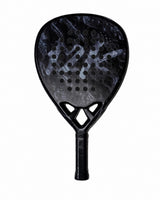
Bring your own racket. Club loaner rackets are dead, heavy and different every week, which makes it hard for a coach to fix anything because the equipment keeps changing under you. A consistent racket gives your coach a fixed reference point, and it means everything you groove in the lesson carries straight into your matches. The Midnight Black from 12k Padel is a forgiving all-round carbon racket that suits exactly this stage of the journey. Sort the racket, book the lesson, and let the coach do the rest.