Padel Warm Up Routine: What to Do in the 10 Minutes Before Every Match
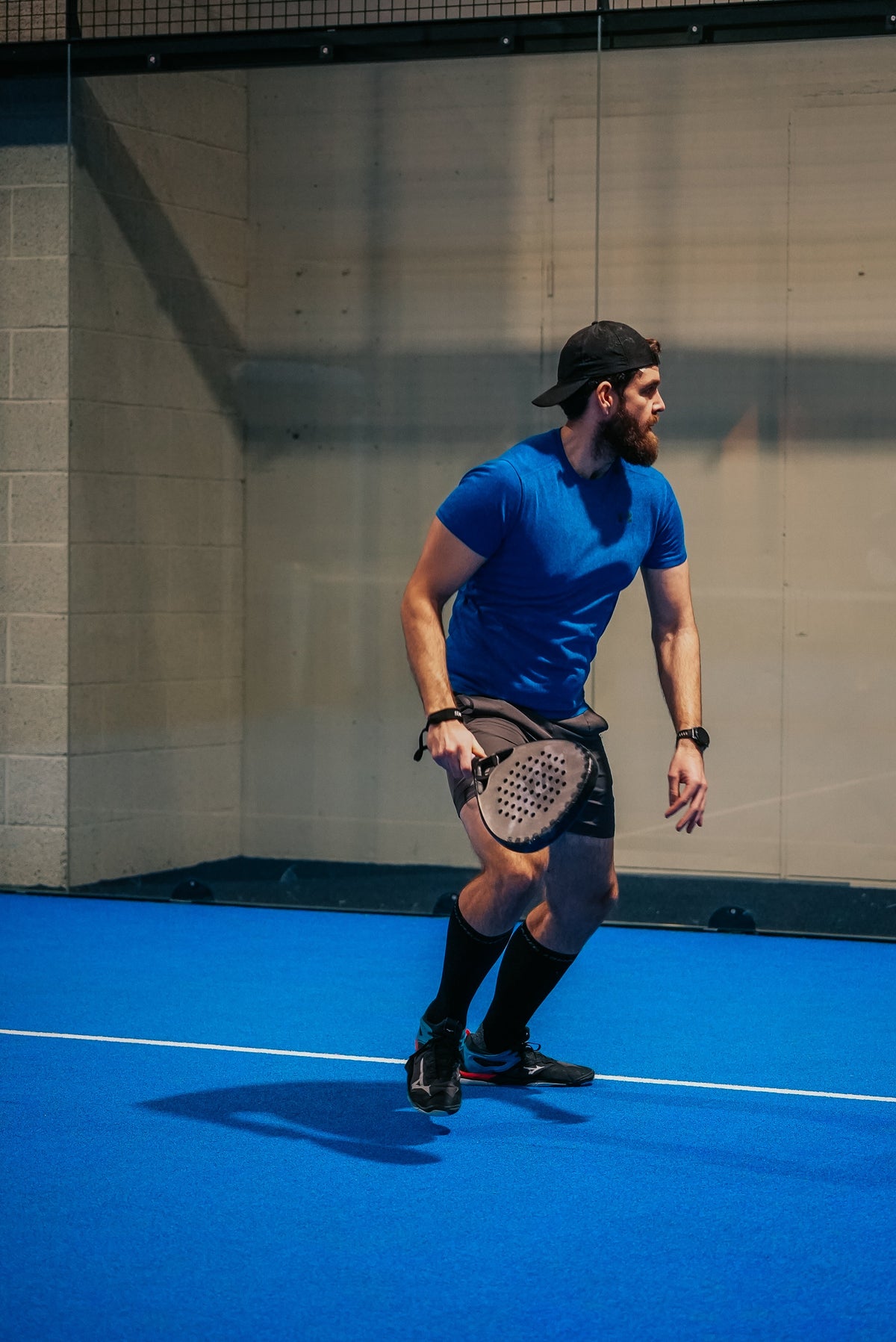
Most padel players jog to the court, say hello to their partner, and go straight into a full rally. Fifteen minutes later, something in a shoulder or a calf starts complaining. It is a predictable outcome for a predictable mistake.
A good warm up does not need to take long. Ten to twelve minutes is plenty if you do it properly. Here is what that looks like.
Why Padel Specifically Needs a Warm Up
Padel is not a gentle sport. You change direction repeatedly. You twist through your torso to play glass rebounds. You reach overhead for smashes. You lunge for low volleys. All of that happens within the first two minutes of a match.
Cold muscles move slowly and tear more easily. Warm muscles are more elastic, respond faster, and recover more quickly between points. The warm up is not a formality. It is preparation for a sport that places real demand on your shoulders, knees, and ankles in particular.
Phase One: Get the Blood Moving
Before you touch a racket, spend three to four minutes raising your heart rate gently. This does not need to be complicated.
Jog gently around the court. Do some high knees along the baseline. Side shuffle from one side wall to the other. The goal here is simply to get blood flowing to your muscles and raise your core temperature. You should feel slightly warm by the end of this phase, not out of breath.
Phase Two: Dynamic Stretches
Dynamic stretches are movement based. You are not holding positions. You are swinging, rotating, and activating the joints and muscles that padel works hardest.
Shoulders and Arms
Padel places real demand on the shoulder joint, particularly through smashes, bandejas, and overhead volleys. Arm circles are the simplest way to warm that joint up. Start small and gradually increase the range over ten to twelve repetitions on each side.
Follow that with shoulder rolls, both forward and backward. Then swing each arm across your chest and back, loosening the rotator cuff before you start swinging a racket.
Hips and Legs
Hip circles are underrated in padel. Your ability to lunge, split step, and change direction quickly all depends on hip mobility. Stand with feet shoulder width apart and trace slow circles with your hips, ten repetitions each way.
Leg swings are next. Hold the court fence for balance and swing each leg forward and back, ten times per side. Then do lateral swings, sweeping each leg out to the side. This activates the adductors and hip flexors that take strain when you stretch wide for a low ball near the side glass.
Finish the legs with a few walking lunges across the court. Add a torso rotation at the bottom of each lunge, reaching toward the front foot. This ties everything together and mimics the twist you make when playing a forehand off the glass.
Ankles and Wrists
Padel courts are unforgiving on ankles, especially when you are moving backward quickly to track a lob. Ankle circles take thirty seconds each side and are worth every one of them.
Your wrist absorbs a lot of vibration through the handle during a match. Gentle wrist circles in both directions before you hit a ball will help reduce that initial impact.
Phase Three: Shadow Movements With Your Racket
Now pick up your racket. Do not hit any balls yet. Instead, shadow your main shots without the ball.
Take a few slow motion forehands. A few backhands. Step forward and mime some volleys. Reach up for an imaginary smash. The goal is to rehearse the movement patterns your body is about to use at full speed, without the added demand of tracking a real ball.
This phase takes two minutes and is worth doing every time. You are telling your nervous system what is coming.
Phase Four: Ease Into the Rally
Now you are ready to hit. Start from the net and tap some gentle volleys with your partner. Do not go to the baseline and start driving the ball hard.
Gradually work back to the service line, then to the baseline. Keep the pace controlled for the first few rallies. Only once everything feels loose and comfortable should you start hitting at anything close to match pace.
There is no prize for going full pace on the third ball of your warm up. There is a real cost if you tear a calf doing it.
What Not to Do Before a Match
Static stretching before padel is counterproductive. Holding a hamstring stretch for thirty seconds before you play tells your muscle to relax and lengthen at exactly the moment you need it to contract fast. Save the static stretches for after the match, when your muscles are warm and your body can cool down gradually.
Do not skip the warm up because you are running late. Even five minutes of dynamic movement is better than nothing. Jumping straight from the changing room into a competitive point is how players end up sitting out the next two weeks with a strained muscle.
The Right Kit Helps Too
A warm up that builds heat naturally is easier when you are dressed for the conditions. If you are playing outdoors in the UK in spring or summer, you want a layer you can remove as you heat up.
The 12k Padel tournament tops are cut to allow full range of movement and are light enough that you will not overheat once the match gets going. Comfortable kit removes one less excuse to skip the phases that matter.
One Rule to Keep
Do the warm up every time. Not just before tough matches. Not just when you are feeling stiff. Every time.
Players who are consistent about warming up tend to pick up far fewer soft tissue injuries over a season. The ten minutes feels like it costs you time. Over the course of a year, it saves far more.
If you are looking to upgrade your kit for summer padel, the 12k Padel shop has everything you need to step on court feeling ready.