Padel Fitness Training: The Off-Court Exercises That Actually Help
Playing more padel is the best way to get better at padel. But if you are already on court two or three times a week and feel like your game has plateaued, what you do away from the court starts to matter a lot more.
The right off-court training builds the physical qualities padel actually demands: lateral speed, rotational power, core stability, and the ability to recover quickly between points. This guide covers where to focus, what to skip, and how to fit it around a normal week in 2026.
What Padel Actually Demands Physically
Padel is an interval sport. Points are short and explosive, separated by brief recovery periods. You are constantly changing direction, accelerating, decelerating, and hitting shots that require rotational force through the trunk.
The main physical demands are lateral quickness, explosive power from the legs, rotational strength through the core, shoulder and wrist stability for shot-making, and the aerobic base to stay sharp through a long three-set match. Each of those can be trained away from the court.
One thing worth knowing before you start. Most of the load in padel is braking, not sprinting. Every time you plant a foot to change direction your quads, glutes and calves lengthen under tension to absorb the force. That is why your legs ache two days after a hard match and why the gym work below leans towards deceleration and single-leg strength.
Core: The Foundation of Every Shot
Almost every shot in padel is driven by rotation through the core. The bandeja, the vibora, the forehand at the net: they all generate power from the trunk, not just the arm. A weak core means less shot power and less control under fatigue.
Plank variations, pallof presses, and cable rotations build the kind of core stability that directly transfers to padel. Medicine ball rotational throws against a wall are particularly useful because they replicate the movement pattern of a padel shot. Prioritise both anti-rotation and rotational exercises.
Legs: Where Your Speed Comes From
Padel requires short, explosive bursts of lateral movement rather than sustained running. The muscles you need most are your glutes, quads, hamstrings, and calves, working together to accelerate, decelerate, and change direction quickly.
Squats and lunges build the base. Add lateral band walks and lateral bounds to train specifically the side-to-side patterns padel demands. Split squat variations are excellent for single-leg stability, which is critical when you are stretching to reach a wide ball at full stretch.
Do not skip glute work. Strong glutes are what let you stay low in defence for a full set, and they take load off your knees and lower back when you stop hard at the glass. Hip thrusts and single-leg Romanian deadlifts cover it in ten minutes.
Plyometrics: Training Explosiveness
Padel points are often won and lost in the first step. The first push off the ground, the jump to chase down a lob, the explosive split step as your opponent makes contact: all of it requires fast-twitch muscle activation that standard strength training alone does not fully develop.
Box jumps, lateral hops, and hurdle jumps develop the kind of explosiveness that shows up in your movement on court. Keep reps low (four to six per set) and rest fully between sets. Plyometrics should always be done when you are fresh, not at the end of a session when form deteriorates.
Shoulder, Wrist and Forearm Stability
The shoulder takes significant load in padel, particularly on overhead shots like the bandeja and smash. Rotator cuff strengthening is worth including in any padel training programme, both for performance and for keeping yourself on court long term.
Banded external rotations, face pulls, and light cable work for the rear deltoid all help. For the forearm, the movement padel uses most is pronation and supination, rotating the palm down and up. Hold a light dumbbell by one end, or a hammer, and slowly rotate the forearm through its full range. Two sets of fifteen each way, twice a week, and the wrist and elbow niggles that sideline a lot of club players become far less likely.
Grip tension matters here too. A worn, slippery overgrip makes you squeeze harder on every shot, and a tight grip is one of the quickest routes to a sore forearm. Fresh 12k Padel overgrips are the cheapest piece of injury prevention in your bag, so change yours as soon as it goes shiny.
Agility and Footwork Drills
Agility ladders are a simple and effective tool for improving the quickness of your feet and your coordination. Lateral shuffle patterns, in-in-out-out drills, and crossover step sequences all reinforce movement habits that carry directly onto a padel court.
You do not need much space or kit. Ten to fifteen minutes of agility work at the start of a gym session is enough to see improvements in your court movement over a few weeks of consistency. If you want the on-court side of this, our padel footwork guide covers the split step and recovery steps in detail.
Aerobic Base: Getting Through Three Sets
Most club padel is two sets, but when matches go to three, fitness becomes a real factor. Players who are aerobically fitter recover faster between points, stay sharper in the late stages of a match, and make fewer unforced errors when they are tired.
Thirty to forty minutes of moderate-intensity cardio two or three times a week builds the aerobic base you need. Cycling is the best option for most padel players because it loads the heart and lungs hard with almost no impact on knees and ankles that are already taking a beating on court. Rowing works the same way. Running is fine if your joints are happy with it.
Once the base is there, swap one of those sessions for intervals. Thirty seconds hard, sixty seconds easy, repeated ten to twelve times, mirrors the rhythm of a padel match far better than a steady jog.
Questions Players Ask About Padel Fitness
Is padel a good workout on its own?
Yes. A typical club match burns somewhere between 400 and 600 calories an hour, and a competitive one can push past that. It works the legs, core and shoulders together and keeps your heart rate in the interval zone for the whole session. The gym work in this guide is not a replacement for that. It is there to make the padel sessions feel easier and to keep you injury-free enough to play more of them.
How many times a week should you train off court?
Two sessions is the number that works for most club players. Any less and the adaptations do not stick. Any more and it starts to eat into your recovery from padel itself, which is the thing that actually improves your game. If you are on court four or five times a week, keep gym work to two short sessions and put the rest of your energy into sleep. Our guide on how often you should play padel goes through the balance in more detail.
Why are my legs so sore after padel?
Because padel is mostly braking. Every stop and change of direction loads the muscle while it is lengthening, and that eccentric work is what causes the stiffness that shows up 24 to 48 hours later. It gets better fast once your legs adapt, and the single-leg and lateral exercises above speed that up. A proper cool-down helps too, and we cover that in our padel recovery guide.
A Simple Weekly Template
Session one: ten minutes of ladder and agility work, then lower body strength (squats, split squats, hip thrusts), then core (pallof press, medicine ball throws). Session two: plyometrics while fresh (box jumps, lateral bounds), then upper body and shoulder work (rows, face pulls, banded rotations, forearm rotations), then a short core finisher.
Add two cardio sessions, one steady and one intervals, on days you are not playing. Keep at least one full day a week with nothing in it. That is the whole plan, and it fits around three padel sessions without leaving you flat on court.
Putting It Together
Two focused gym sessions a week alongside your regular padel, combining strength, core, and explosive work, will make a visible difference to your movement and stamina within six to eight weeks. You do not need to train like a professional to see results on court.
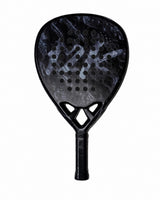
The other thing that makes a difference as your fitness and game improve is having the right equipment in your hands. At 12k Padel, we build rackets for players who are serious about getting better. If your training is going up and your game is following, take a look at the 12k Padel Shark Blue, a 365 gram teardrop with a 12K carbon face and medium EVA core, built for players who want the control and power that sharper technique deserves.