How to Volley in Padel: A Beginner's Guide to Owning the Net

The volley might be the most important shot in padel. Most points are won at the net, and if you can hold your ground there with confidence, you will start winning games you used to lose. For beginners the volley often feels rushed and uncontrolled. Once you understand the basics, it becomes one of the simplest shots in the game.
This 12k Padel guide walks you through the volley step by step. Grip, stance, technique, common mistakes, and a few drills that will sharpen your net game in a matter of weeks.
What Is a Volley in Padel?
A volley is any shot you hit before the ball bounces. In padel, volleys usually happen near the net after you have moved up from the baseline. The goal is not power. The goal is placement, pressure, and keeping your opponents pinned deep.
Think of the volley as a reset button. You are not trying to finish the point every time. You are trying to keep the ball in a position where your opponents have to play a weak lob or a weak return off the glass.
The Grip: Continental Is Your Friend
The continental grip is the standard for padel volleys. Hold the racket as if you were shaking hands with it, with the V between your thumb and index finger running along the top edge of the handle.
This grip works for both forehand and backhand volleys, which means you do not have to switch your hand when the ball comes fast. At the net, there is no time to change grips. The continental keeps the racket face stable and ready.
Grip pressure matters too. Hold the racket at about five out of ten between shots, and firm up at the moment of contact. A squeezed grip locks your wrist and sprays the ball.
How the Volley Grip Differs from Your Baseline Grip
At the back of the court you might drift a little towards a semi western feel, especially on higher topspin groundstrokes. At the net that has to go. Settle into continental the moment you move forward so you are not hunting for a grip change while the ball is in the air.
Body Position and Footwork
Stand about a metre from the net with your knees slightly bent. Your weight should be on the balls of your feet. The racket stays up in front of your body, roughly at chest height, ready for anything.
When the ball comes, step into the shot. A small step forward with the leg opposite to the volleying arm gives you balance and power. Do not reach or lunge. If the ball is wide, move your feet first and let your body arrive with the racket.
If the ball comes low, bend with your legs rather than dropping the racket head. Your arm is stronger when you are low because you can extend through the shot.
Forehand Volley Technique
Keep the backswing short. Almost no swing at all, really. The racket should travel forward through the ball, not around your body. Meet the ball in front of you, around shoulder height, with the racket face slightly open.
Use a gentle push. Let the weight of the racket and the pace of the incoming ball do most of the work. Aim deep, not hard. A deep volley to the back corner is almost always better than a flashy winner clipped into the net.
Backhand Volley Technique
Same principles apply. Short backswing, contact in front, push through the ball. Use your non dominant hand on the throat of the racket during the preparation. This keeps the racket face stable and stops you over swinging.
The backhand volley is where most beginners struggle. Practise it until it feels as natural as the forehand. Many pros say the backhand volley is actually easier to control because the shoulder guides the shot and there is less wrist involvement.
Common Volley Mistakes to Avoid
Swinging too hard is the number one issue. Padel volleys reward control, not power. Cut your swing in half, aim deeper, and watch how much cleaner your shots become.
Dropping the racket head below your wrist is another common fault. The head should always stay above the wrist on the volley. If it drops, the ball goes into the net.
Stepping back when the ball comes fast is a habit from tennis. In padel, step forward and meet the ball early. Retreating gives your opponents time to reload and attack.
Drills to Improve Your Volley Fast
Try the wall drill. Stand two metres from a wall and volley the ball back against it continuously. Aim for fifty clean contacts without letting the ball bounce. This trains your reflexes and your grip pressure in one go.
The feed and block drill is another favourite. Have a partner feed balls from the baseline while you stand at the net and volley everything back deep. Focus on aiming for the back corners rather than winners.
Shadow volleys also work. Without a ball, practise the step, the short swing, and the follow through. It builds muscle memory and smooths out your technique before you step on court.
Choosing a Racket for Net Play
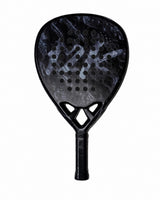
If you spend a lot of time at the net, racket choice matters. Round shaped rackets with a larger sweet spot are more forgiving on volleys, which helps when you mishit under pressure. The balance should sit low to mid so the head does not feel heavy when you react fast.
A firm carbon face, like the 12K face on 12k Padel rackets, gives a crisp response on blocks. Have a look at the 12k Padel rackets collection if you want something that rewards clean technique at the net.
Final Thoughts
The volley is the shot that separates beginners who stay at the baseline from players who actually control the match. Get the grip right, keep your swing short, and trust the placement. Everything else falls into place with a bit of practice.
Grab a partner, find a wall, and put in a few focused sessions. The net will start to feel like home.