How to Return a Serve in Padel: A Beginner's Guide to a Smarter Return
If you have ever stood in the service box, watched the ball bounce, and swung like you were trying to win the point outright, you are not alone. Most people who come to padel from tennis or squash treat the return like a groundstroke. That is a mistake. The return in padel is a patience shot wearing a power shot's clothing.
Get the return right and you keep your team in the rally. Get it wrong and the other pair is already volleying into open space while you scramble back to the glass. Here is how to think about it properly, updated for the 2026 season with the questions UK club players ask most.
Why the Padel Return Matters More Than You Think
In padel, the serving team has one job once the ball is in play: move forward and take the net. Your job as the returner is to stop that happening, or at the very least make it as uncomfortable as possible.
Every return you hit is either pinning the server back or handing them free rein at the net. That is the whole game packed into one shot. If your return sits up in the middle of the court, the point is decided before it has properly started.
The Return of Serve Rules You Need to Know
The serve is hit underarm, at or below waist height, and must bounce in the service box diagonally opposite the server. Your side of the deal is simple. You have to let the ball bounce once before you hit it. Volley the return and you lose the point straight away.
After that single bounce, the ball can hit the back glass or the side glass and still be live. You can play it before it reaches the glass or after it comes off, as long as you hit it before the second bounce. If the serve bounces and then touches the metal fence before you can play it, that is a fault.
There is no rule about where you stand. You can set up anywhere on your half of the court, and so can your partner. For the full picture on faults, lets and foot faults, read our guide to padel serve rules.
Where to Stand When You Are About to Return
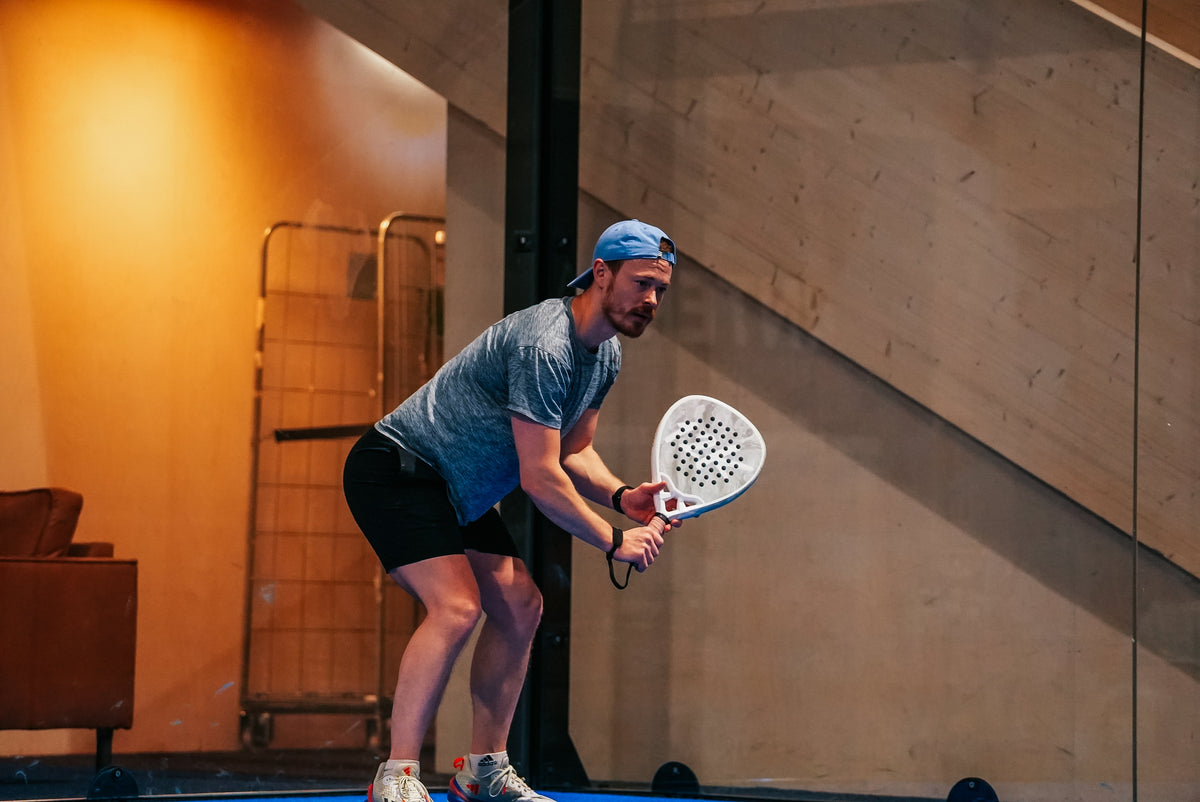
Set up a step or two inside the back glass, diagonally across from the server, with your feet roughly level with the service line. Weight on the balls of your feet, racket out in front, grip relaxed but ready.
The biggest error beginners make is standing too deep. If you are crammed against the back glass, any decent serve will kick off the wall and leave you with an awkward half chance. A bit of breathing room gives you space to choose what to do with the ball.
Adjust for the server in front of you. Against a soft, slow serve, take half a step forward and play the ball before it dies into the glass. Against a heavy slice that kicks off the back wall, drop back towards the corner and give the ball room to come to you.
How to Read the Serve Before It Bounces
The padel serve is struck below the waist, so it will not scream past you the way a tennis serve can. Watch two things: the server's ball drop and the angle of their racket face at contact.
A flat racket face means the ball is coming through quicker and deeper. An open face usually signals a slice that will dart towards the glass after bouncing. The moment the ball leaves the racket you also know whether it is heading to your forehand or backhand, so start the backswing then rather than after the bounce.
Reading early gives you a whole extra beat to prepare your feet. Serves that hit the side glass are the hardest to read, so if you are new to the walls, our beginner's guide to using the walls will help.
The Three Returns Every Beginner Should Have
You need three reliable options, picked according to what the server gives you.
The Low Driven Return
Your default. Aim low over the net and crosscourt, targeting the server's feet as they move forward. This takes away their volley and forces them into a half volley off their shoelaces. Crosscourt gives you the longest diagonal and the most net clearance.
Keep the swing compact. A short backswing and a firm wrist does more work than a full windup ever will. Contact the ball in front of your body, not beside it.
The Lob Return
When the serve is heavy or you have been pushed wide, lob it. A well placed lob over the server's partner at the net flips the whole point on its head.
The lob does not need to be perfect. Height matters more than depth, and as long as it clears the net player's racket you have bought time to take the court. We break the shot down in our guide to playing the lob in padel.
The Soft Return to the Feet
The surprise option, often called a chiquita. When the server is already charging forward, a slow return that dips to their feet or dies just over the net can be brutal. Save it for an easy serve you have time on. Used too often it becomes predictable, and attempted on a tough serve it hands over a free volley.
The Biggest Mistakes Beginners Make on the Return
Going for too much. You are not trying to hit a winner off the return. You are trying to keep your team in the point and the serving pair under pressure.
Standing still. Your feet should be moving the whole time the server is setting up. Static feet equal late contact every time.
Chasing the ball into the glass. If the ball is going to come off the back wall, let it. Stepping into the glass to meet the ball early almost always produces a weak, cramped shot.
Gripping too tight. A tense grip kills your feel on the soft return and makes the lob fly long. If your hand is sliding and you are squeezing to compensate, a fresh 12k Padel overgrip gives you tack without the tension and takes two minutes to put on.
Forgetting about your partner. A sharp return into the server's feet sets your partner up to poach the next ball at the net, and that is where points get won.
How to Practice Your Padel Return Between Matches
Find a wall or a ball machine. Hit a hundred returns with no goal other than placing each one low and crosscourt. Ten minutes of this twice a week will do more for your match results than any amount of gym work.
The racket you play with matters as well. A frame in the 360 to 370 gram range with a medium balance lets you absorb the pace of a fast serve with a short swing, and a teardrop head keeps the sweet spot wide enough that a slightly late return still clears the net.
Questions Players Ask About the Padel Return
Can you volley the return of serve in padel?
No. The returner must let the serve bounce once before hitting it, and volleying the serve loses the point immediately. Once the return has been played, volleys are allowed for the rest of the rally.
Can you return a serve after it hits the back glass?
Yes. As long as the serve has bounced in the correct service box, it can hit the back or side glass and remain in play. Take it off the glass before it bounces a second time. If it hits the fence after the bounce, it is a fault.
Forehand or backhand on the return?
Take whichever side the ball gives you, but prepare early. Most beginners find the crosscourt forehand easiest to keep low. On the backhand, shorten the swing further and guide the ball rather than hit it. Our padel backhand guide has the full technique.
Final Thoughts on the Padel Return
The return is the most underrated shot in padel. But the players who win week after week are the ones who hit returns that keep their team in the rally, every single point.
Keep the swing short. Aim low. Read the server before the ball bounces. Everything else is detail on top of those three things.
At 12k Padel we build our rackets for everyday players who take the game seriously. If you want a frame that rewards a compact swing and clean contact on the return, the Shark Blue is a 365 gram teardrop with a medium balance and a full 12K carbon face.