How to Hit a Forehand in Padel: A Beginner's Guide to a Reliable Forehand

The forehand is the shot you'll hit more than any other in padel. Get it right, and the rest of your game starts to feel calmer. Get it wrong, and the ball flies long, into the glass, or into the net.
Here's how to build a forehand that holds up under pressure, even when you've only been playing a few weeks.
Why the Padel Forehand Is Different
Padel borrows its forehand from tennis, but it isn't the same shot. The court is shorter, the walls do half the work, and the ball moves slower off the strings. Big tennis swings are usually too much.
In padel, the forehand is built for control first, power second. You're trying to keep the ball low, deep, and away from your opponents. A clean forehand sets up the next shot. A wild one hands the point straight back.
Getting the Grip Right
Most coaches recommend the continental grip for the padel forehand. It's the same grip you'd use to hold a hammer. Lay the racket flat, place your hand on the handle as if you were shaking it, and you're roughly there.
Some players shift slightly toward an eastern forehand grip when they want more topspin. That's fine once you've played a season or two. For now, stick with continental. It works for forehand, backhand, volley, and overhead. One grip, less to think about.
If you want to dig deeper, our beginner's guide to gripping a padel racket covers every common grip in more detail.
Stance and Footwork
Your forehand starts with your feet, not your arm. Stand with your knees soft, weight on the balls of your feet, ready to move sideways. As the ball comes, turn your shoulders early. Your free arm points roughly at the ball or the side wall.
Step into the shot with your front foot. For right handers, that's the left foot. For left handers, the right. This loads your body and gives you the platform to swing through the ball, not at it.
If you're caught flat footed, the forehand falls apart. Move first, swing second.
The Swing Itself
Keep the backswing short. A tennis sized loop is too much. Bring the racket back to roughly shoulder height with the head pointing up, then drop it slightly below the ball as you swing forward. Contact happens out in front of your body, not next to it.
Finish the swing across your chest, with the racket head ending somewhere near your opposite shoulder. Smooth, not snappy. Think of it as guiding the ball rather than hitting it.
Where to Aim Your Padel Forehand
Most beginner forehands die in the net or float deep into the back glass. Both come from poor target choice as much as poor technique.
Aim crosscourt by default. The crosscourt is the longest part of the court, so you've got more margin for error. It also keeps the ball away from the opponent at the net, who is usually the biggest threat.
When you're confident, mix in a forehand down the line to surprise the other team. The bread and butter, though, is crosscourt, deep, and low.
Common Padel Forehand Mistakes
A few patterns come up again and again on UK courts. Watch out for these.
Swinging Too Hard
Power feels satisfying. It also feels expensive when the ball lands in the back glass on your side. The padel forehand rewards rhythm over force. If you can hit ten forehands in a row at 70 percent and land them all in, you're already ahead of most weekend players.
Late Contact
If you're hitting the ball next to your hip, you're late. The forehand needs to be struck out in front, where your shoulder has room to rotate. Late contact causes shanks, mishits, and balls that drift wide.
Forgetting the Walls
The walls in padel change everything. Don't rush. If a forehand looks like it's going to hit the back glass first, let it bounce, then come off the glass, then play it. You'll have more time and a better angle than you think.
Practising Your Forehand on UK Courts
The UK padel scene has grown fast. New clubs are opening across London, Manchester, Bristol, Leeds, and Glasgow. So there are plenty of options for putting in a few hours of practice each week.
Forehand practice doesn't need to be glamorous. Hit crosscourt rallies with a partner for ten minutes at the start of every session. No points, no pressure, just rhythm. You'll feel the difference within a few weeks.
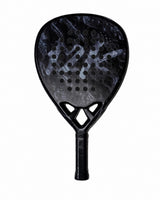
A racket that suits your style helps too. If you're playing several times a week and your current frame feels heavy or dead through the ball, it might be holding you back. The 12k Padel range has a 12K carbon face, a teardrop shape and a medium EVA core, at £79.95.
Bringing It Together
A reliable padel forehand is built on small, repeatable habits. A continental grip. Quick footwork. A short backswing. Contact in front. Crosscourt by default.
None of this needs power. It needs patience. The good news is that an hour of focused practice will move you further than ten matches of just hoping it clicks.
Shape the basics, and the rest of your game starts to feel easier. That's the same idea that runs through everything we make at 12k Padel: simple, clean, built to last.
If you're due an upgrade, take a look at the full 12k Padel range and see what fits your level.