How to Hit a Backhand in Padel: A Beginner's Guide to a Solid Backhand
Most beginners worry about the backhand before they even step on court. It feels less natural than the forehand, the timing is harder to find, and the wall behind you makes everything feel rushed. The good news is that the padel backhand is one of the most coachable shots in the game once you understand what makes it work.
This guide covers the grip, the stance, the swing, the back glass and the mistakes that show up in nearly every club match in 2026. By the end you will know exactly what to drill to stop dumping balls into the net.
Why the Padel Backhand Matters
You spend a huge chunk of every padel match defending the back third of the court. Opponents at the net will hunt your backhand side on purpose, because most players are weaker there. If your backhand cannot keep the ball deep, they stay glued to the net and the point ends before it really starts.
A reliable backhand also opens up the rest of your game. It lets you lob with control and reset rallies after a tough volley. Treat it as a foundation, not a weakness.
Choosing the Right Padel Backhand Grip
Almost every padel backhand uses the continental grip. It is the same grip you use for the volley and the smash, which is one of the reasons coaches push it so hard. Hold the racket as if you were shaking hands with it, with the V between thumb and index finger sitting roughly along the top edge of the handle. If that still feels vague, our guide to gripping a padel racket shows you where each finger goes.
If your wrist twists at contact, your grip pressure is probably wrong. Hold the handle firmly enough that the racket does not move on impact, but loose enough that your forearm stays relaxed through the swing. Squeeze a little harder right at contact, then let go again.
A worn, shiny overgrip makes all of this harder, because you end up clamping the handle just to stop it slipping. Swap it as soon as it loses its tack. A fresh 12k Padel overgrip costs a few pounds and takes two minutes to wrap, and your backhand will feel steadier the same afternoon.
Two Handed or One Handed?
Most beginners start with two hands and stick with it. The non-dominant hand gives you stability, helps with timing, and lets you generate pace without muscling the ball. As you progress you will use one hand on lower balls and shots tucked into the back glass, but two hands is the default starting point for the padel backhand.
Two hands also takes pressure off your dominant arm. Players coming from tennis sometimes resist this and pay for it in their elbow within a few weeks.
Stance, Footwork and Body Position
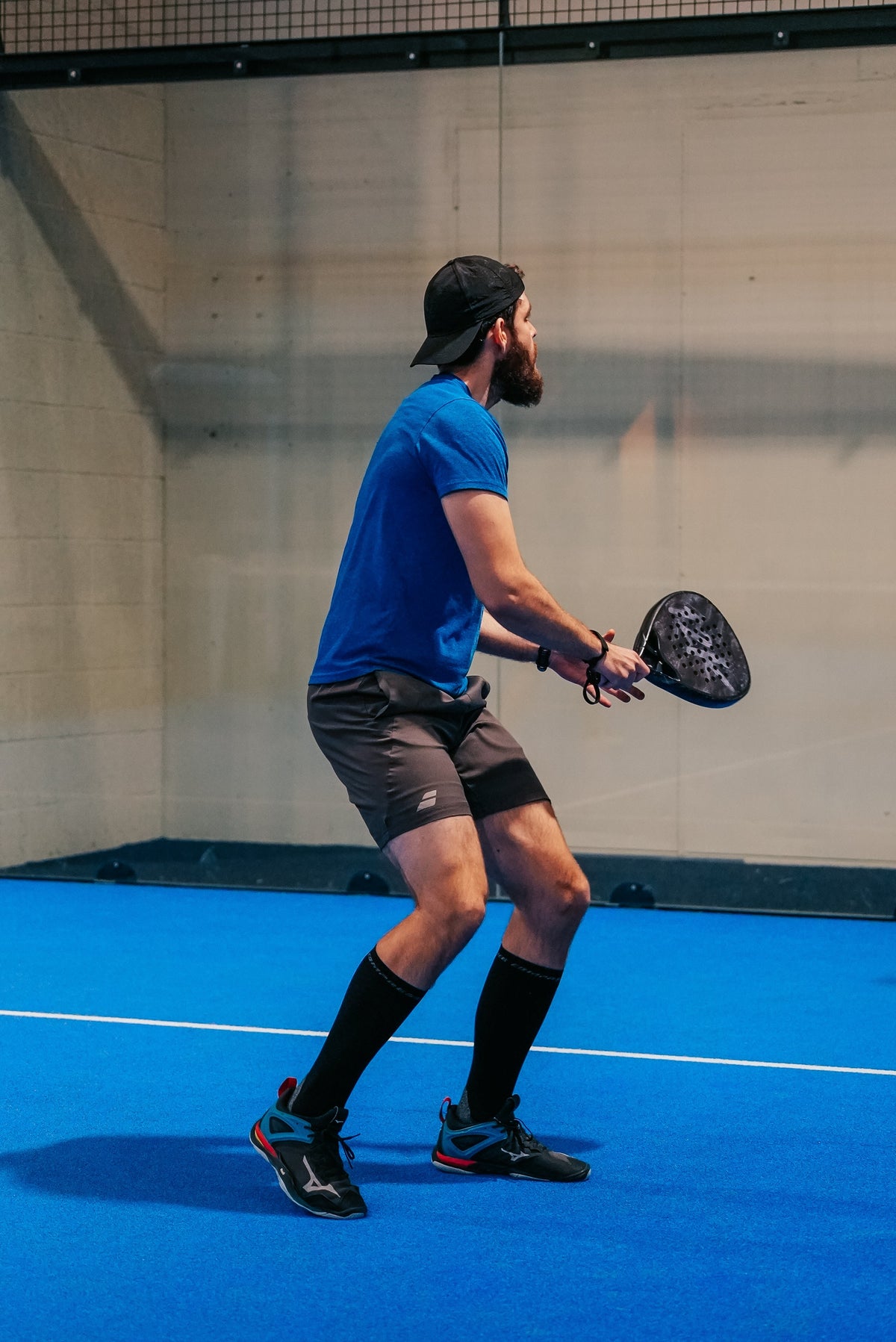
Footwork does most of the work on a clean backhand. Step in with your front foot at roughly forty five degrees to the net, turn your shoulders fully sideways, and let your weight transfer through the ball as you swing. If your feet are square to the net at contact, you are reaching, and the ball will float.
Get to the ball early. The space between you and the back wall is small, so the longer you wait, the more you have to swing through your own body. A small split step as your opponent hits buys you the half second you need. We cover this in more depth in our padel footwork guide.
Where the Contact Happens
Contact should sit out in front of your front hip, not next to it. A backhand caught beside your body has nowhere to go and tends to pop straight up or fly long. Watch the ball onto the strings and trust the prep you already did.
Hitting too far in front is the other trap. Nervous beginners jab at the ball an arm's length early, the wrist bends, and the shot sprays. Let the ball come to the zone just ahead of your hip.
The Swing Path of a Padel Backhand
Keep the swing compact. A short, controlled motion with shoulder turn and weight transfer beats any big tennis style backswing. Take the racket back with both hands, drop it slightly below the ball, swing low to high through contact, and finish with the racket pointing roughly toward your target.
Lead with the elbow, not the wrist. The shot comes from the shoulder turn and the elbow extension. If you flick the wrist, the racket head opens and the ball flies long.
A useful rule on shot selection: anything below waist height, hit flat. Anything above waist height, add a touch of slice to give your opponents an awkward bounce. Slicing low balls leaves you with almost no margin over the net.
How to Use the Back Wall on Your Backhand
The back glass changes everything. When the ball is heading for the wall, take a small step back, give it space, and let it bounce off. Wait until it sits up at a comfortable height, then swing through it just like a normal backhand.
The most common mistake is rushing. Trust the wall, keep your eyes on the ball, and play the shot on the way down. A backhand off the back glass is one of the easiest places to lob from, since the ball is already slowing and the angle is in your favour. If the wall still feels like an enemy, read our beginner's guide to using the walls in padel before your next session.
Common Padel Backhand Mistakes
A few patterns show up in nearly every beginner game. Wrist flicking instead of using the shoulder turn, standing too close to the bounce, and watching the opponents instead of the ball. Lifting the racket head before contact is the other big one.
Chopping down on a slice is another one. The racket starts high, comes straight down and never travels forward, so the ball gets plenty of spin and no depth. Keep the racket low through contact and drive it toward the net rather than the floor.
If your backhand is short and floaty, you are usually rushing. If it sails long, your wrist is probably opening up at contact. Slow everything down, breathe, and remember that footwork fixes more than technique ever will.
Questions Beginners Ask About the Padel Backhand
Why does my padel backhand keep going into the net?
Nine times out of ten the racket head is above the ball at contact. You are hitting down on it, usually because you got there late and had no time to drop the racket. Prepare earlier, set the racket below the ball, and swing low to high. Clearing the net by a foot and landing deep beats a hard ball that catches the tape.
Should you slice every backhand in padel?
No. Slice works on balls above waist height, where the downward brush keeps the ball low and awkward for the net players. On low balls, slice shrinks your margin and the ball sits up or dies in the net. Learn the flat backhand first, then add slice as a second option rather than a default.
Is the padel backhand the same as a tennis backhand?
Not quite. The grip is the same continental grip, but the swing is far shorter, the ball is slower and you often play it after the glass rather than straight off the bounce. Tennis players tend to over-swing and hit the back wall on the follow through. Shorten everything and let the court do some of the work.
Drills to Build a Reliable Padel Backhand
The simplest drill is a cooperative cross court rally. Stand at the back of the court with a partner and hit only backhands to each other for ten minutes. Focus on rhythm, not winners.
Once that feels comfortable, add the wall. Drop feed yourself, let the ball hit the back glass, and play the backhand off the bounce. Twenty in a row before you move on. The repetition is what locks the technique in.
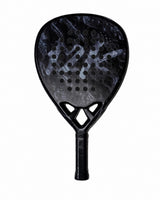
A solid frame helps the process too. The 12k Padel range is built for control out of the box, with a teardrop shape and a medium EVA core that gives a beginner enough forgiveness to focus on technique rather than fighting the racket.
Putting It All Together
A good backhand is not flashy. It is consistent, deep, and slightly boring to play against, which is exactly why it wins matches. Get the grip right, move your feet, keep the swing compact, and let the ball come to you.
Take it to your next session and play three sets where you only step in to volley after a deep backhand. You will start to feel how the shot sets up everything else. If you want a racket that rewards that kind of patient, control-first game, the 12k Padel Midnight Black is built around exactly that idea.