Common Padel Mistakes Beginners Make (and How to Fix Them)
If you have played a few sessions and feel like something is not clicking yet, you are not alone. Most beginners make the same set of mistakes on court and those habits hold them back more than they realise. The good news is that once you can see them, fixing them is usually straightforward.
Here are the most common padel mistakes beginners make, and what to do instead.
Hitting the Ball Too Hard
This one is almost universal. New players swing hard, the ball flies into the back glass, and it looks like it should work. Against other beginners, it does work for a session or two. Then you play someone slightly better and the same shot comes back at twice the speed.
Padel is built around consistency and placement, not power. Medium pace gives you more control over where the ball lands and forces your opponents to construct their own shot rather than reacting to yours. Save the hard hits for moments when you have genuinely created an opening. If you are swinging at full power on every ball, you are playing tennis on the wrong court.
Treating the Walls Like the Enemy
New players flinch when the ball comes off the back glass. They rush forward, panic, and either hit it too early or get completely off balance. The walls are not your opponent. They are part of your game, and learning to use them well is what separates a beginner from a developing player.
When the ball hits the back glass, let it come to you. Step back, track it off the bounce, and play a controlled shot from a settled position. Our guide on how to use the walls in padel covers this in full if you want to go deeper on the technique.
Staying Too Far Back from the Net
Most beginners hang at the back of the court because it feels safer. More time to react, more room to move. The problem is that staying back puts you on the defensive almost permanently.
The attacking position in padel is at the net. Most points are won from there. You do not need to rush up after every single ball, but if your team has played a solid lob or a good defensive shot, work your way forward together. Winning consistently from the back is much harder than it looks.
Going to the Net Too Early
The opposite problem is just as common. Some beginners read that the net is where points are won and immediately sprint up after every ball, ending up pressed right against the net with almost no time to react to what comes back.
The ideal position is roughly halfway between the service line and the net. That gives you time to handle a volley, room to read the ball, and the option to retreat if a lob goes over your head. There is a real difference between being at the net and being on top of it.
Not Preparing the Racket Early Enough
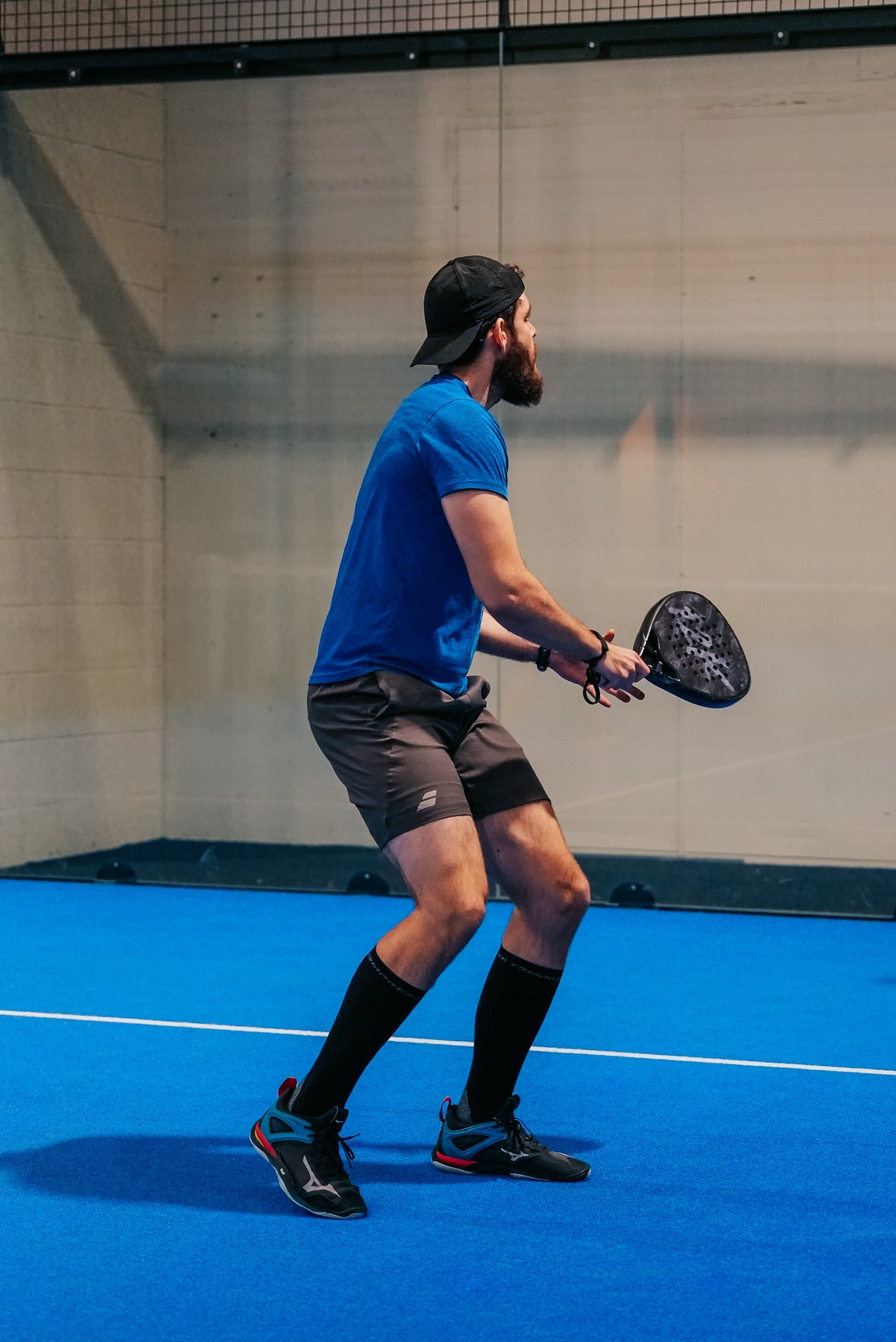
Watch a more experienced player and their racket is already back before the ball has crossed the net. Watch a beginner and the backswing starts the moment the ball arrives. That extra fraction of a second matters.
Early preparation gives you time to adjust your feet, settle into position, and hit with real control instead of improvising at the last second. As soon as you read where the ball is going, get your racket back. Do not wait for it to arrive and then decide what to do with it.
Ignoring Your Partner
Padel is a doubles game and a surprising number of beginners forget that entirely. They chase every ball, cross into their partner's side without warning, and leave half the court open. Two players operating independently is not a team.
Call "mine" or "yours" early and clearly. If you cross to cover a ball, let your partner know so they can shift across. After every shot, reset your position so you are covering the court evenly together. Two players who communicate and move as a unit will beat two better individual players more often than you would expect.
Using the Wrong Racket for Your Level
A heavy diamond-shaped racket built for advanced players might look the part, but for a beginner it causes more problems than it solves. Hard foam means less margin for off centre hits and more strain on your wrist and elbow. A racket that fights you will reinforce bad habits before you even know you have them.
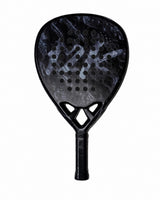
For most beginners, a round-shaped racket with a softer core gives you a bigger sweet spot, more forgiveness, and better control through the early stages of learning. The 12k Padel rackets have a 12K carbon face, a teardrop shape and a medium EVA core, built for players who are still developing their technique.
Gripping the Racket Too Tight
Most beginners grip the racket like they are trying to stop it from escaping. This kills feel, tires out the forearm quickly, and takes away the natural wrist movement that good shots depend on.
A relaxed grip gives you more control, not less. Firm enough that the racket stays in your hand on contact, but loose enough that someone could pull it away between shots without much resistance. Your grip should tighten briefly at impact and then relax again. A fresh overgrip also helps. If the handle is worn smooth or feels slippery, your hand compensates by squeezing harder than it needs to.
Trying to Fix Everything at Once
Beginners who read a list like this often walk onto court determined to fix all of it in one session. That approach rarely works. You end up thinking about too many things at once and playing worse than before you started.
Pick one thing per session. Work on early racket preparation for a full hour and then leave it. Next session, focus on net position. Small focused adjustments bed in far better than a complete overhaul attempted all in one go.
Where to Go from Here
Most of these mistakes come down to habits formed in those first few sessions. The earlier you spot them, the less work it takes to correct them. Padel rewards players who think clearly and move well far more than it rewards players who hit hard.
If you are still getting set up, the 12k Padel shop has rackets and accessories built with the early stages of learning in mind.